Album of Landscapes; Leaf 6 — History & Facts
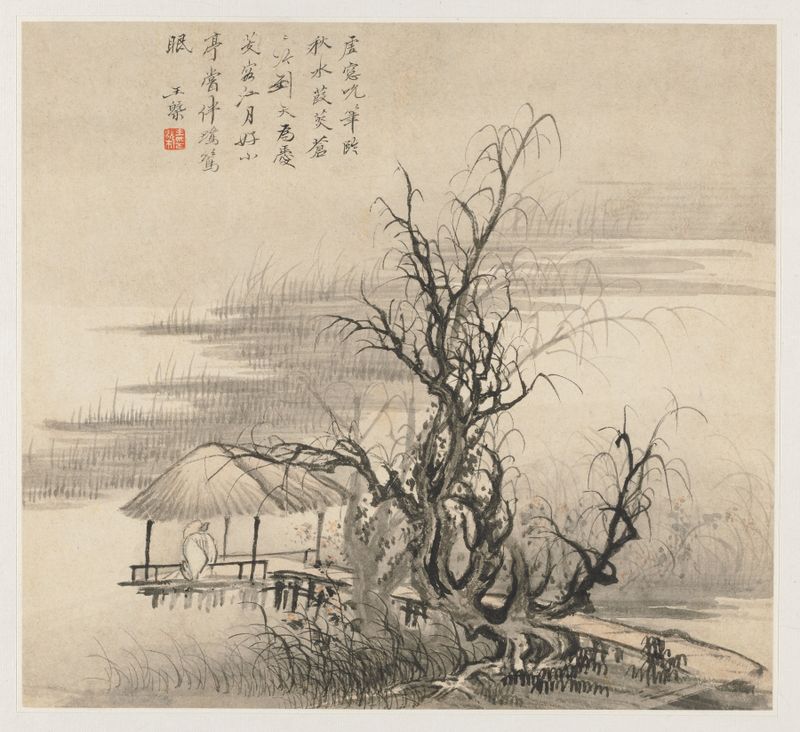
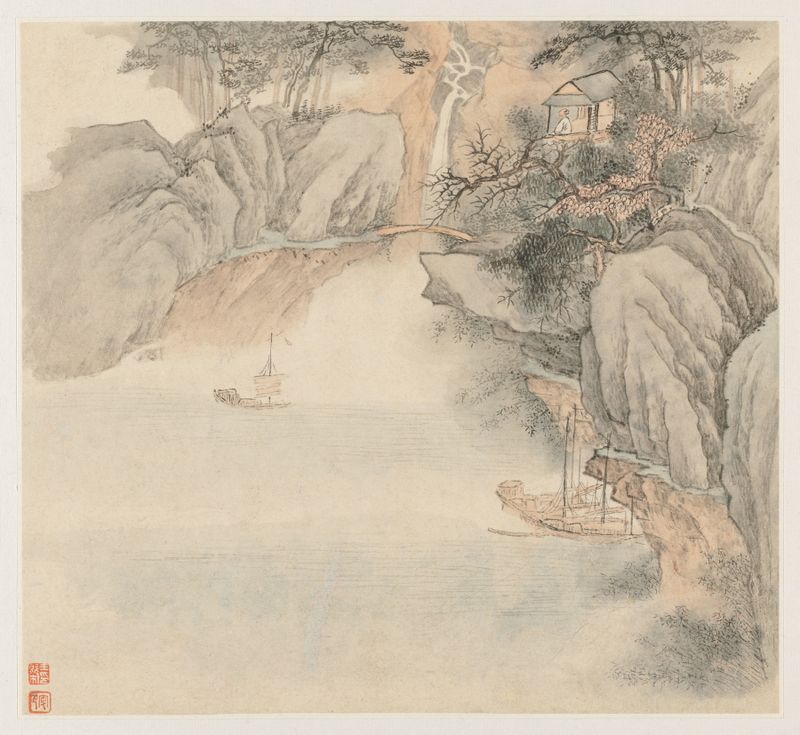
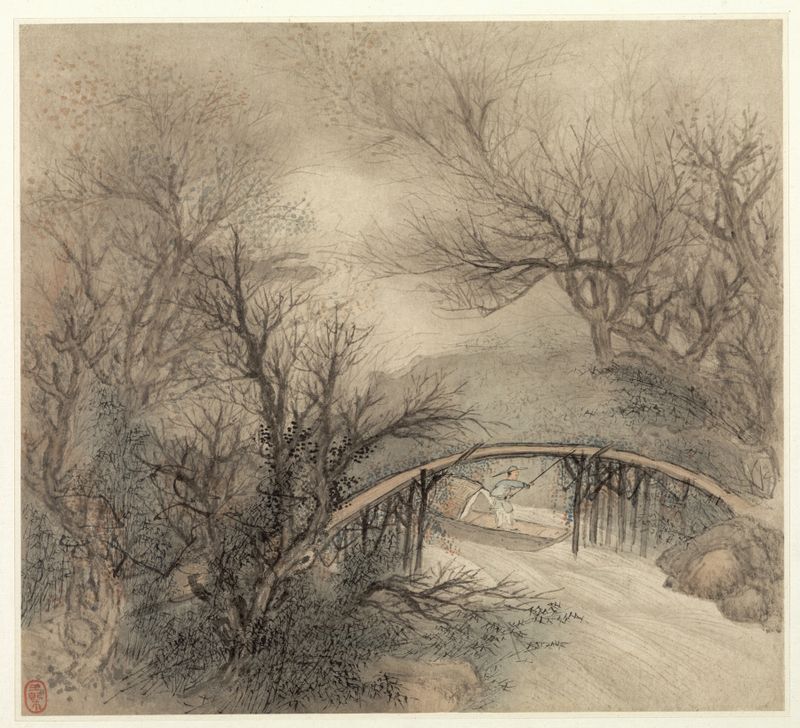
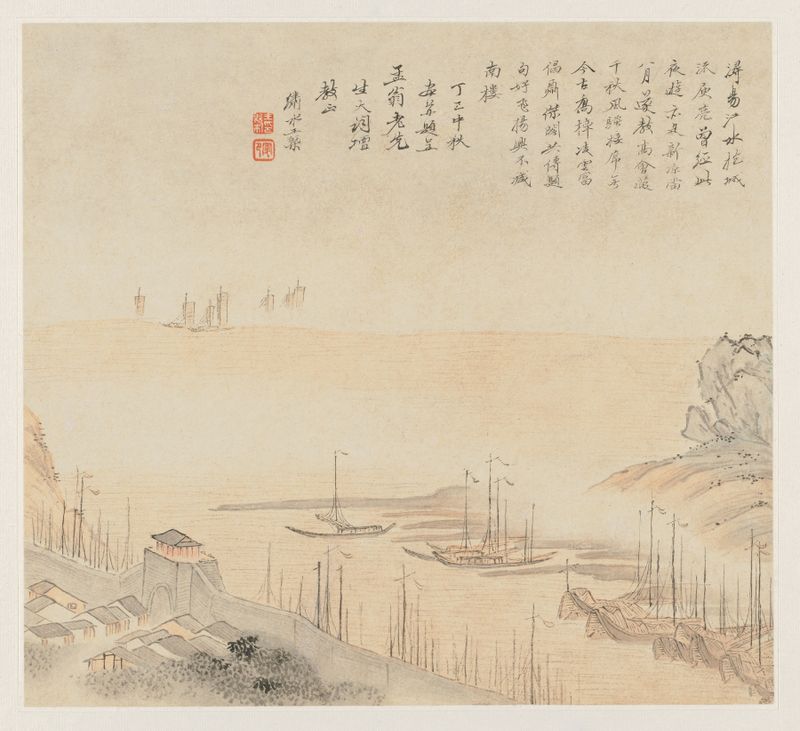
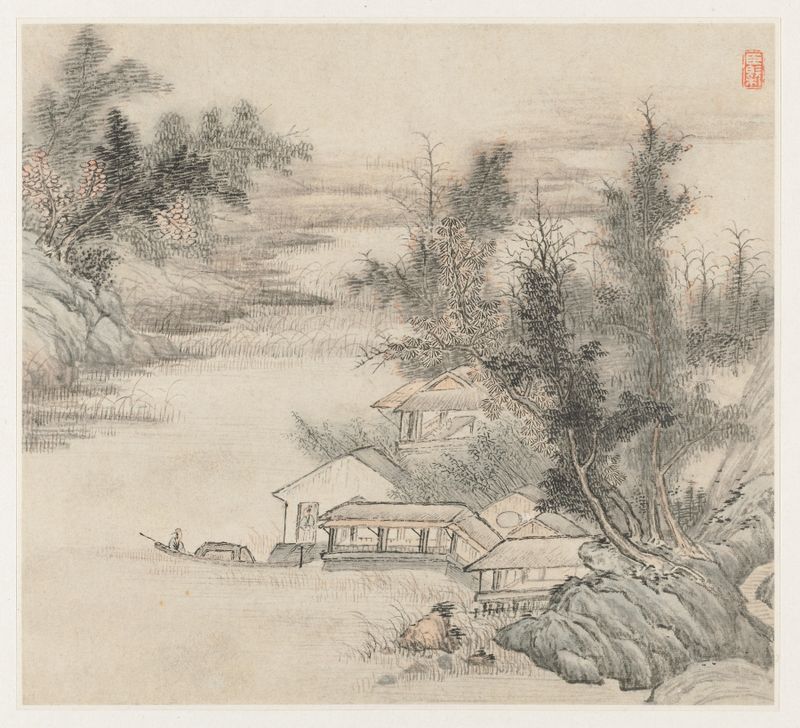
In Album of Landscapes; Leaf 6, an ethereal stillness envelops the canvas, inviting the viewer to explore the depths of solitude and reflection that resonate within its strokes. Look to the center, where a gentle stream winds its way through an expanse of valleys. The artist employs a delicate touch of ink wash, allowing the soft greys and muted greens to blend seamlessly into one another. Notice how the textured brushwork captures the whispering rustle of leaves and the tranquil flow of water, creating a meditative rhythm that draws the eye deeper into the landscape.
The subtle contrast between dense foliage and open sky evokes a sense of balance, where nature is both a refuge and a reminder of solitude. Beneath the serene exterior lies a poignant exploration of loneliness. The solitary tree, bowed yet resilient, symbolizes endurance amid isolation. The landscape, though beautiful, conveys a feeling of distance, hinting at the dichotomy between the external world and internal emotions.
The absence of human figures emphasizes a profound connection with nature, suggesting that solitude can be both comforting and melancholic. Wang Gai created this piece in 1677 during the Ming-Qing transition, a period marked by political turmoil and social upheaval. Living in a time when traditional values were being tested, he sought refuge in landscapes that reflect both the external world and the inner self. The work emerges from a rich history of Chinese ink painting, merging classical techniques with personal introspection, encapsulating the artist's yearning for tranquility amidst the chaos of his time.