Album of Landscapes; Leaf 7 — History & Facts
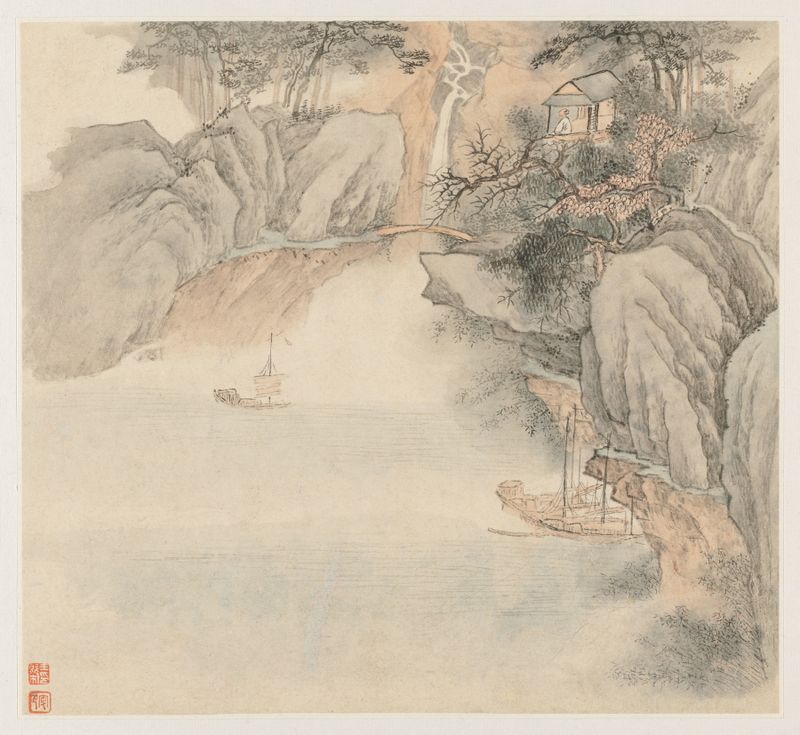
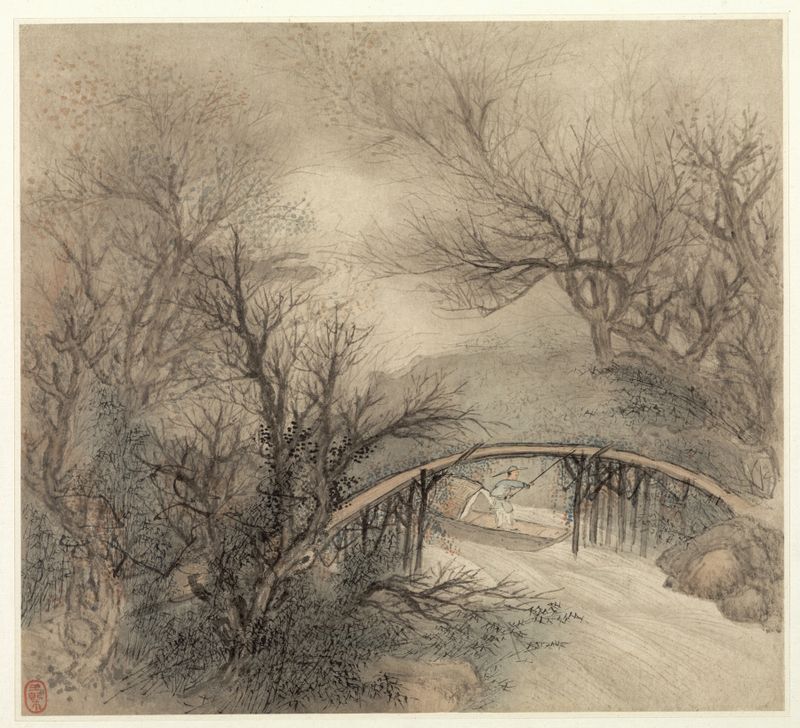
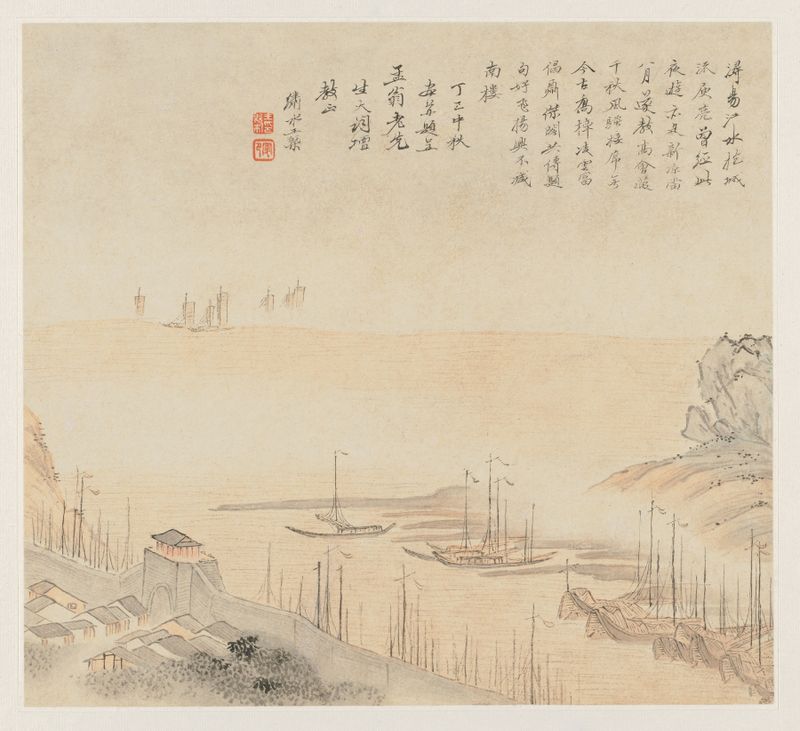
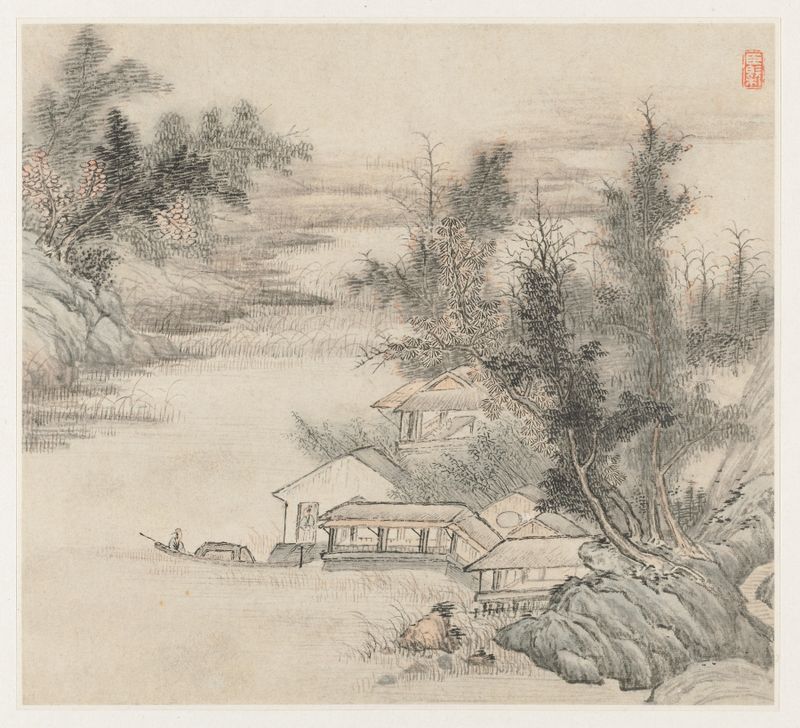
Who listens when art speaks of silence? In the delicate brushstrokes of Album of Landscapes; Leaf 7, revelation unfolds within the stillness of nature, inviting us into a contemplative realm where every detail resonates with profound meaning. Look closely at the gentle undulations of the mountains, rising majestically against the horizon. The muted greens and soft browns offer a serene palette, while the subtle play of light captures the quiet moment of dawn breaking. Notice how the traditional ink wash technique creates a sense of depth, each layer of ink revealing the artist’s meticulous attention to form and space.
The sweeping lines of the landscape guide your gaze across the scene, instilling a sense of journey through this tranquil vista. Within the vastness of the composition lies an intimate exploration of solitude and nature's enduring beauty. The distant mountains symbolize both grandeur and distance, while the calm waters reflect not only the scenery but the artist’s introspective state. Every brushstroke whispers a connection to the world, inviting viewers to ponder their place within it.
The interplay of light and shadow evokes a sense of transience, reinforcing the fleeting nature of moments that can only be captured in art. Wang Gai created this piece in 1677 during a period when traditional Chinese painting was shifting, as artists began to explore more personal interpretations of landscapes. Living in a time marked by social and political change, he sought solace and expression in the natural world, drawing from the rich heritage of literati painting. This work stands as a testament to both his skill and a reflective engagement with the landscapes that surrounded him.