Album of Landscapes; Leaf 8 — History & Facts
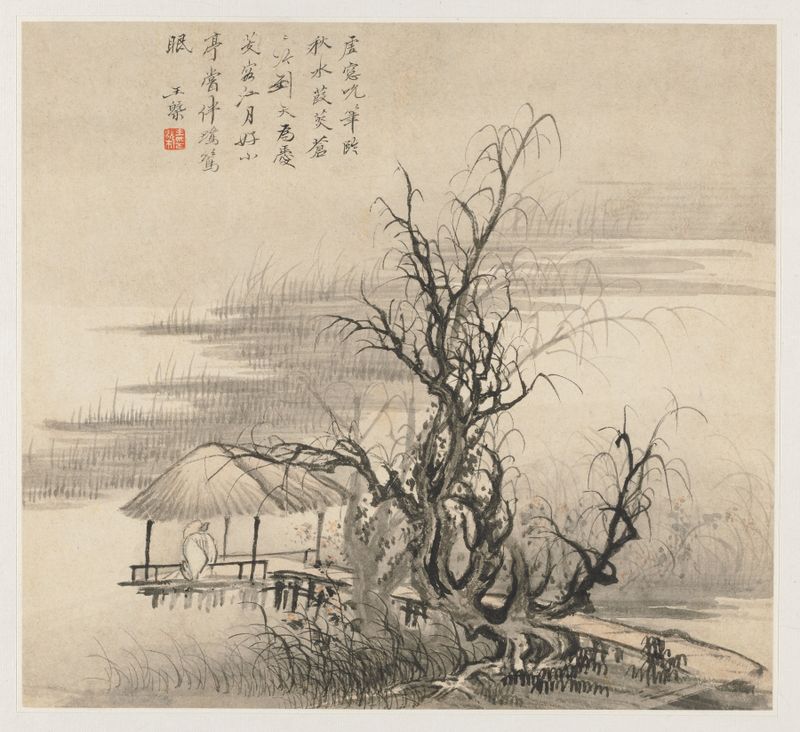
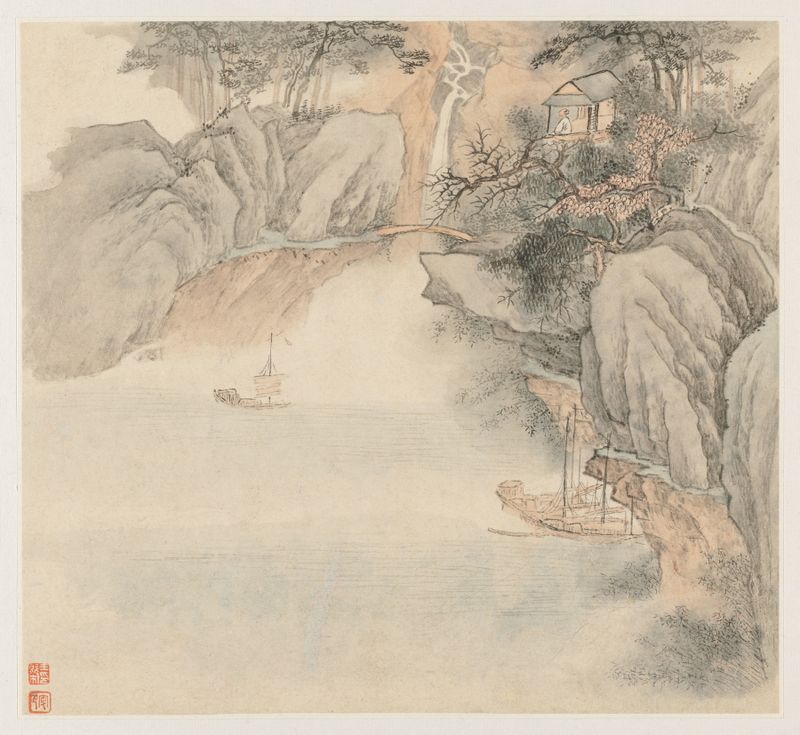
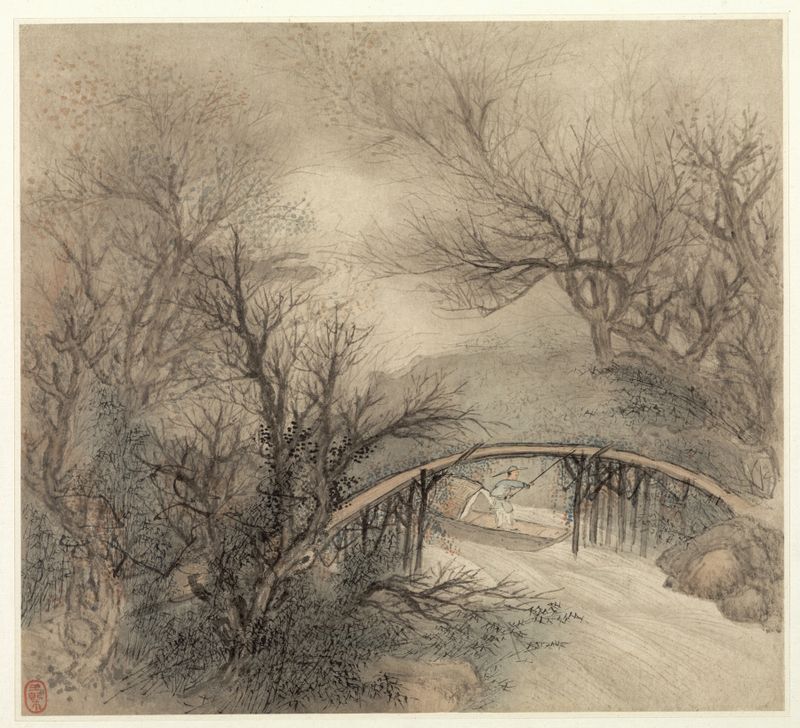
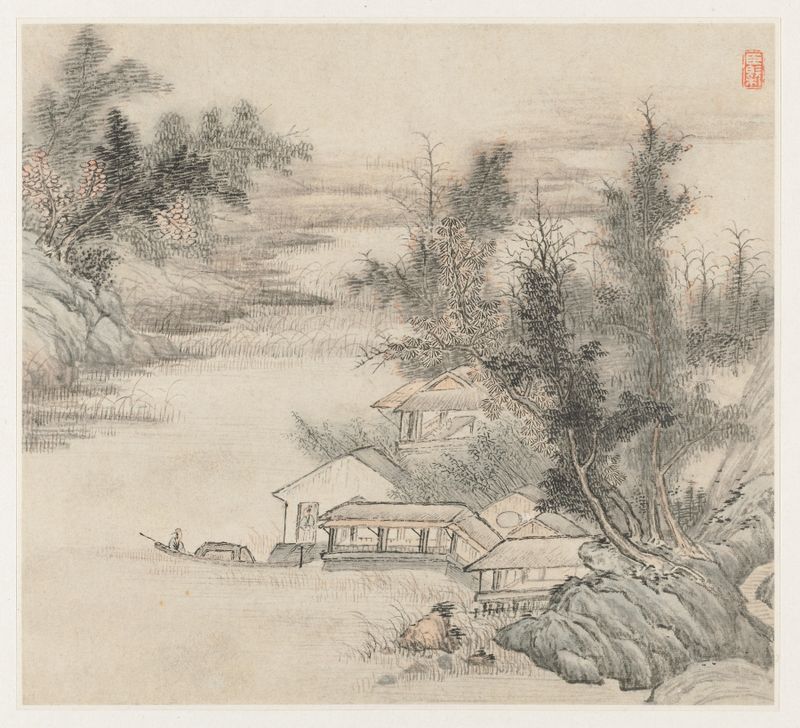
In the stillness of a landscape, memory weaves through the rustling leaves, whispering secrets of seasons past. Each brushstroke captures a moment — a fleeting impression, yet timeless in its resonance. Look closely at the gentle undulations of the hills; the soft greens and browns meld harmoniously, guiding your gaze toward the distant horizon. Notice how the intricate detailing of the trees contrasts with the vast, open sky above, creating a palpable sense of space and solitude.
The subtle gradations of color suggest the shifting light of day, evoking the tranquility of an untouched wilderness, while the delicate lines breathe life into the serene setting. Within this peaceful expanse lies a profound duality: the serenity of the landscape against the pulse of memory that urges us to reflect. The textured brushwork captures the essence of nature, yet also speaks to the impermanence of moments, reminding us that every beauty is but a whisper of what once was. The careful balance between light and shadow suggests both clarity and obscurity, inviting the viewer to ponder the interplay of remembrance and forgetfulness. Wang Gai painted Album of Landscapes; Leaf 8 in 1677, an era marked by the cultural flourishing of the Ming and Qing dynasties.
While he was at the forefront of the literati painting movement, Gai sought to bridge the worlds of art and nature, creating works that resonated with personal reflection. This period in his life was defined by a focus on expressing the inner self through the landscape, as he navigated the complexities of personal and artistic identity amidst societal change.