Alders in the Rhön — History & Facts
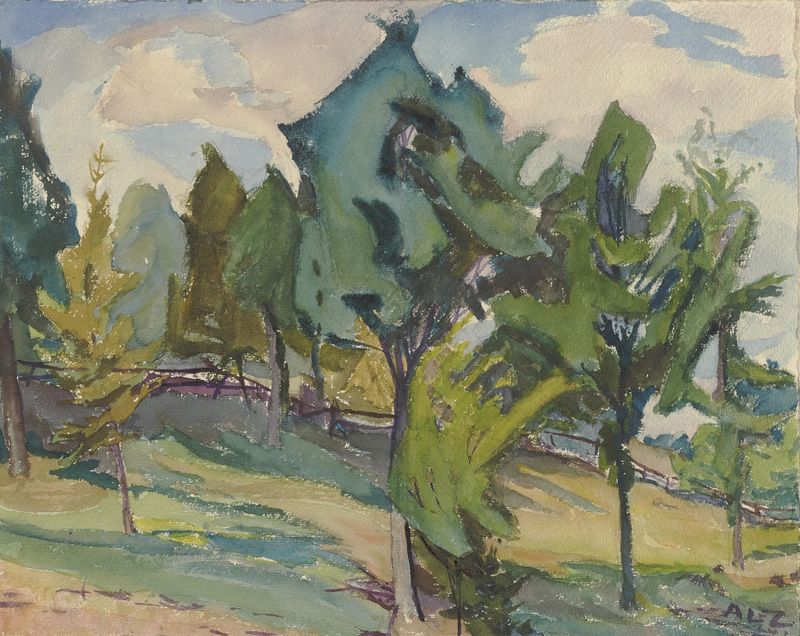
Is this a mirror — or a memory? The shimmering tranquility of Alders in the Rhön invites viewers to ponder the delicate balance between past and present, urging contemplation of what we cherish and what we forget. Look to the center of the canvas, where the verdant alders stand proudly against a backdrop of soft, rolling hills. The artist masterfully employs a palette of greens and browns, interspersed with hints of blue, to create an atmosphere brimming with life. Notice how the dappled sunlight filters through the leaves, casting playful shadows on the water's surface, drawing your gaze into the serene embrace of nature.
Each brushstroke seems to breathe, allowing the viewer to feel the gentle rustle of the leaves and the whisper of the breeze. In this painting, the contrast between light and shadow evokes a profound sense of longing. The alders, while vibrant and alive, seem to guard a silence that speaks of memories both cherished and lost. The still water reflects not just the trees but also the weight of the moment, capturing the transient nature of time.
Here lies a tension between the beauty of the scene and the undercurrent of nostalgia—a reminder that every serene moment is tinged with the yearning for what has passed. Created in 1820, this work emerged during a time of personal reflection for Langenbeck-Zachariae, who was navigating her role as a female artist in a male-dominated landscape. Living in Germany, she created this piece during a period of Romanticism, where artists sought to evoke deep emotional responses through nature. As she painted, the world was shifting—caught between tradition and the burgeoning modernity that would soon redefine artistic expression.