Rhön Mountains — History & Facts
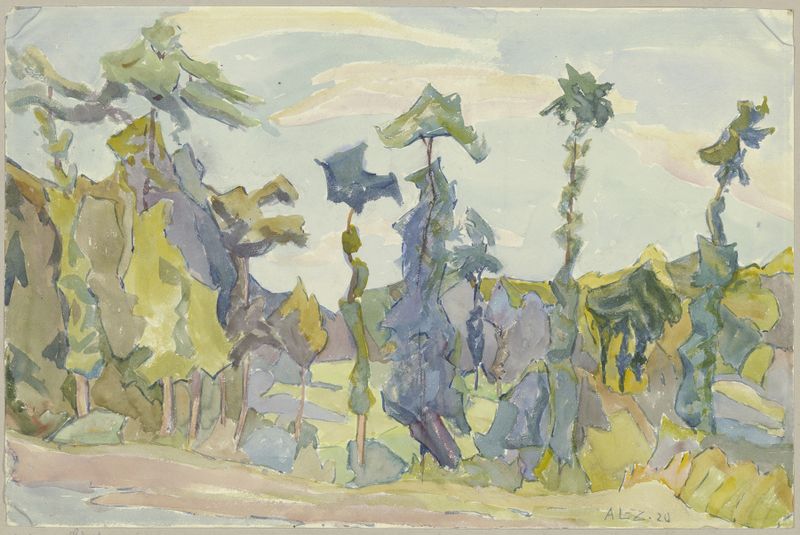
When did color learn to lie? In the twilight hours, hues can mask the truths we hold, even as they bring forth the echo of loss. Agnes Langenbeck-Zachariae captures this tension beautifully in Rhön Mountains, where an expanse of undulating hills evokes the complexity of grief nestled within the serene landscape. Look to the forefront of the canvas, where a deep green valley breathes life beneath a spectrum of soft blues and gentle whites. The mountains rise like solemn guardians, their peaks kissed by the soft glow of a fading sun.
Notice how the brushwork varies; the smooth strokes on the hills contrast sharply with the textured clouds swirling above, suggesting a conflict between calmness and turmoil. This interplay of light and shadow creates an atmosphere that feels both comforting and haunting. Delve deeper into the painting, and you'll find layers of emotion hidden in those serene vistas. The starkness of the mountains can be seen as a metaphor for isolation, embodying the weight that grief brings to the human spirit.
The contrast between the vibrant valley and the imposing range serves to remind us that joy and sorrow often coexist, intertwined like the colors across the canvas. Each stroke tells a story of the heart, revealing the artist's own tumult and connection to the landscape. In 1824, Langenbeck-Zachariae painted this work during a time when Romanticism was flourishing in Europe, emphasizing emotion and nature's sublime power. Residing in Germany, she was influenced by the wave of artists who sought to evoke profound sentiments through their representations of the natural world.
The context of her life, marked by personal and wider societal challenges, undoubtedly enriched the essence of this poignant piece.