Allegorical Figure of a Woman Holding A Circle — History & Facts
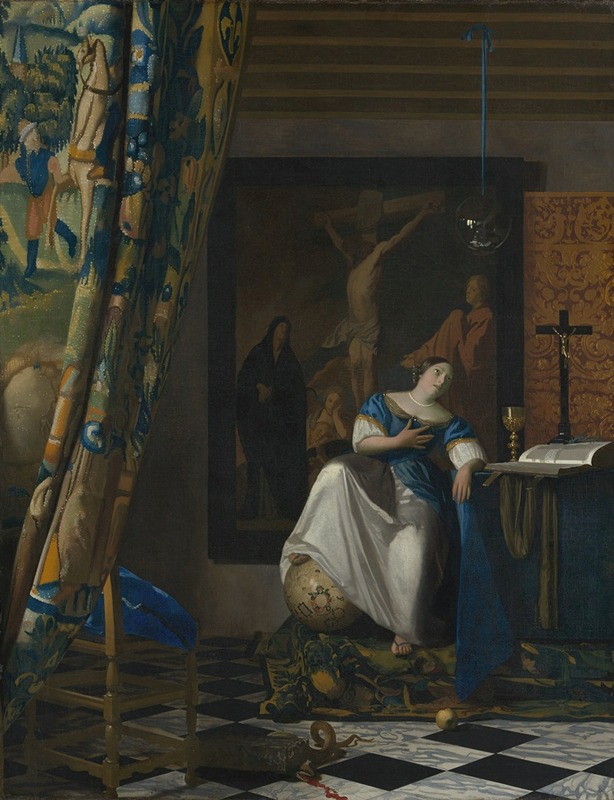
This sentiment echoes through the intricate contours of the figure, inviting contemplation on the duality of ecstasy and suffering. The physical manifestation of beauty often conceals deeper emotional truths, weaving a tapestry of complexity beneath its surface. Focus on the serene expression of the woman, her delicate features framed by flowing garments that dance around her in ethereal folds. Notice how the circle she holds gleams with a radiant light, the interplay between gold and shadow enhancing the figure's sense of otherworldliness.
The artist’s meticulous brushwork captures not only the fabric’s texture but also the gentle play of light, creating a luminous halo that envelops her, elevating her presence beyond mere representation. This painting holds a multitude of interpretations; the circle could symbolize unity, eternity, or the cyclical nature of life, suggesting that moments of ecstasy are often fleeting. Additionally, the contrast between her tranquil demeanor and the potential weight of the circle evokes a tension that resonates with the viewer, inviting introspection on the burdens that accompany beauty. Each detail, from the curves of her body to the rich colors, hints at a complex relationship between joy and sorrow, suggesting that ecstasy is often a fragile state. Giovanni Battista Benvenuti, known as Ortolano, created this piece during the late 15th to early 16th century, a time marked by vibrant artistic exploration in Italy.
It was an era when the Renaissance flourished, blending classical themes with novel techniques. Ortolano's work reflects the transitional spirit of the time, as artists sought to explore both the divine and the human experience, navigating the nuances of emotion while embracing the aesthetic ideals of beauty and form.