Allegorical grave monument for Louise, Princess of Orange-Nassau — History & Facts
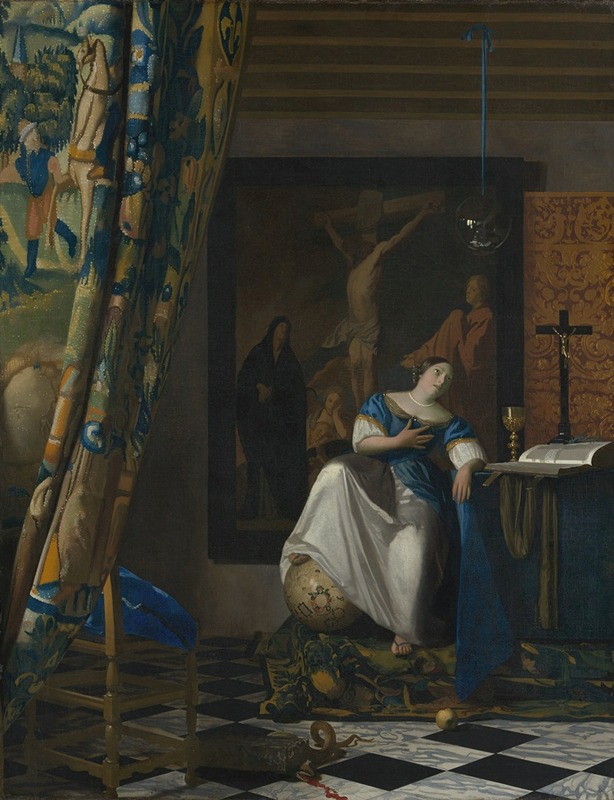
In this exquisite work, a silent narrative unfolds, revealing layers of grief and commemoration intertwined with the essence of life. The artistry speaks of loss, yet whispers of love, inviting us to delve deeper into the emotions captured within its frame. Focus first on the central figure, a striking, allegorical representation of mourning. The artist employs a delicate palette dominated by soft greys and muted whites, evoking a sense of solemnity.
Notice how the light gently caresses the contours of the monument, illuminating the serene expression of the figure, which seems to gaze into the distance as if lost in remembrance. The intricate details of the drapery and the finely sculpted features draw the viewer in, creating a haunting beauty that captivates the heart. As you explore further, subtle contrasts emerge—between the gravity of loss and the tenderness of memory. The figure, shrouded in a flowing garment, conveys both sorrow and dignity, while the delicate flowers at her feet stand as symbols of ephemeral beauty, a reminder of fleeting life.
This interplay between life and death embodies not just mourning but a celebration of the spirit who has departed, compelling the viewer to reflect on their own connections and experiences of love and loss. In 1819, the artist was immersed in a world grappling with profound changes. Living in a period marked by political upheaval and artistic evolution, Johnston sought to merge classical ideals with personal emotion. This work was conceived in a time when memorial art flourished, reflecting societal values and mourning customs.
His creation stands as a testament to both the personal and collective experiences of grief, revealing the timeless human condition through a singular, poignant tribute.