Allegorie met Justitia, Pax en Charitas — History & Facts
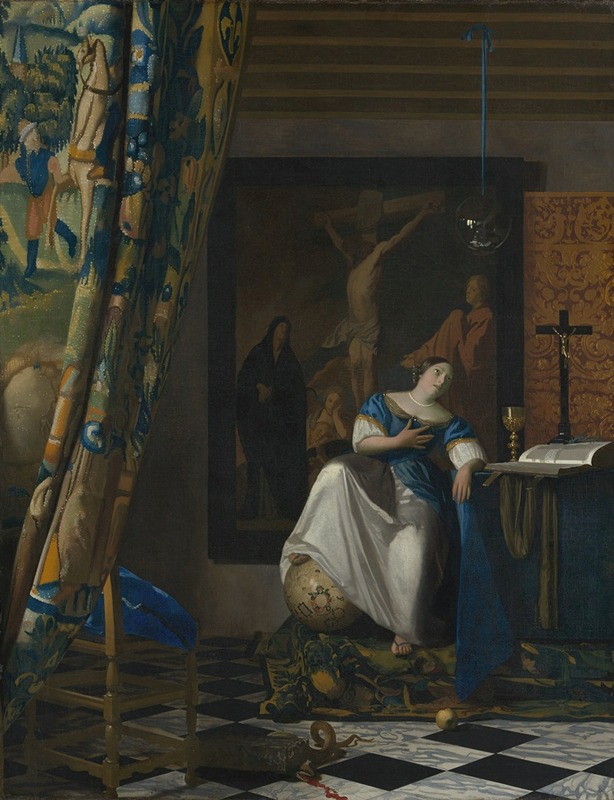
This sentiment resonates deeply in the reflective exploration of the human condition, inviting us to dissolve our fears into the shimmering layers of art. Focus first on the central figures, where Justitia stands resolute, a blindfold over her eyes, symbolizing impartiality. Look to her left, where Pax extends a gentle hand, embodying peace. Notice the tender interplay of light and shadow that highlights their contrasting postures; one conveying strength through stillness, the other warmth through openness.
The rich palette of golds and deep reds envelops the scene, contrasting the ethereal nature of the figures with the heavy weight of their moral implications. Delve deeper into the symbolism woven into the fabric of this composition. The blindfold of Justitia signifies not just fairness, but an unsettling truth: her indifference towards the suffering beneath her gaze. The garnet hues around her suggest a looming tension between justice and the inherent fear of its consequences.
Meanwhile, Pax's serene expression masks the anxiety that underlies the pursuit of harmony in a tumultuous world, revealing the fragility of peace amid unrest. Created in a time of dynamic transition in the late 16th to early 17th century, this piece reflects the artist's engagement with the complexities of his era. Egbert Jansz. painted Allegorie met Justitia, Pax en Charitas during a period marked by political upheaval and social change in the Netherlands.
Artistic expression was burgeoning, yet it bore witness to the fears and uncertainties of a society grappling with its identity amidst the turmoil of religious conflicts and the quest for justice.