Allegory of Free Love — History & Facts
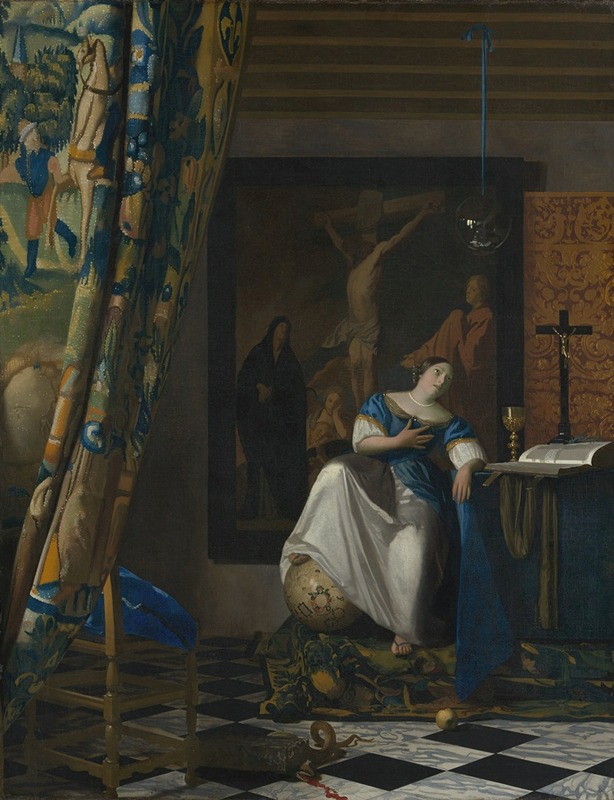
In the realm where vibrant hues intertwine with the fragility of existence, we confront the ephemeral nature of love and life itself. Look closely at the painting's central figure, draped in flowing garments that shimmer with delicate pastels. The gentle play of light highlights the contours of the body, evoking both grace and vulnerability. Notice the soft brushstrokes that create an air of intimacy, inviting the viewer to linger on the serene expressions and subtle gestures that speak volumes.
In the background, a lush landscape unfurls, contrasting the vividness of the figures with a muted horizon, suggesting the fleeting moments that define our connections. Delve deeper into the juxtaposition of free love and the inevitability of mortality. The entwined figures exude passion, yet their expressions reveal an underlying melancholy, hinting at love's transience. The dappled light filtering through the foliage amplifies this tension, reflecting both hope and sorrow.
Every detail—from the gentleness of a hand to the intertwining of limbs—serves as a testament to the joy and pain of love, encapsulating the dual nature of human experience. Joseph Pierre Vianey created this evocative piece in 1761, amidst a period marked by Enlightenment ideals that questioned societal norms and celebrated personal freedoms. Living in France, Vianey was influenced by the shifting artistic currents of his time, moving towards a more expressive and intimate representation of human emotions. This painting stands as a poignant reflection of the era's exploration of love, autonomy, and the inherent fragility of existence.