Allegory of Peace and War — History & Facts
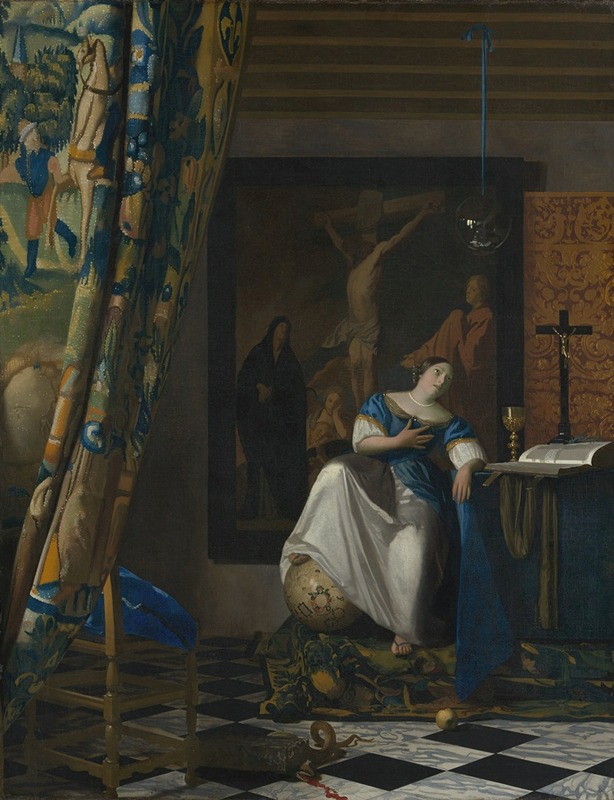
Could beauty survive in a century of chaos? The allegorical representation of peace and war speaks to the heart of this inquiry, embodying the tension between serenity and conflict. Look to the left at the serene figure of Peace, draped in flowing garments that cascade softly against a background of muted colors. Her gentle demeanor contrasts starkly with the looming figure of War on the right, whose sharp angles and darker palette evoke a sense of aggression and discord. Notice how the soft light bathes the figure of Peace, illuminating her features and bestowing an ethereal quality, while the shadows around War deepen, creating a visual dichotomy that draws the viewer into a silent battle of emotions. Deeper insights emerge from the small details within the painting: the olive branch gently cradled in Peace's hands represents hope, while the weapons at War’s feet signify the destruction that accompanies conflict.
This interplay of symbols reveals the fragility of tranquility in the face of turmoil, suggesting a poignant narrative about the loneliness that arises in times of discord. As these figures interact without physical contact, a profound emotional distance reflects the isolation that often accompanies the struggle for harmony. In 1776, Batoni was working in Italy, a time when Europe was rife with political upheaval and revolutionary fervor. His exploration of allegory was part of a broader trend in art that sought to convey complex themes through personification.
As nations grappled with their identities and the impact of war, this work captures the artist's response to a world caught between the ideals of peace and the reality of conflict.