
Allegory of the Dutch victory over the Spanish fleet at Gibraltar, 25 April — History & Facts
What first catches the eye in Adam Willaerts’s Allegory of the Dutch victory over the Spanish fleet at Gibraltar, 25 April is not the clash of ships in the bay, but the almost theatrical tug-of-war unfolding on the shore. Two men, one in Dutch dress and the other Spanish, strain against each other over a simple stick, their bodies pitched forward in mirrored determination. The scene is more than a contest of strength—it is a staged drama, watched intently by figures in elaborate costume: an Englishman and a Venetian, their postures neutral, as if weighing the outcome.
Behind them, the light glances off the choppy green water, drawing the viewer’s gaze to the distant armada where the real battle rages, sails billowing, flags snapping in the wind. The palette is cool and clear, the horizon low, giving the sky and the sea equal weight in this contest of nations. Painted in the early seventeenth century, this allegorical tableau belongs to a world where political victories were celebrated not only in chronicles but in paint. Such works were often commissioned to commemorate triumphs and to shape public memory, blending current events with symbolic gesture.
The Dutch victory at Gibraltar in 1607 was a source of national pride, and artists like Willaerts translated that pride into images that could be read by all: the stick becomes the spoils of war, the onlookers stand for the wary gaze of Europe, the distant ships for the scale of the conflict. History has kept few traces of this specific painting’s journey, but its presence in the Rijksmuseum collection today invites us to read its coded language anew—each figure, each gesture, a piece of the story the Dutch wished to tell the world.
More Artworks by Adam Willaerts
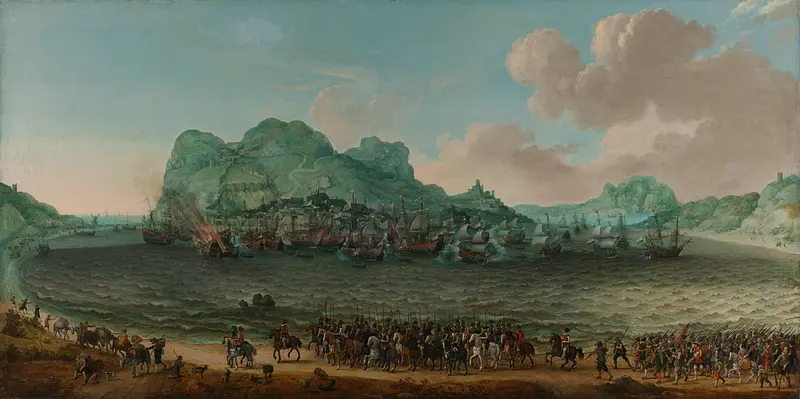
Victory over the Spanish near Gibraltar by a Fleet Commanded by Admiral Jacob van Heemskerck, 25 April 1607
Adam Willaerts
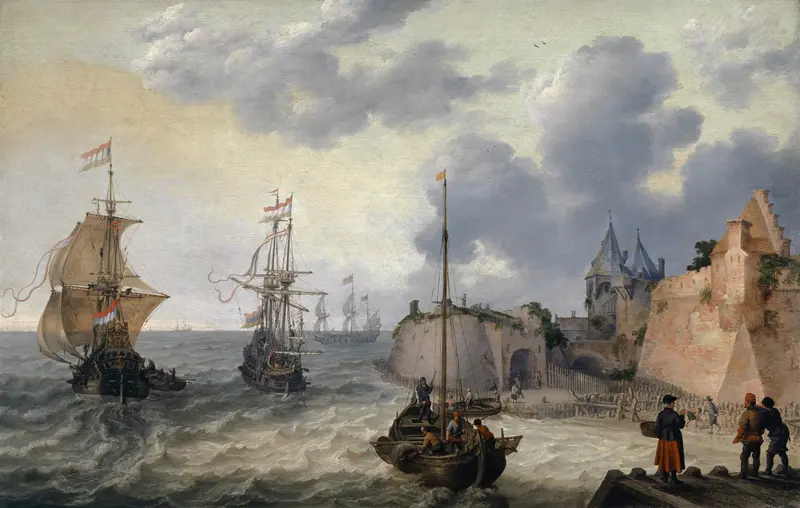
Dutch Harbour with Sailing Ships
Adam Willaerts
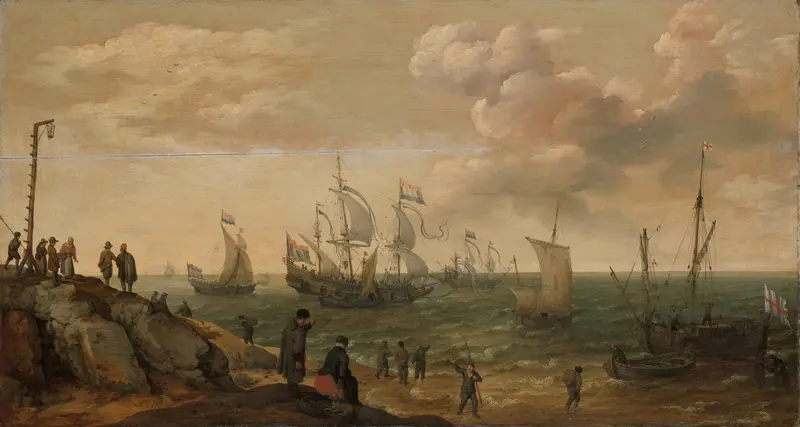
Ships along the Shore
Adam Willaerts
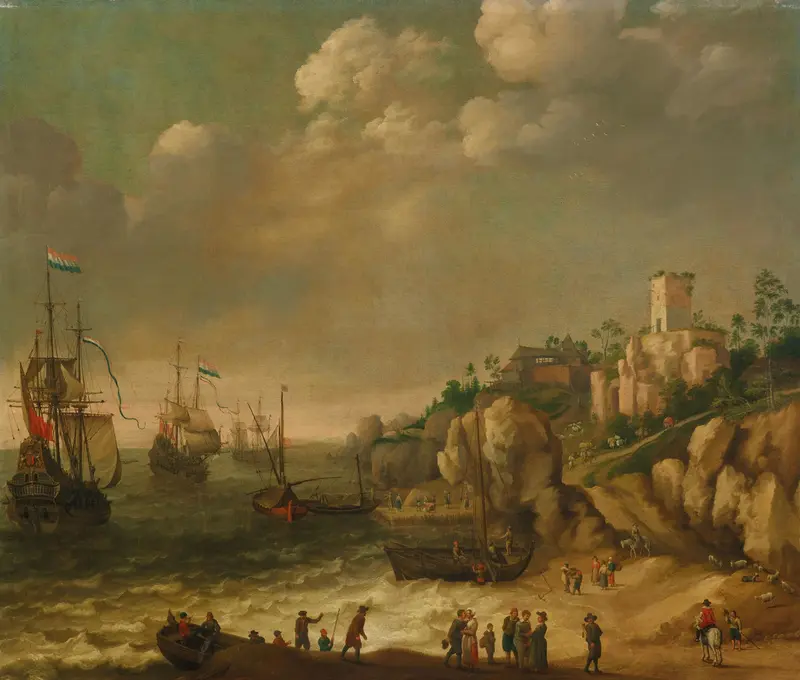
Dutch ships in front of a rocky coast with figures, buildings beyond
Adam Willaerts
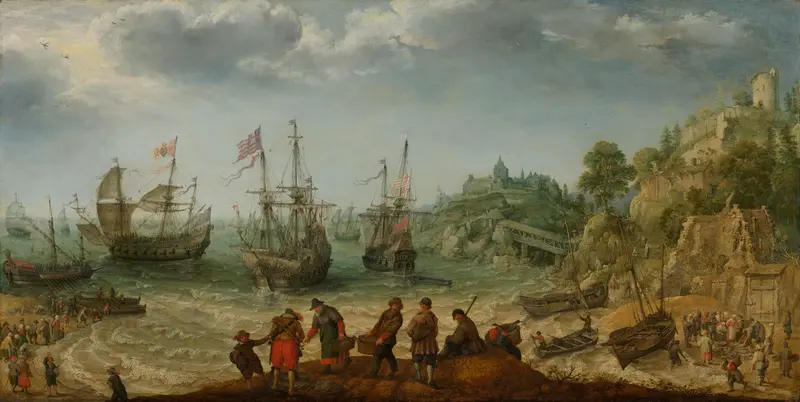
Ships off a Rocky Coast
Adam Willaerts
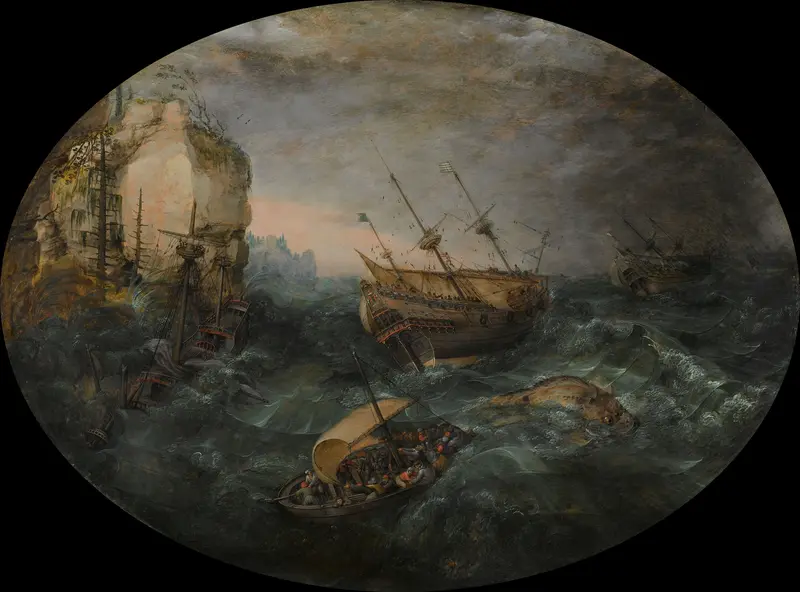
Shipwreck off a Rocky Coast
Adam Willaerts
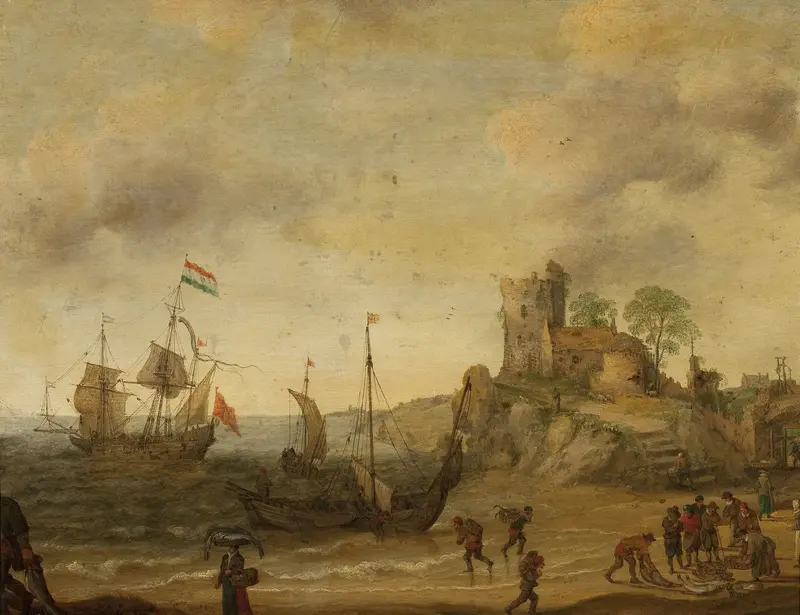
Fishermen at the seaside
Adam Willaerts
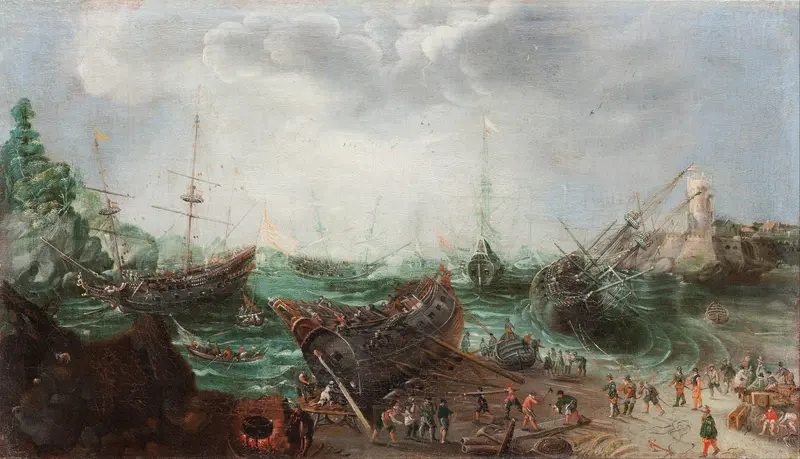
Harbour scene
Adam Willaerts
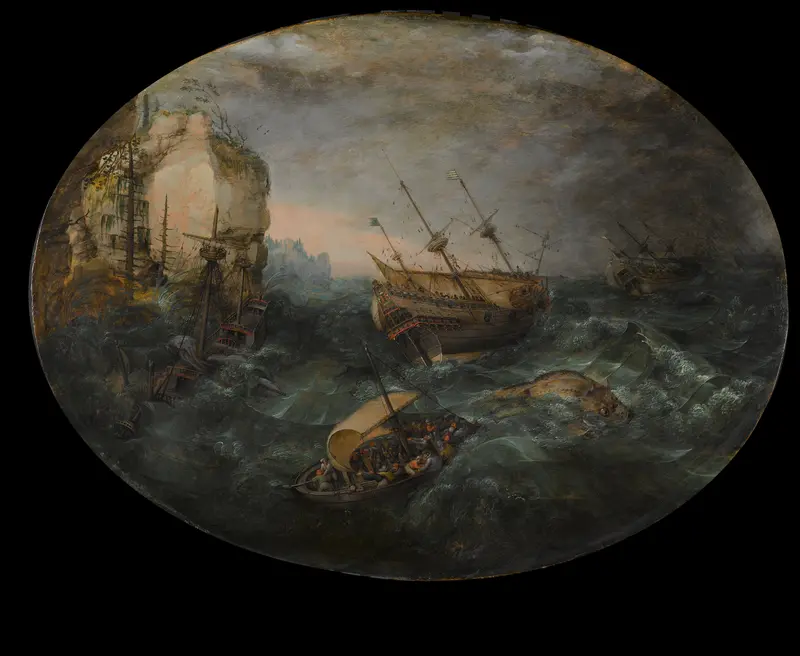
Shipwreck off a Rocky Coast
Adam Willaerts
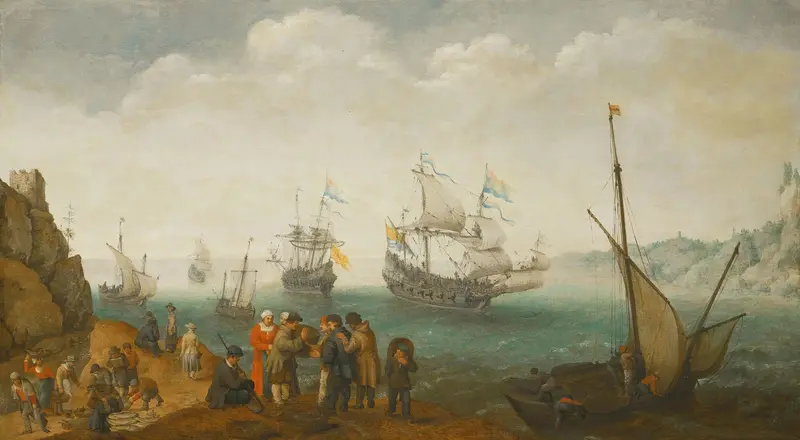
A Marine With Five Vessels Out To Sea And Another In Port, And With Groups Of Largely Male Figures Engaged In Buying Or Selling Fish Or Other Wares
Adam Willaerts





