Allégorie révolutionnaire — History & Facts
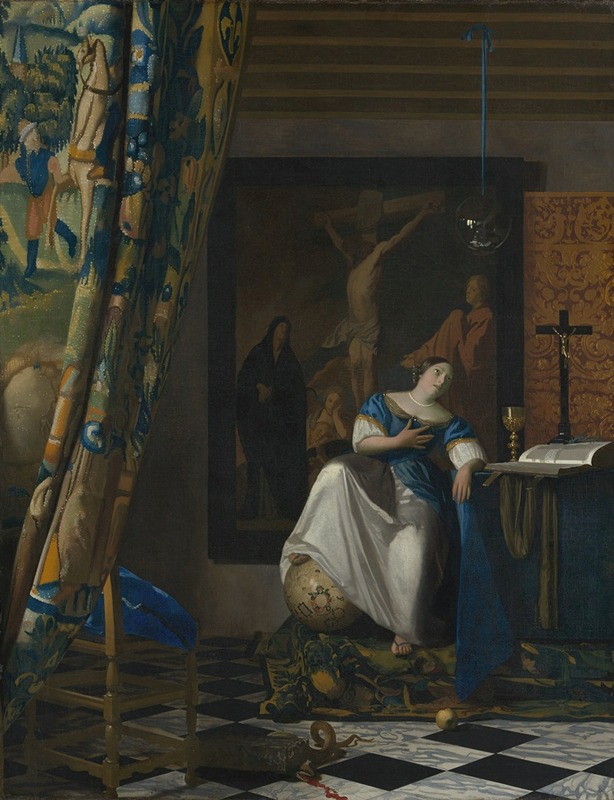
In a world swirling with chaos, it offers a sanctuary of serenity, a moment where tranquility holds its ground amid tempestuous change. Focus first on the central figure, poised with grace, draped in flowing robes that ripple like the softest of breezes, inviting serenity into the heart of revolution. The subtle interplay of light emphasizes the contours of her face, revealing a gentle strength that belies the tumult surrounding her. Look closely at the gestures—the way her hand extends outward, as if to bridge the divide between conflict and peace, and how the soft palette of blues and whites captures a sense of calm resilience. Delving deeper, one can sense the tension between the hopeful ideal of the revolution and the somber reality it often inspired.
Notice the juxtaposition of the vibrant figures in the background, their expressions a tumult of fervor and determination, contrasting sharply with the central figure's serenity. This duality suggests a complex narrative, encapsulating the revolution's promise and peril, echoing the sentiments of a nation at the brink of transformation. Created in 1794, during the height of the French Revolution, this piece reflects the artist’s commitment to capturing the era’s ideological shifts. Jeaurat de Bertry painted in a time when political strife and artistic expression collided, as artists began to grapple with themes of liberty and upheaval.
It was a period marked by uncertainty, yet this work stands as a poignant reminder of the enduring pursuit of peace amidst chaos.