
Art movement · c. 1750–1850 · Europe
Neoclassical Art and Paintings
Neoclassicism is an art movement that began in Europe in the mid-1700s and revived the art of ancient Greece and Rome, with crisp outlines, balanced compositions and serious subjects from classical history and myth. It emerged from about 1750, after the rediscovery of Pompeii, and lasted until the mid-1800s. Its painters include Jacques-Louis David, Jean-Auguste-Dominique Ingres, Angelica Kauffmann, Anton Raphael Mengs and François Gérard.
Neoclassical painters wanted art to teach as well as to please. In David's The Oath of the Horatii, commissioned by Louis XVI and painted in Rome, three brothers swear an oath on swords held up by their father, under plain stone arches.
Browse 1,009 Neoclassical paintings and artworks below, all public domain and free to download.
Selected and written by Pavel MazuelasUpdated November 5, 2026
Part of Art Movements and Painting StylesRelated: Colonial American, Romanticism, Famous Historical Paintings
All Neoclassical paintings and artworks
Portraits, history and myth paintings, architecture, drawings and prints. All public domain, free to download.











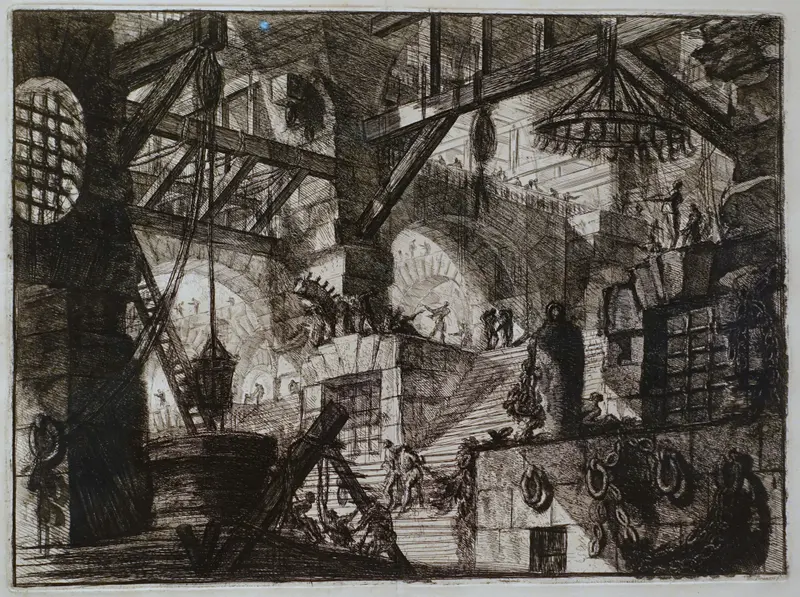
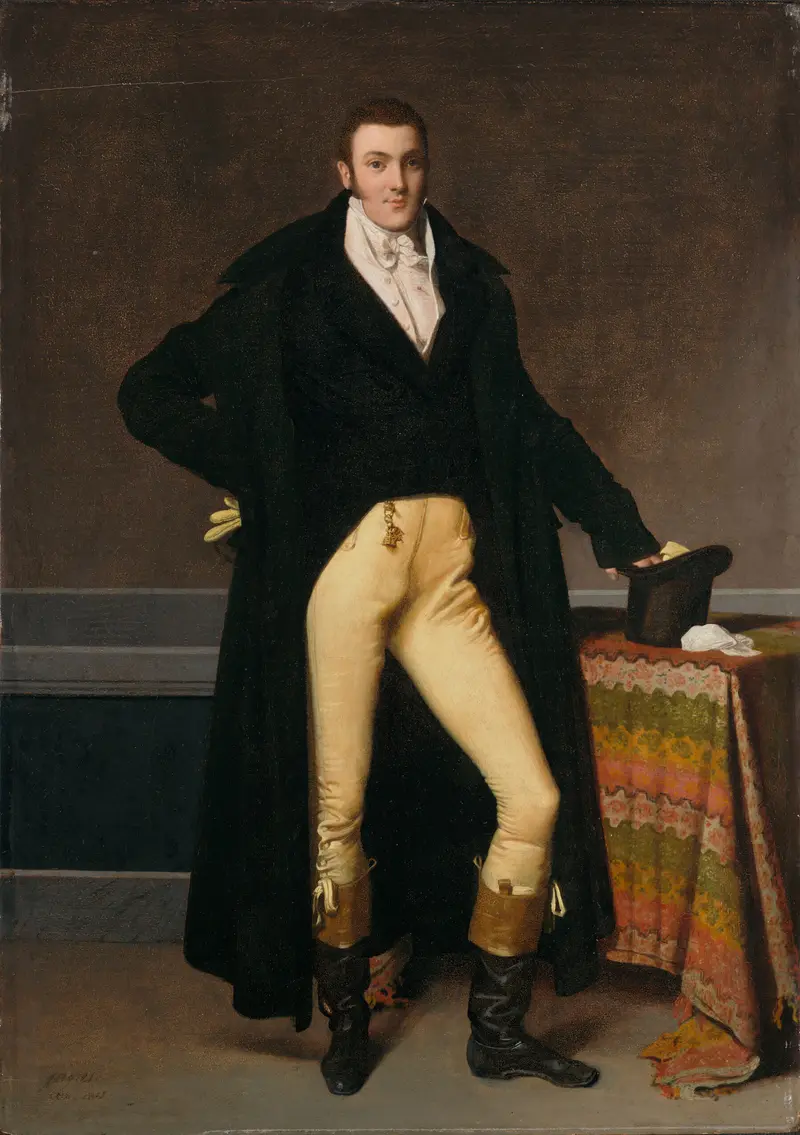
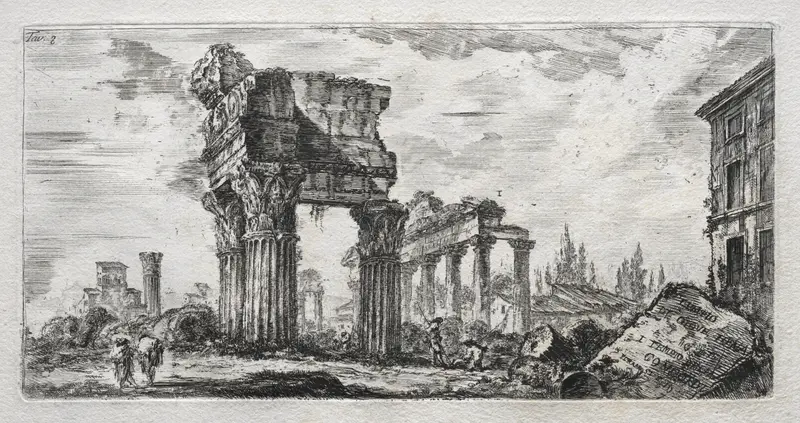
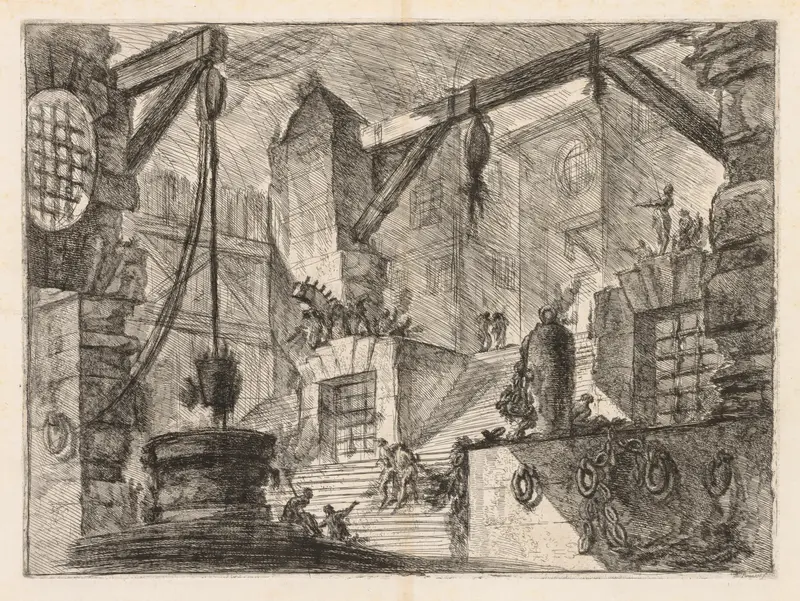
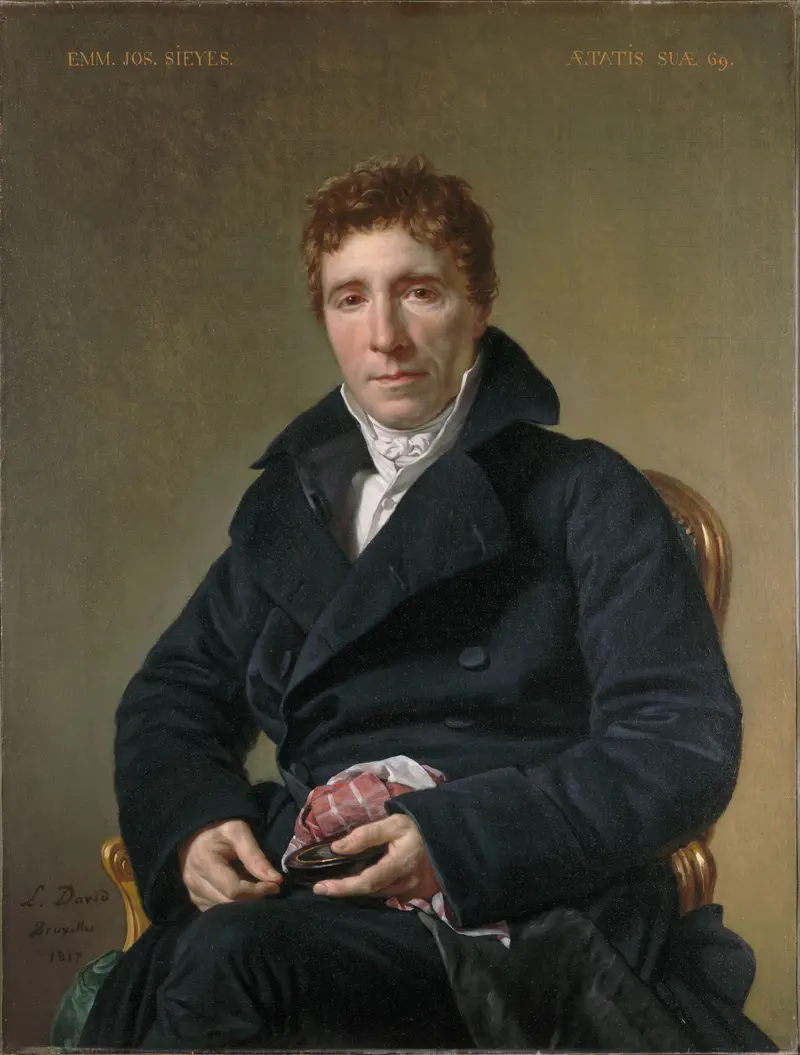
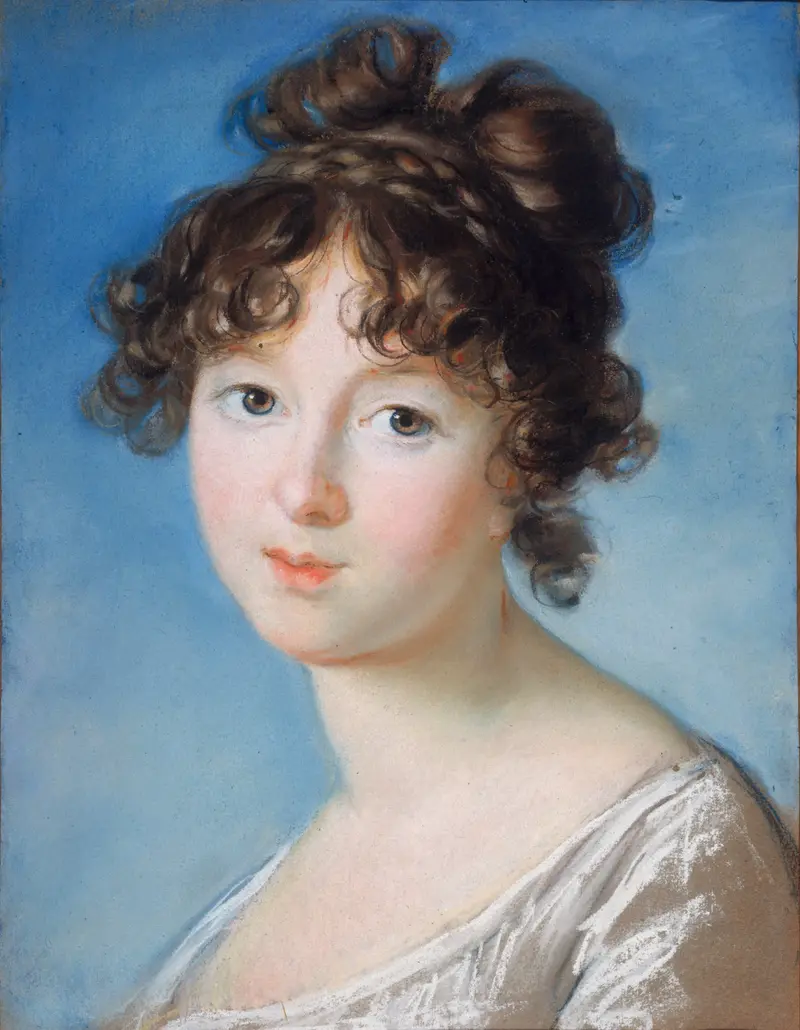
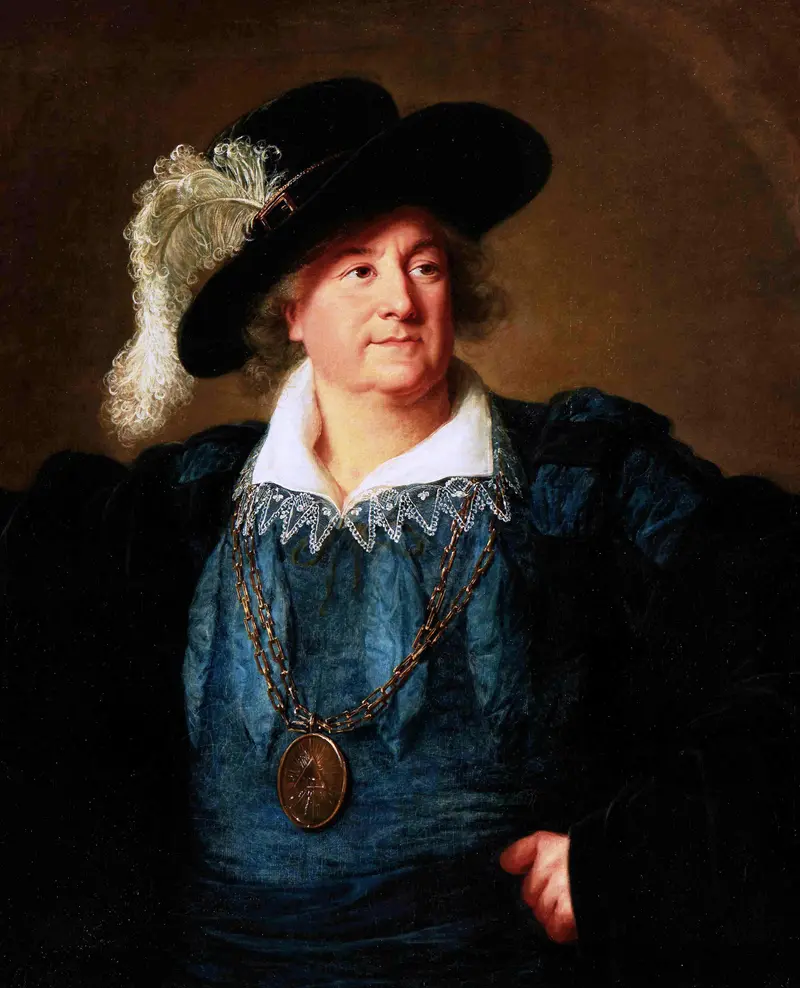
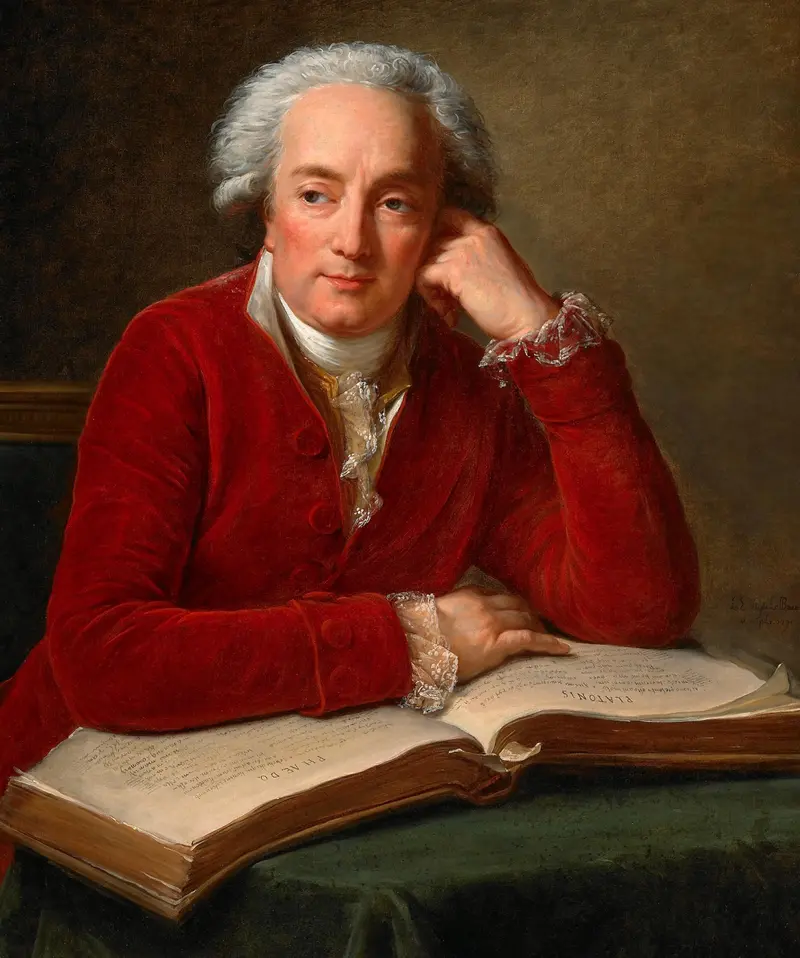
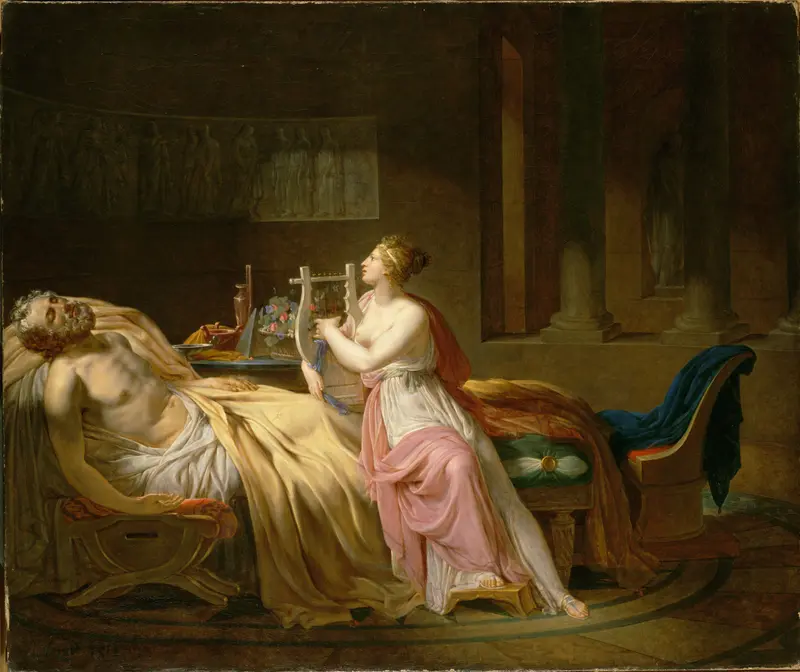
Famous Neoclassical paintings
The best-known Neoclassical paintings. Click any painting to see it up close and download it free.
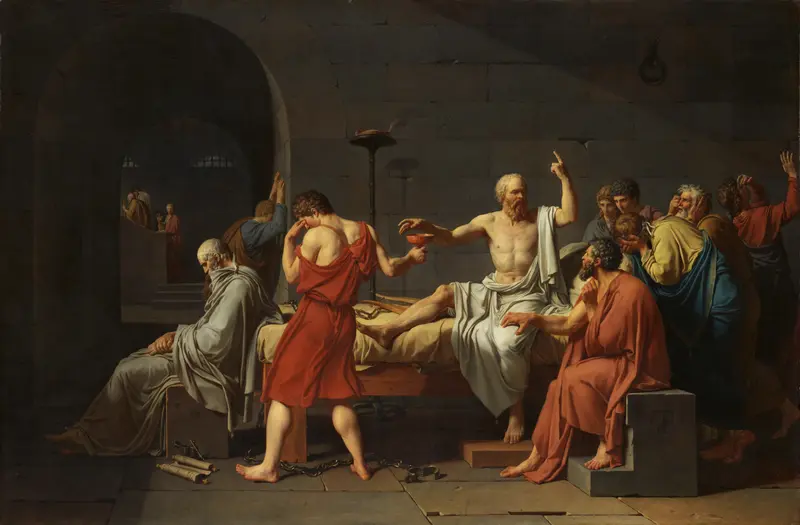 The Death of SocratesJacques-Louis David
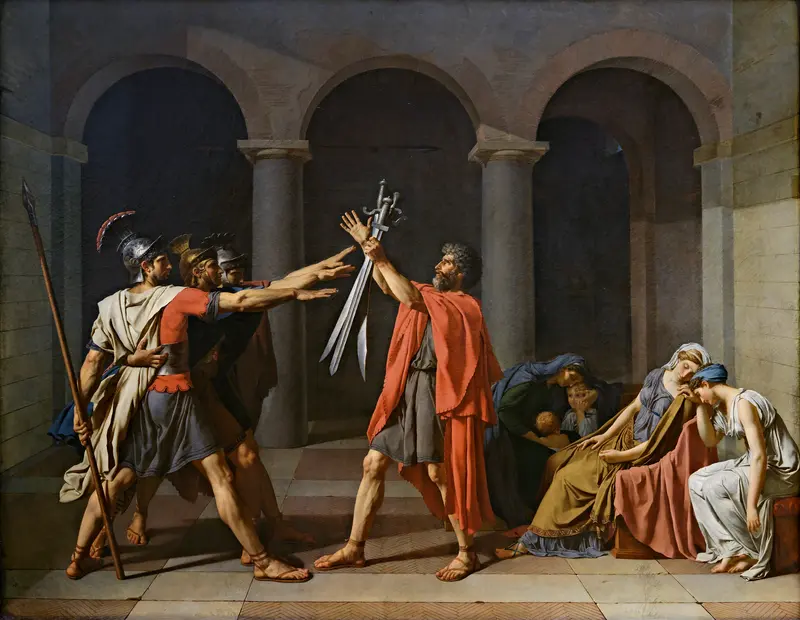 The Oath of the HoratiiJacques-Louis David
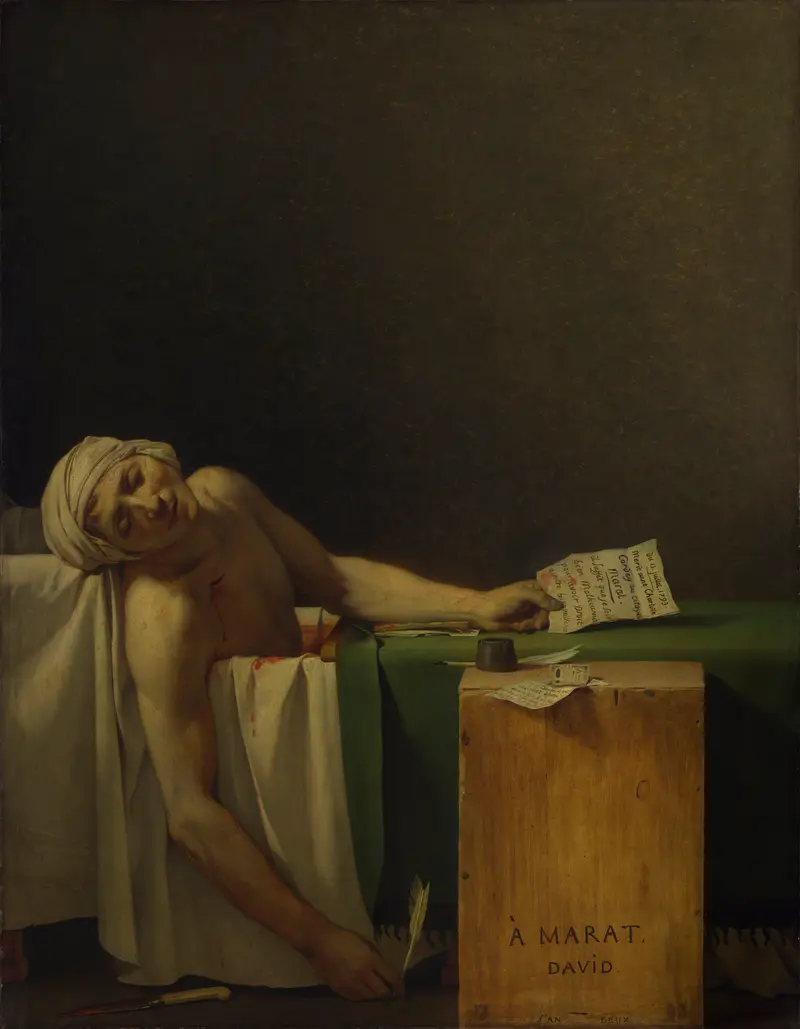 The Death of MaratJacques-Louis David
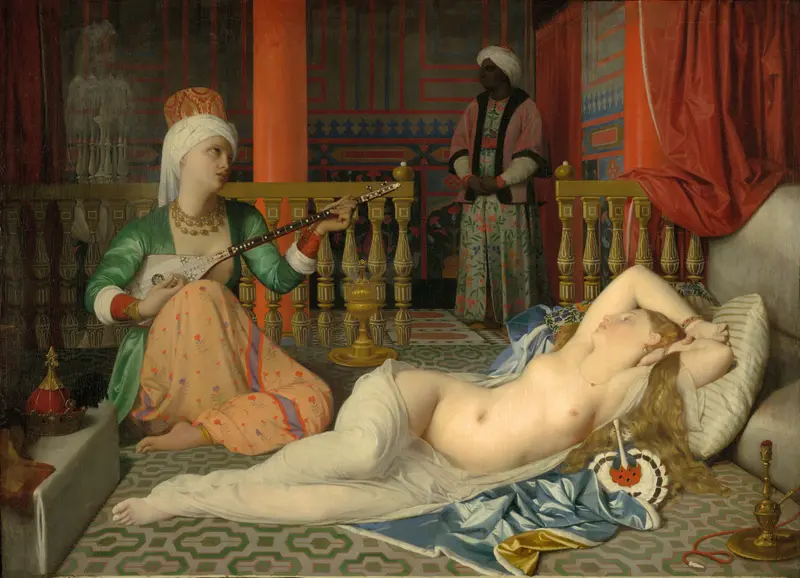
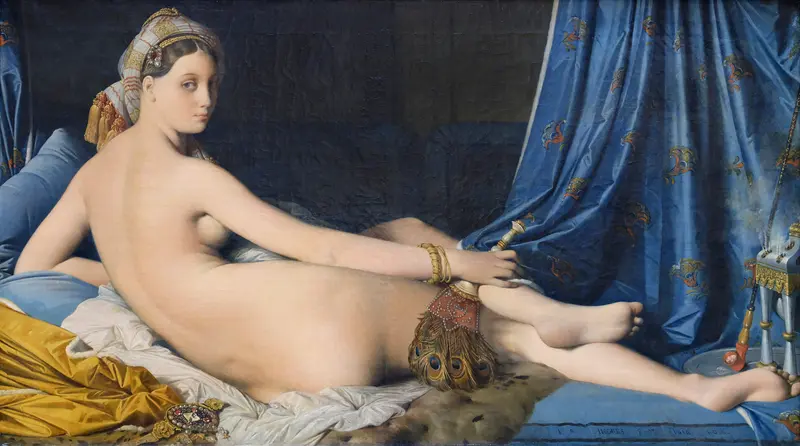 Grande OdalisqueJean-Auguste-Dominique Ingres
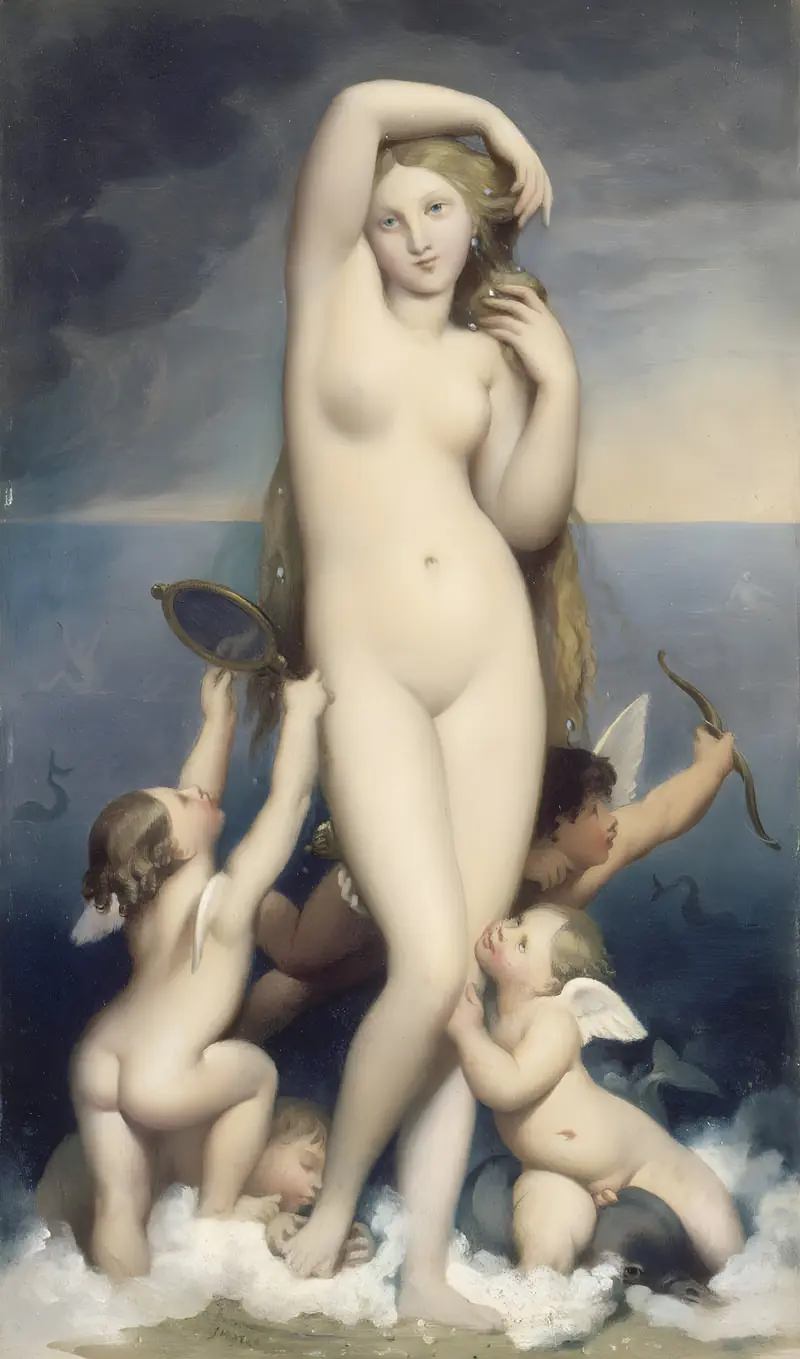
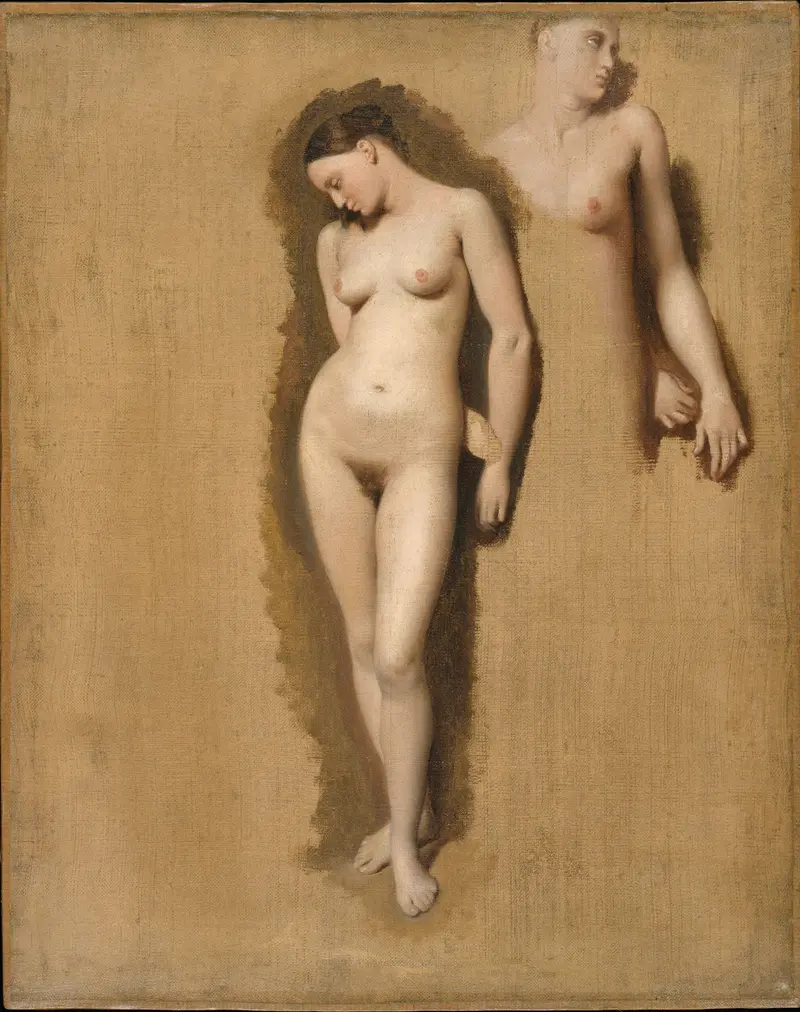
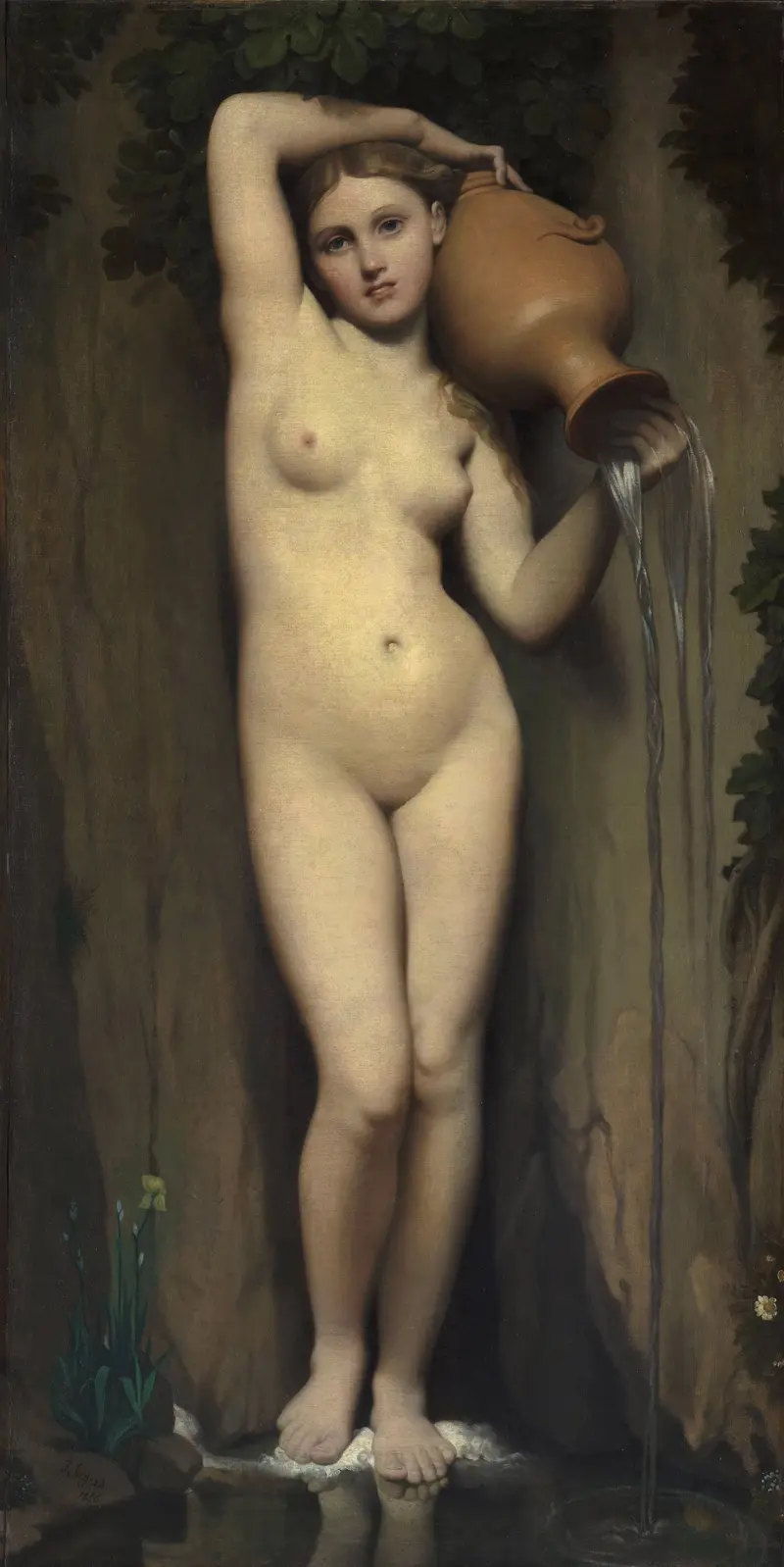 The SourceJean-Auguste-Dominique Ingres
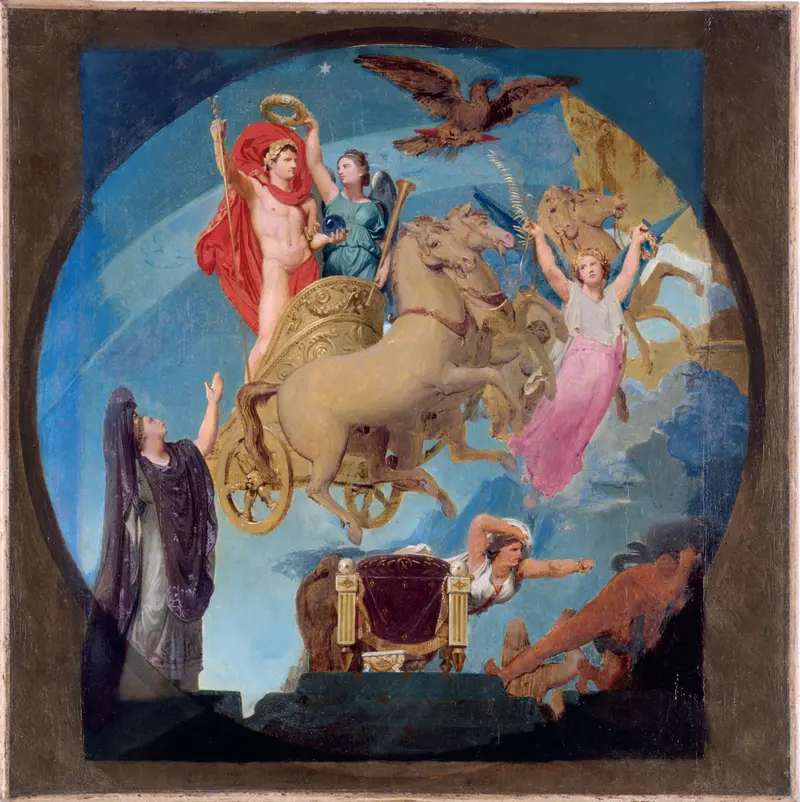
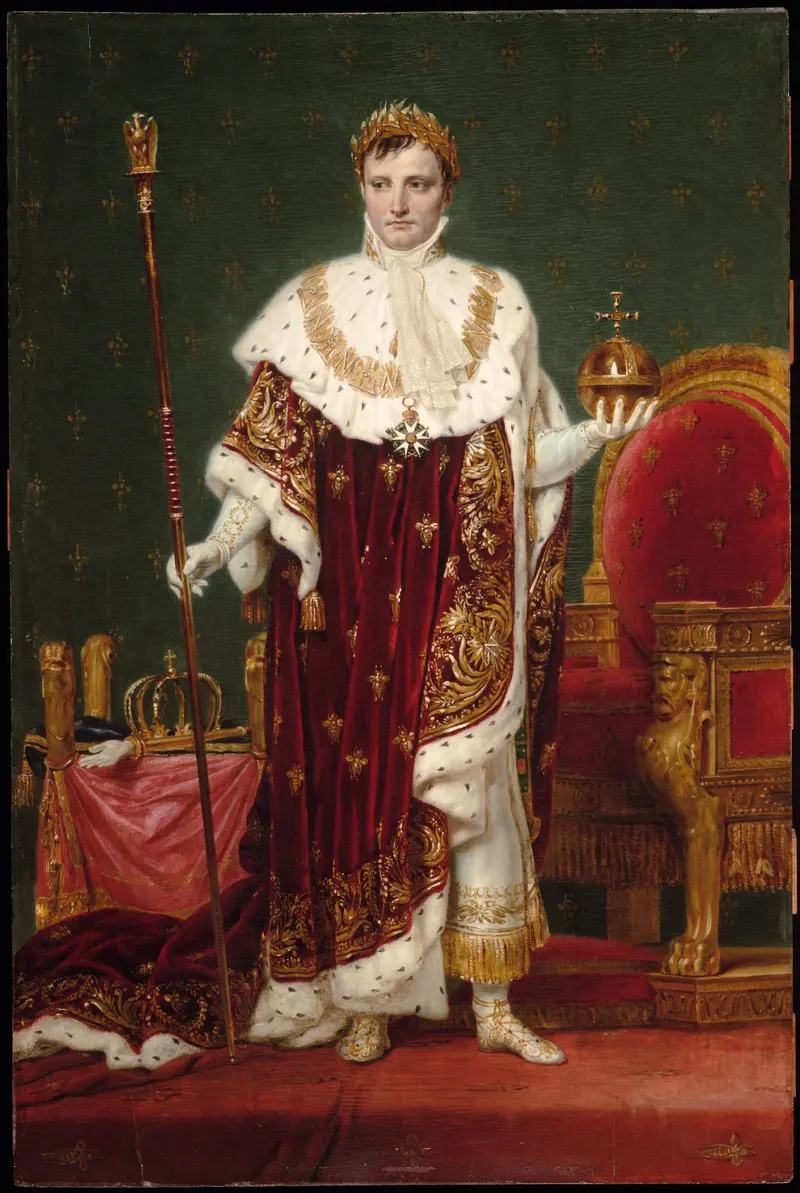
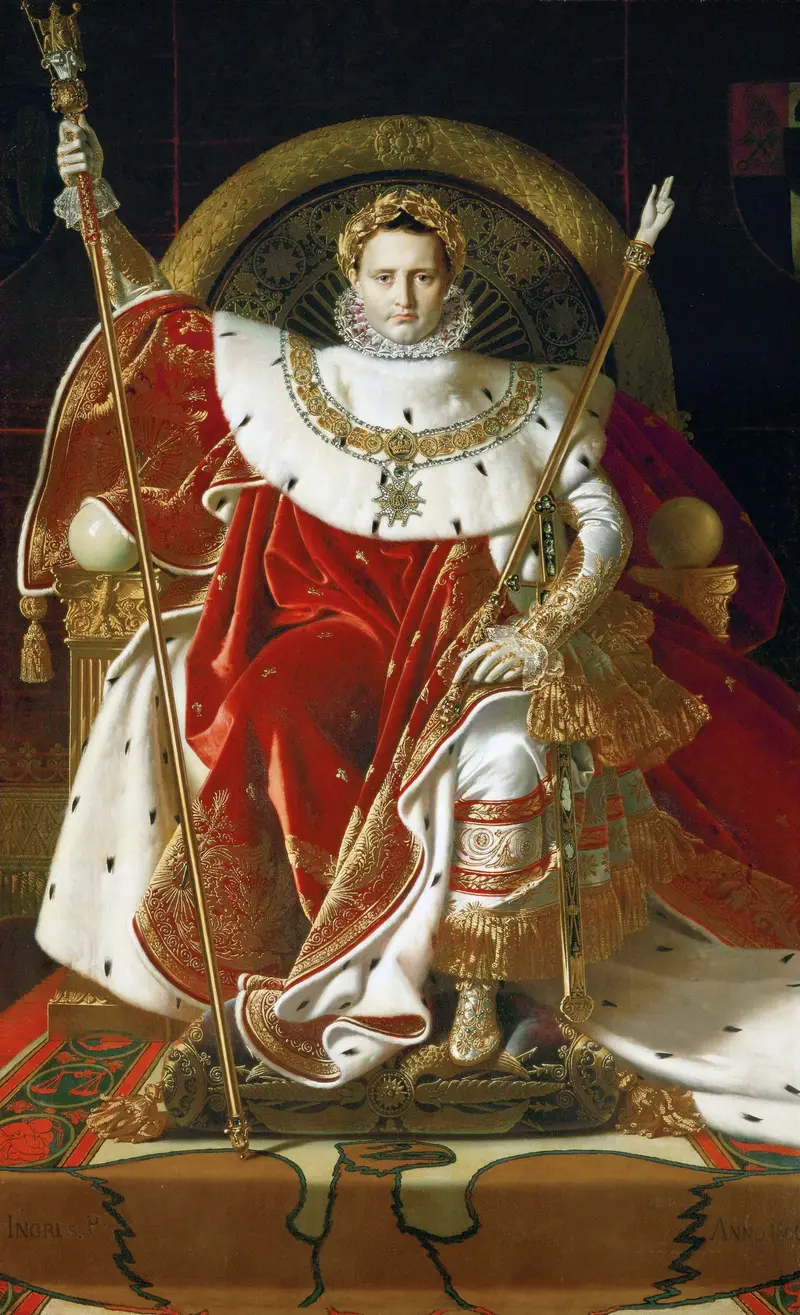 Napoleon I on His Imperial ThroneJean-Auguste-Dominique Ingres
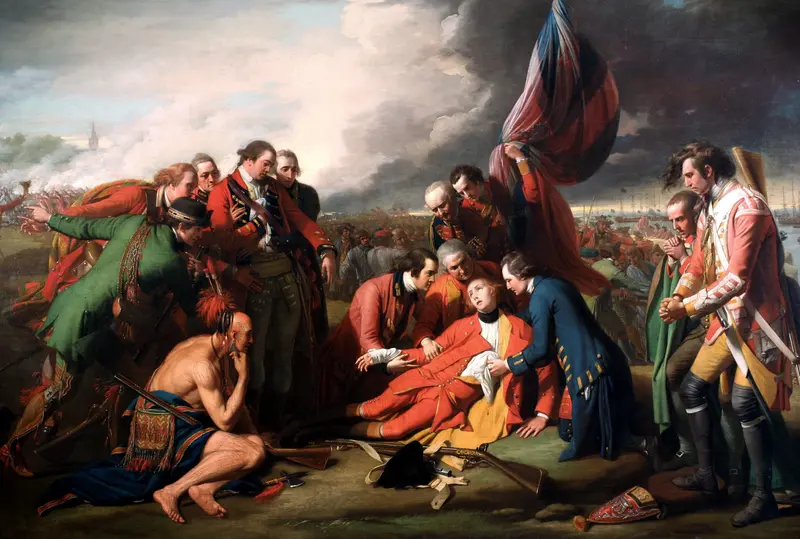 The Death of General WolfeBenjamin West
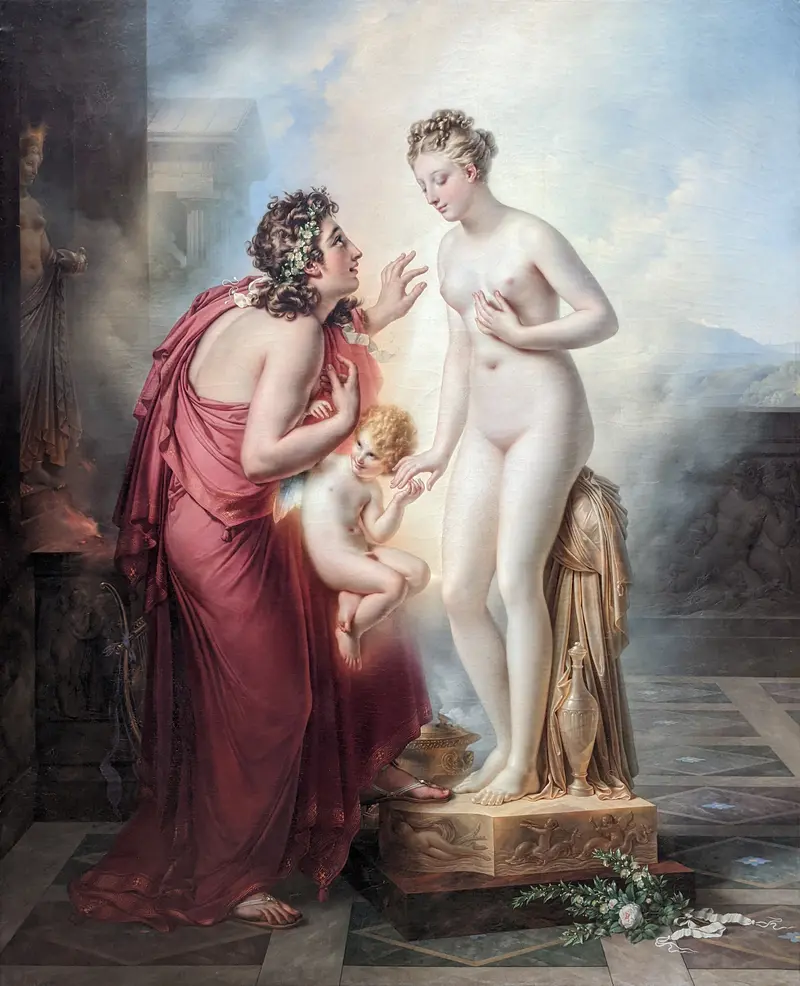
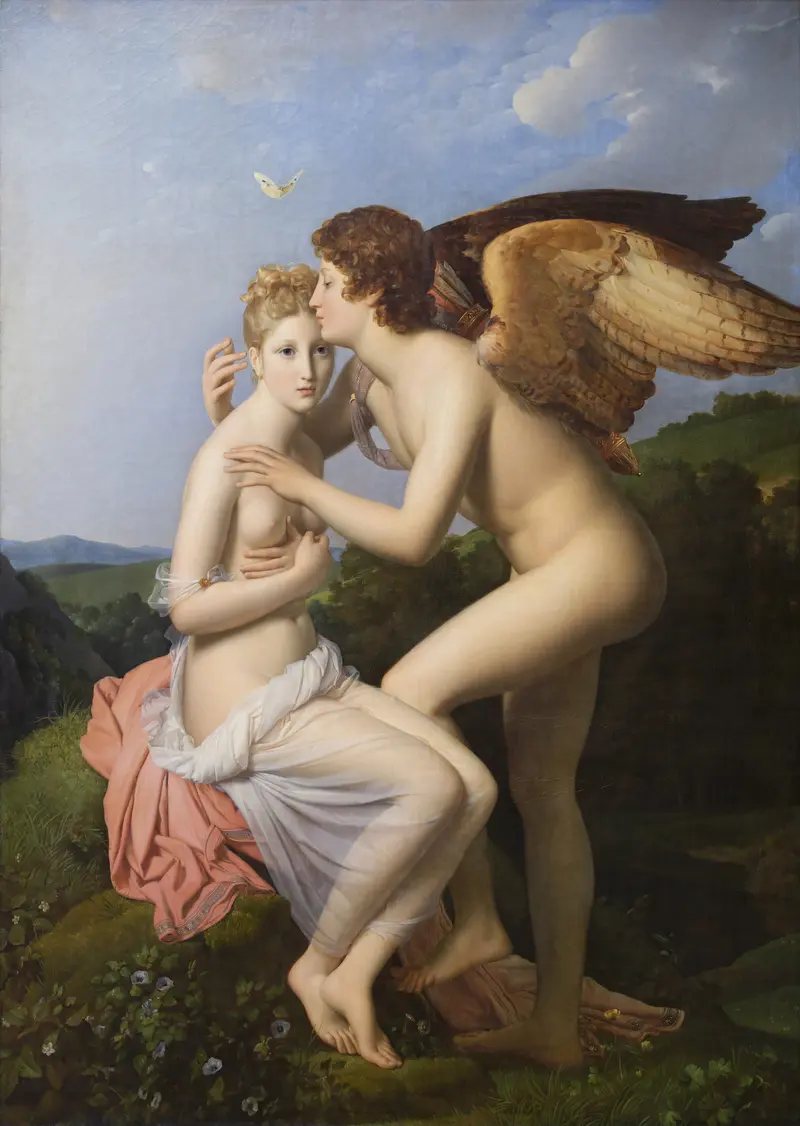 Cupid and PsycheFrançois Gérard
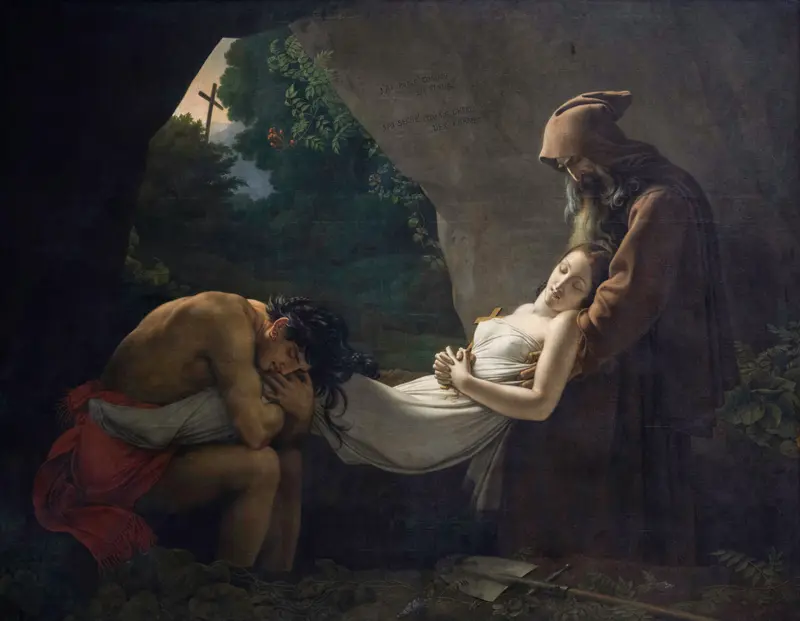 The Entombment of AtalaAnne-Louis Girodet
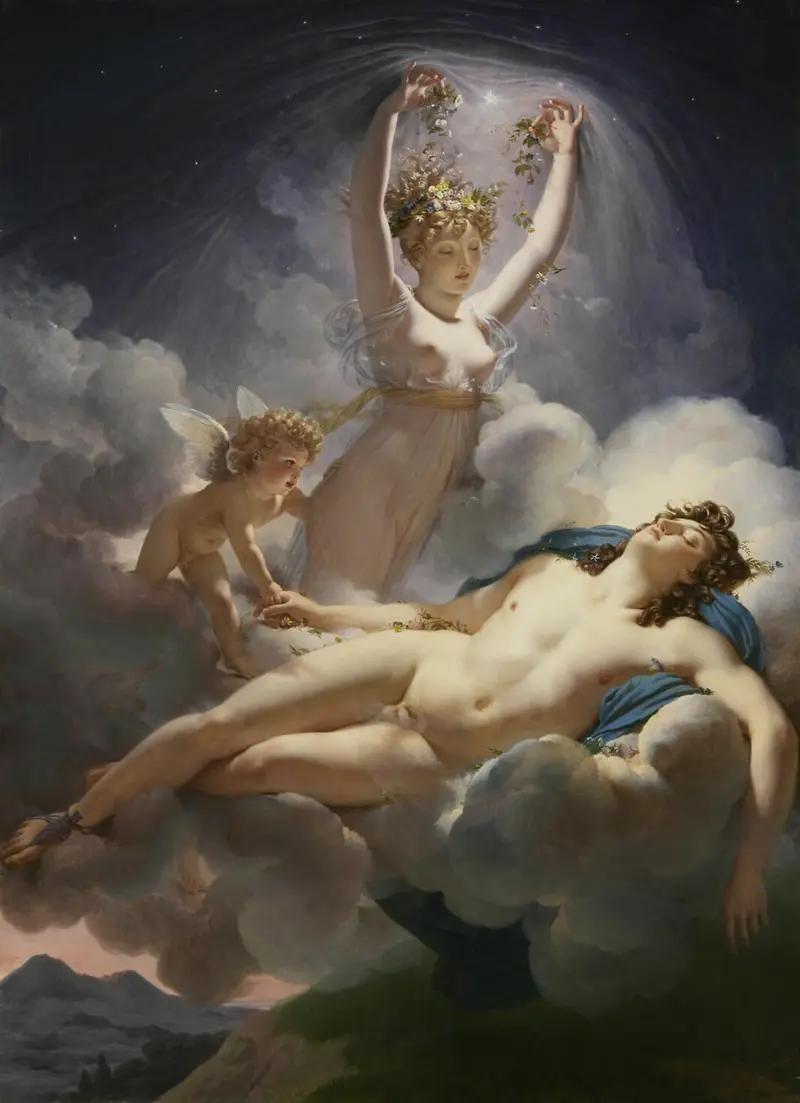 Aurora and CephalusPierre-Narcisse Guérin
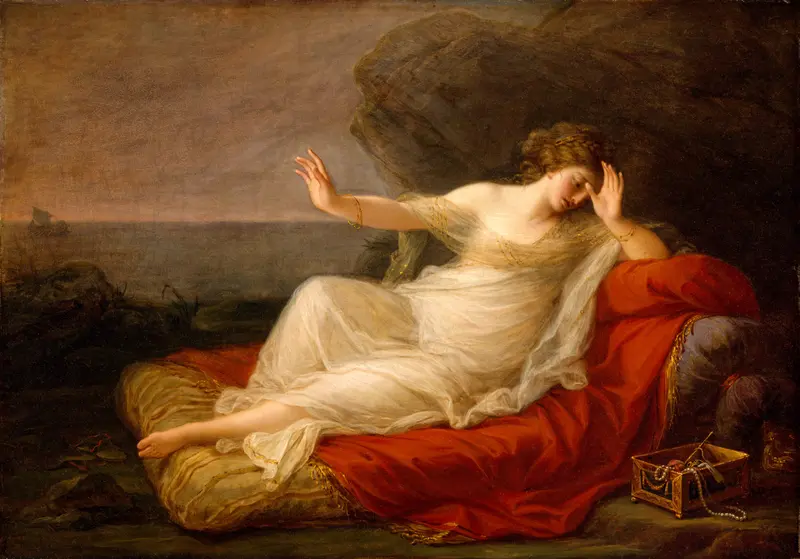 Ariadne Abandoned by TheseusAngelica Kauffmann
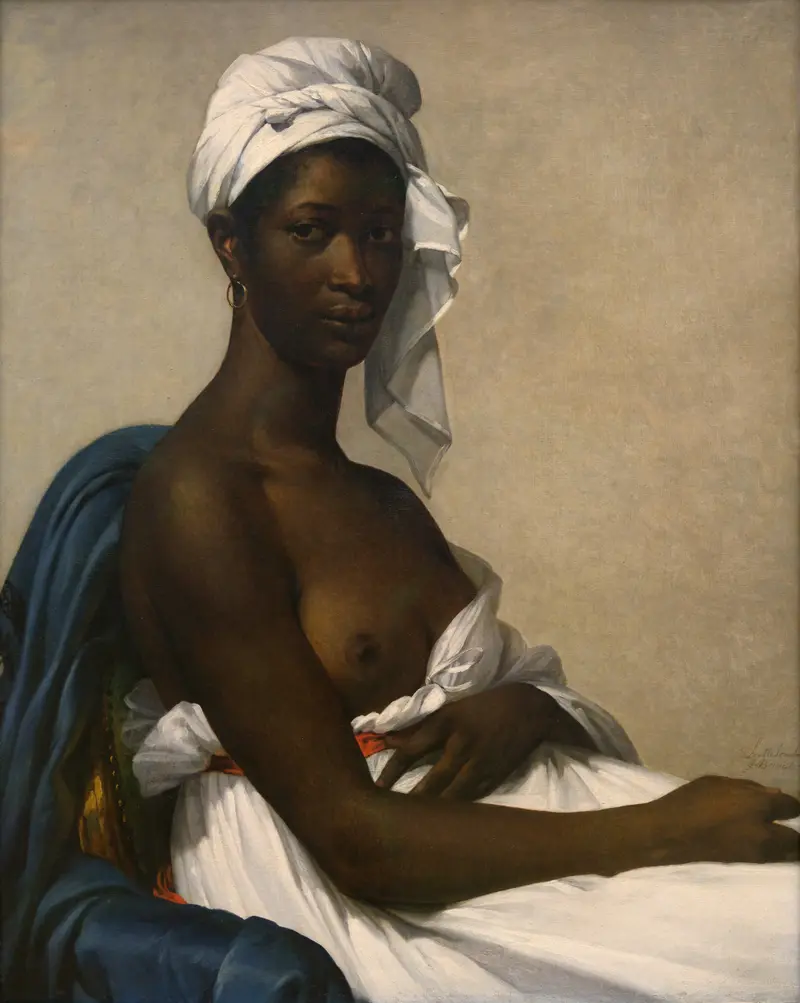 Portrait of MadeleineMarie-Guillemine Benoist
Famous Neoclassical artists
Eight Neoclassical painters at the heart of the movement, from David and Ingres to Angelica Kauffmann and Adélaïde Labille-Guiard. Each link opens all their paintings.
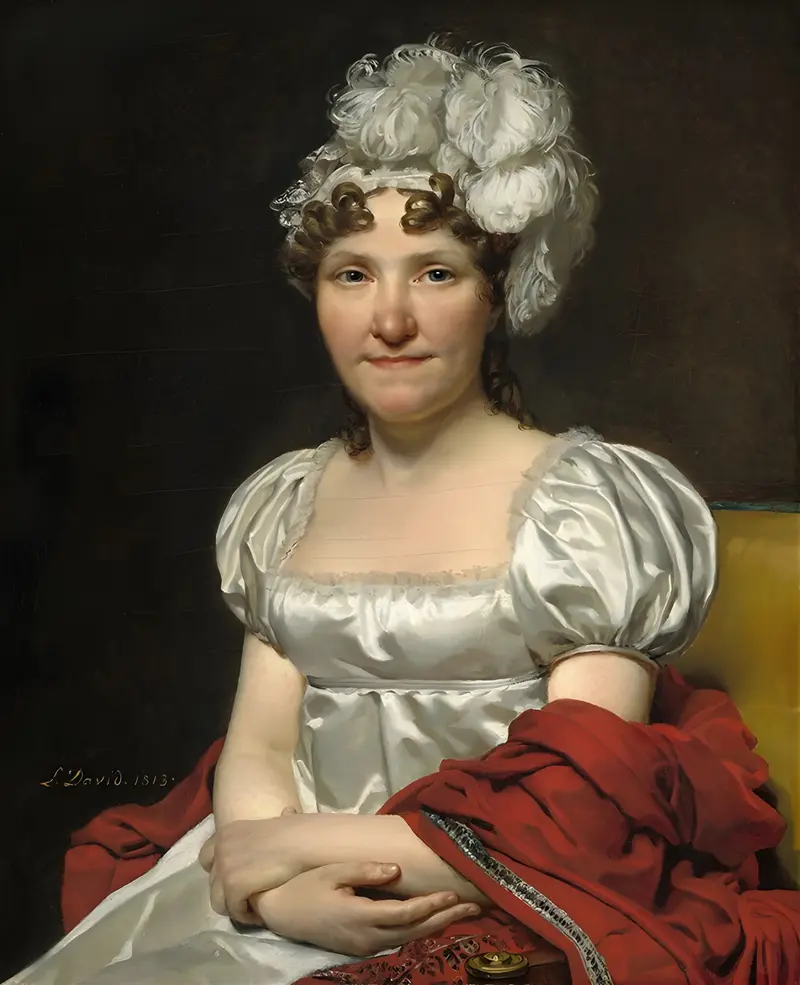 Jacques-Louis David1748–1825. The leading painter in France of the Neoclassical movement; he took part in the Revolution, glorified Napoleon in a series of portraits and died in exile in Brussels.
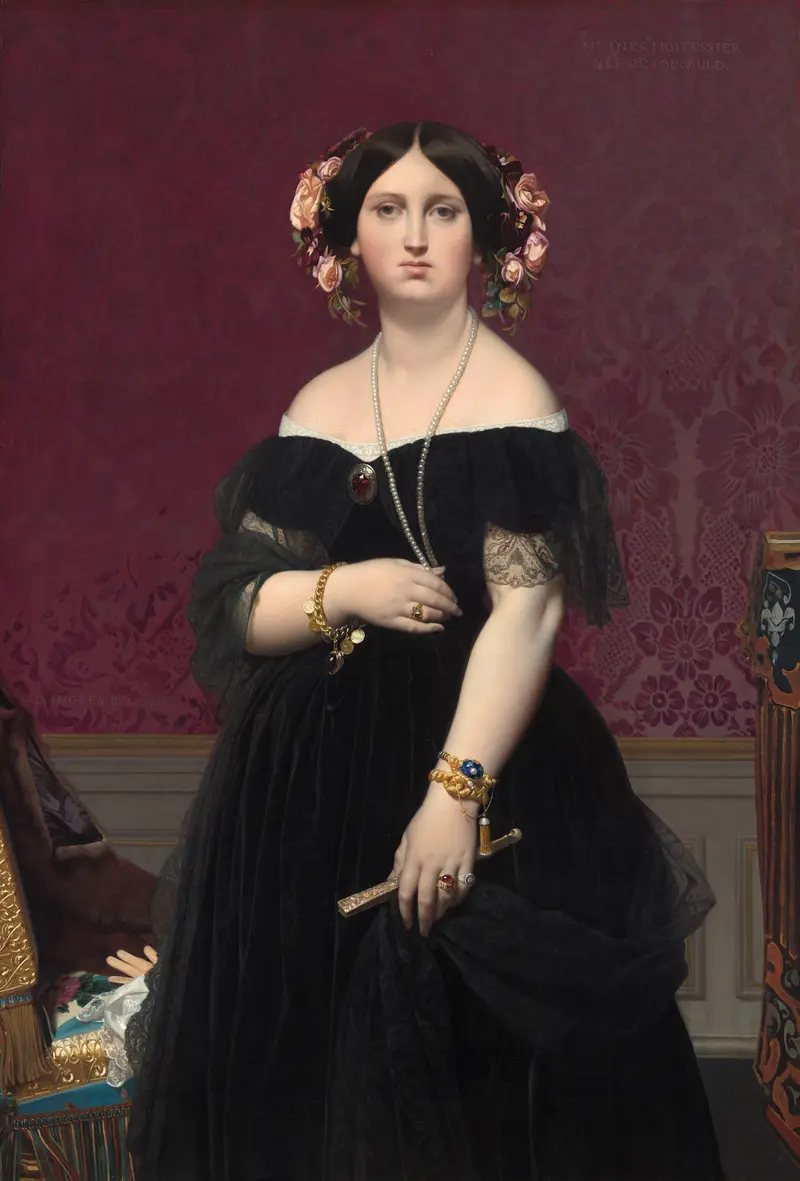 Jean-Auguste-Dominique Ingres1780–1867. David's pupil, who won a scholarship to Rome in 1801 and became the defender of a rigid classicism against Delacroix's Romanticism; today he is most famous for his portraits.
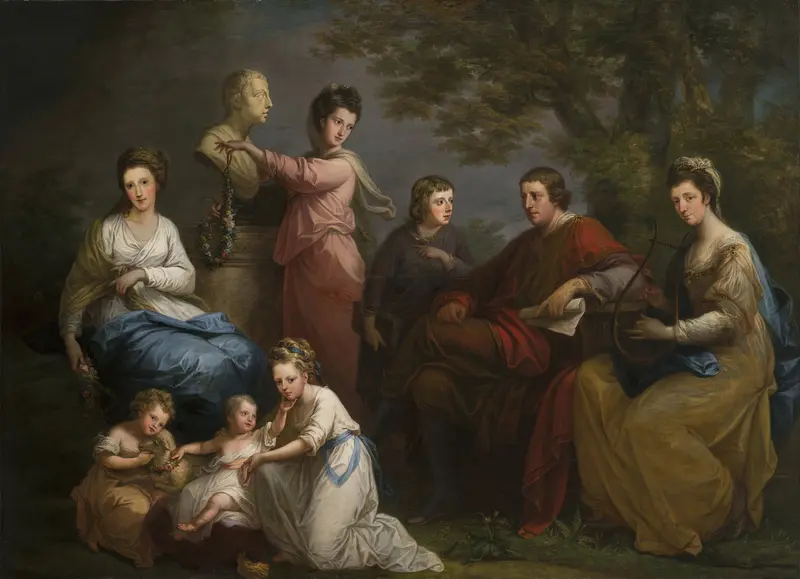 Angelica Kauffmann1741–1807. Swiss-born painter of history scenes and portraits and a member of the Royal Academy in London; she died in Rome.
 Anton Raphael Mengs1728–1779. Born in Bohemia, he spent much of his life in Rome, where the writer Winckelmann helped him form his Neoclassical style; he worked for Charles III in Madrid from 1761 to 1771.
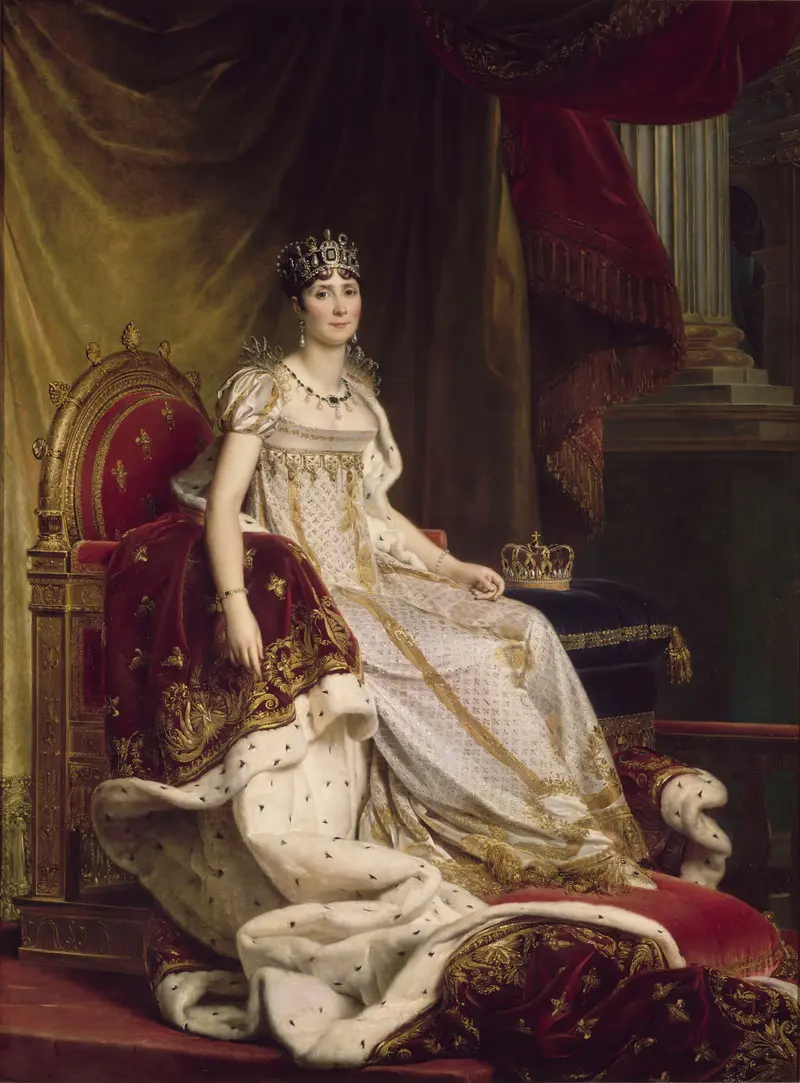 François Gérard1770–1837. Born in Rome and trained by David; his Cupid and Psyche was shown at the Salon of 1798, and he went on to paint Napoleon, the Empress Joséphine and Talleyrand.
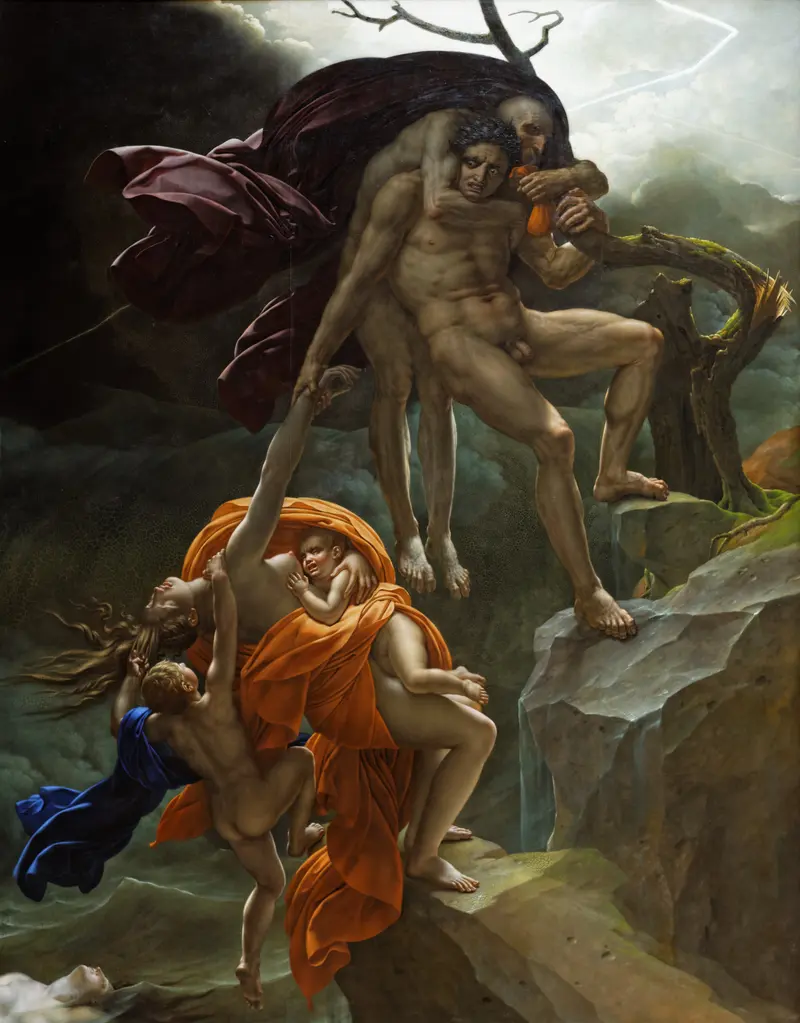
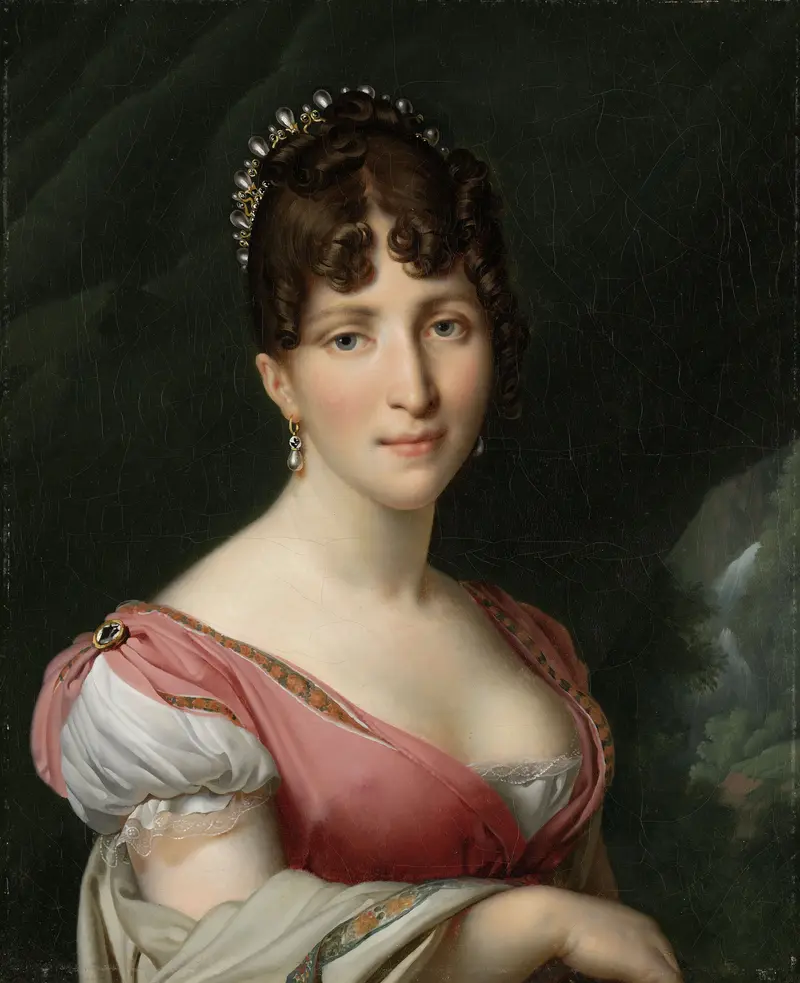 Anne-Louis Girodet1767–1824. A pupil of David; the Louvre hangs his Entombment of Atala, Scene of the Flood and Pygmalion and Galatea in its Neoclassicism gallery.
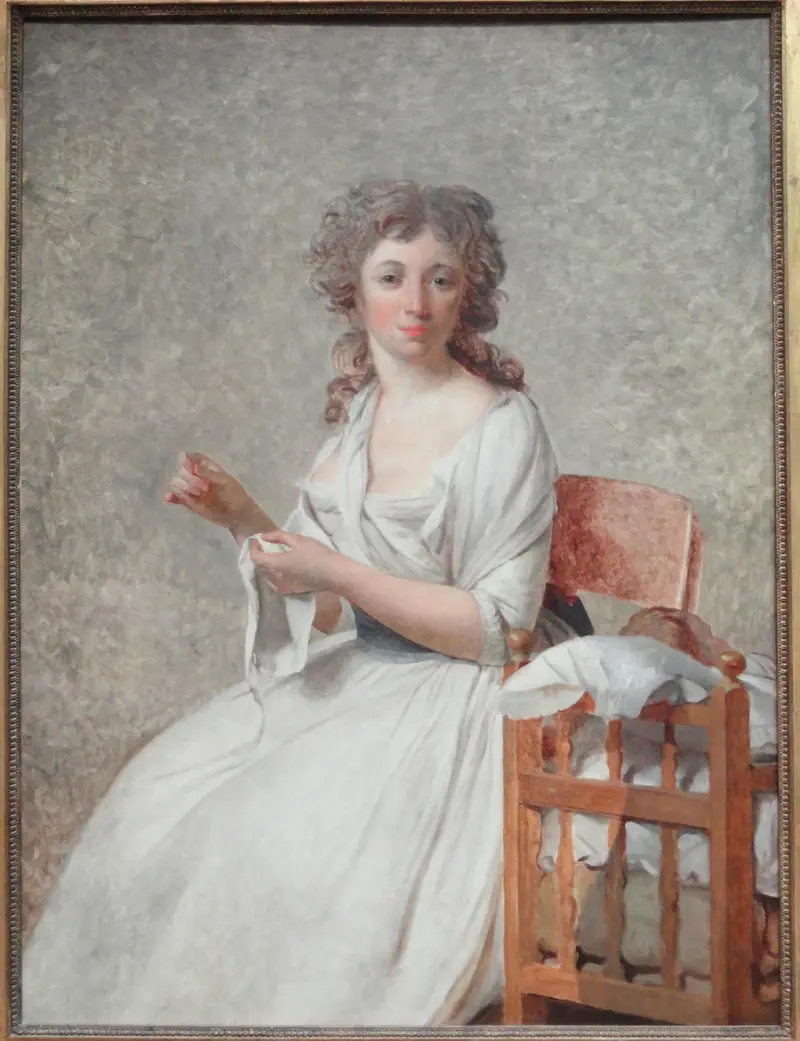
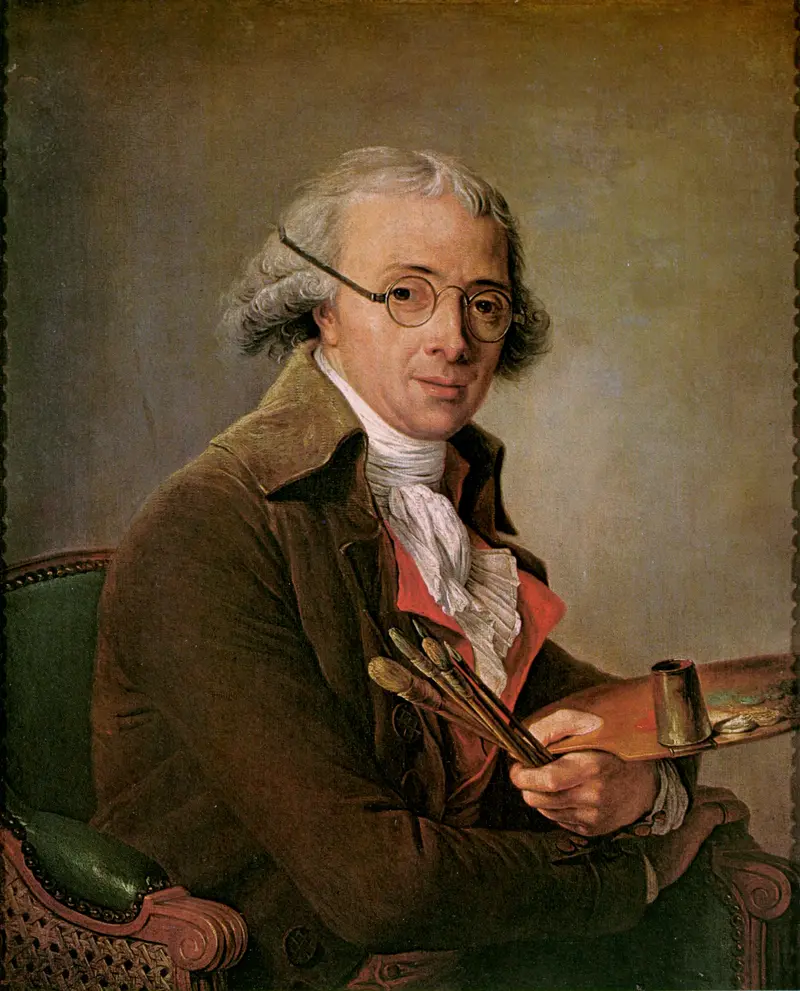 Adélaïde Labille-Guiard1749–1803. Paris portrait painter and member of the Royal Academy of Painting and Sculpture, who trained women painters; she studied with François-André Vincent, whom she painted here.
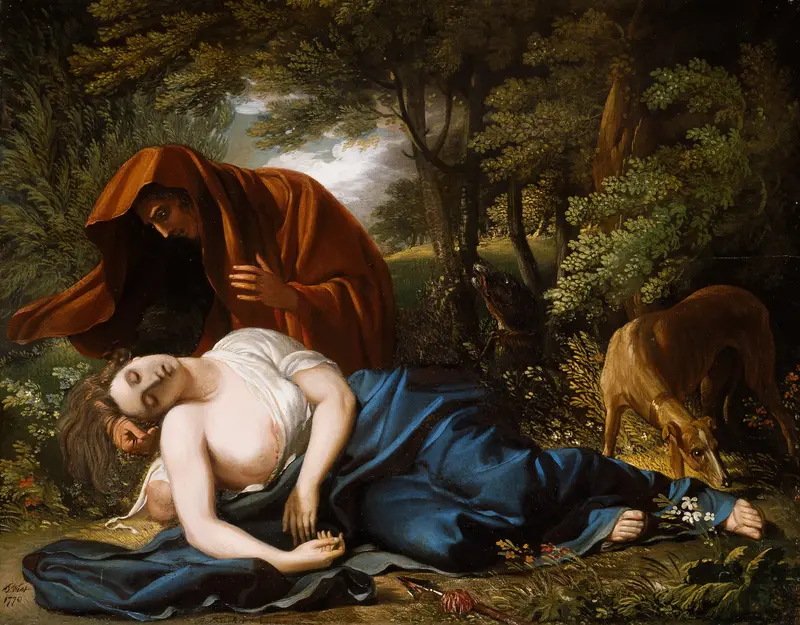 Benjamin West1738–1820. American-born painter who became President of the Royal Academy in London; Tate names him among Britain's Neoclassical painters.
Jacques-Louis David paintings
The National Gallery in London calls Jacques-Louis David the leading painter in France of the Neoclassical movement. He took part in the Revolution, and his images of Napoleon as general, consul and emperor helped to glorify the French leader.
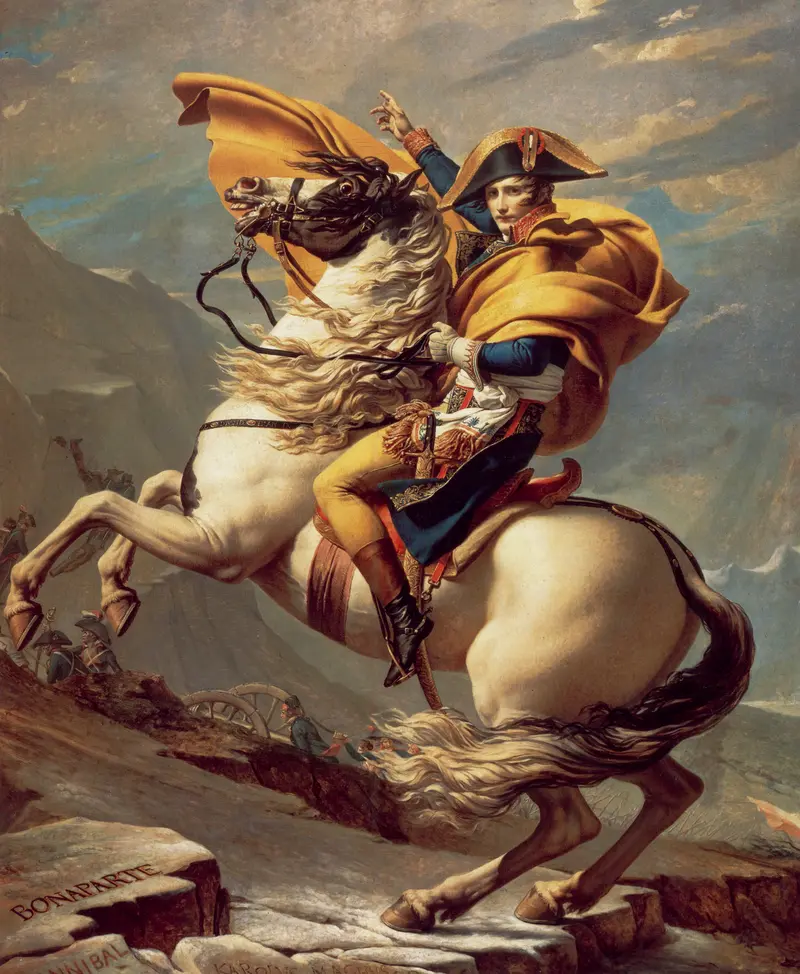 Napoleon Crossing the AlpsJacques-Louis David
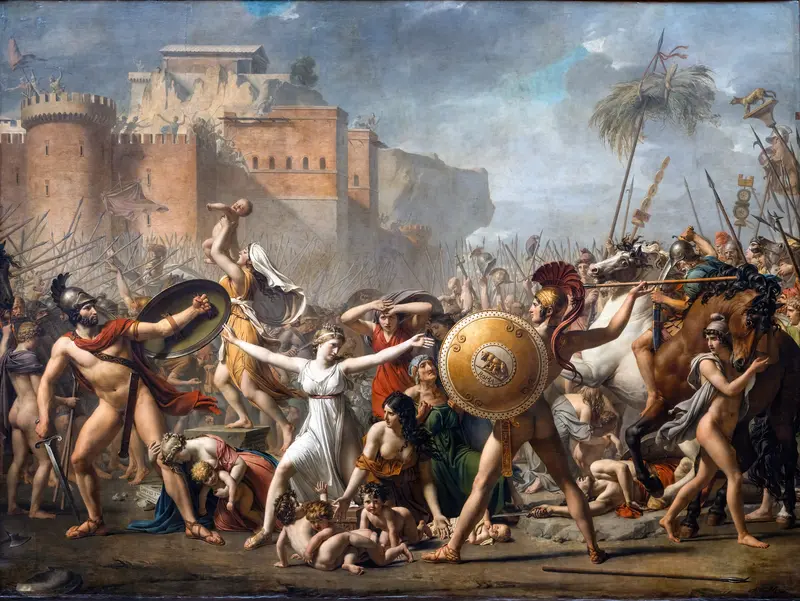 The Intervention of the Sabine WomenJacques-Louis David
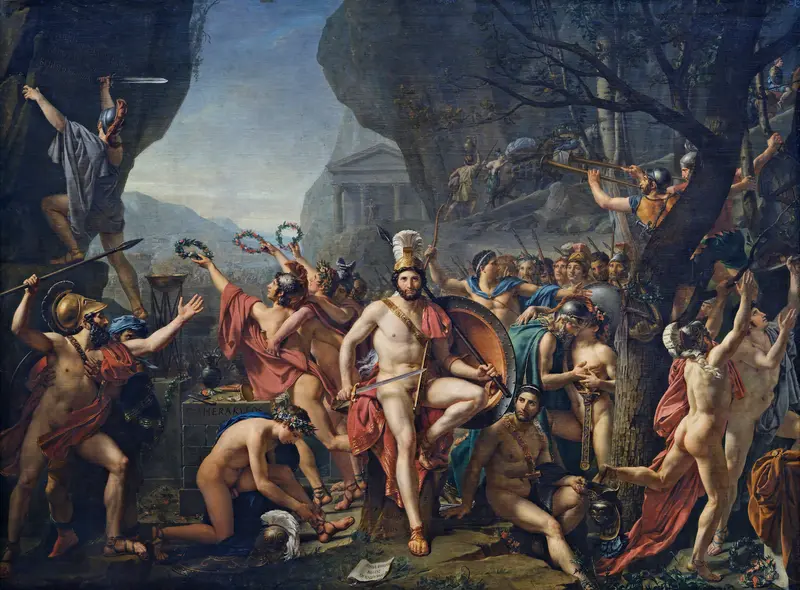 Leonidas at ThermopylaeJacques-Louis David
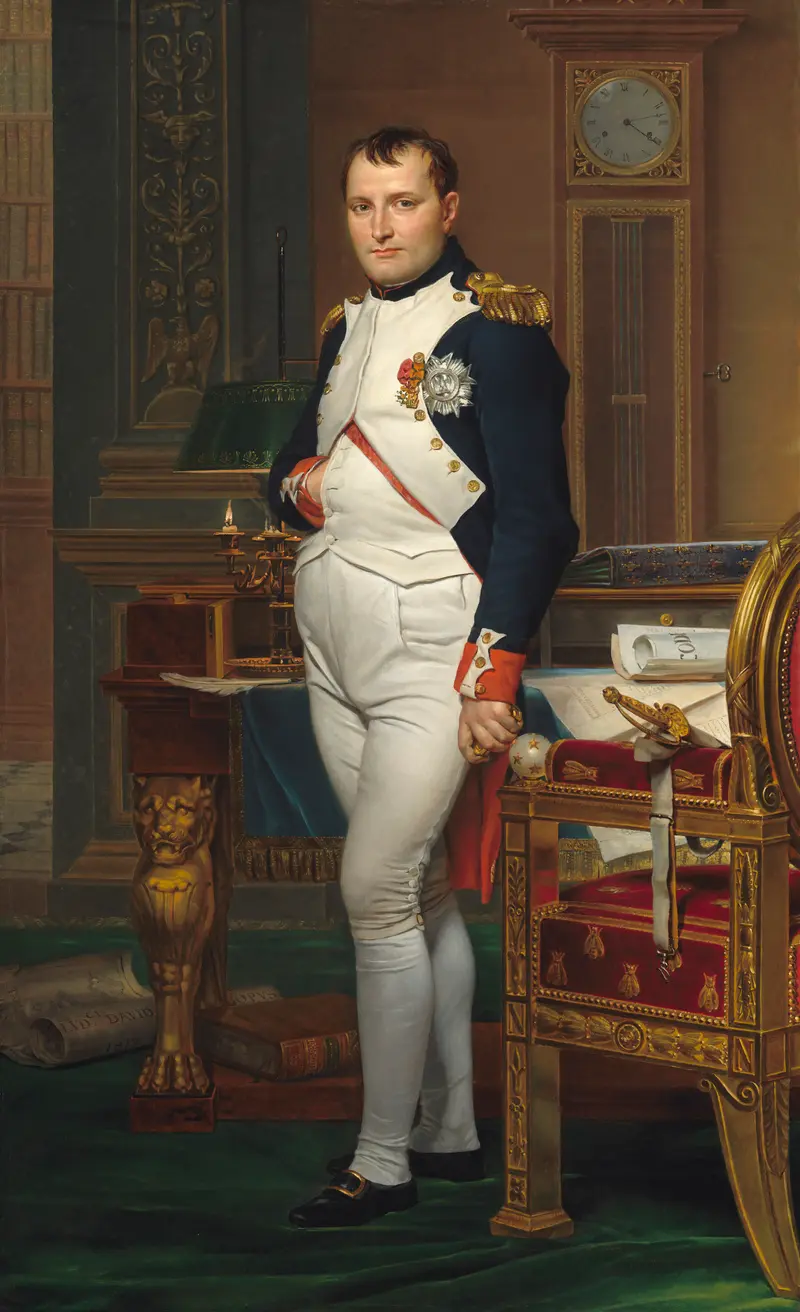 The Emperor Napoleon in His Study at the TuileriesJacques-Louis David
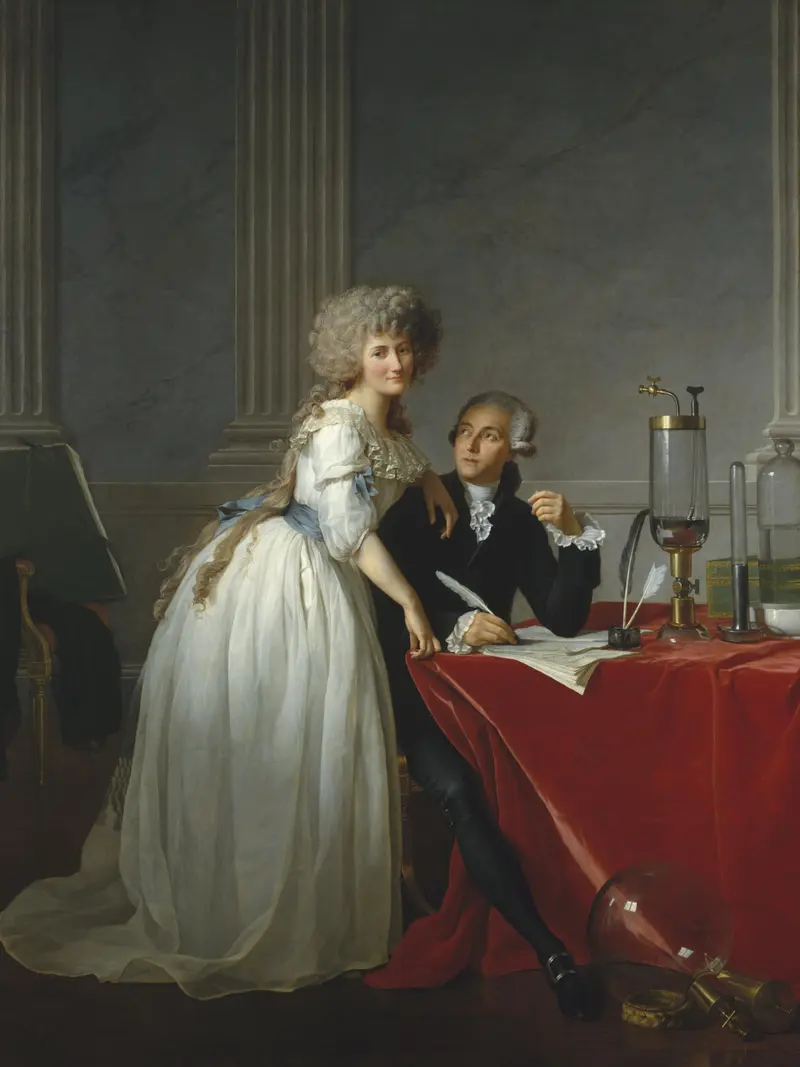 Antoine Laurent Lavoisier and Marie Anne LavoisierJacques-Louis David
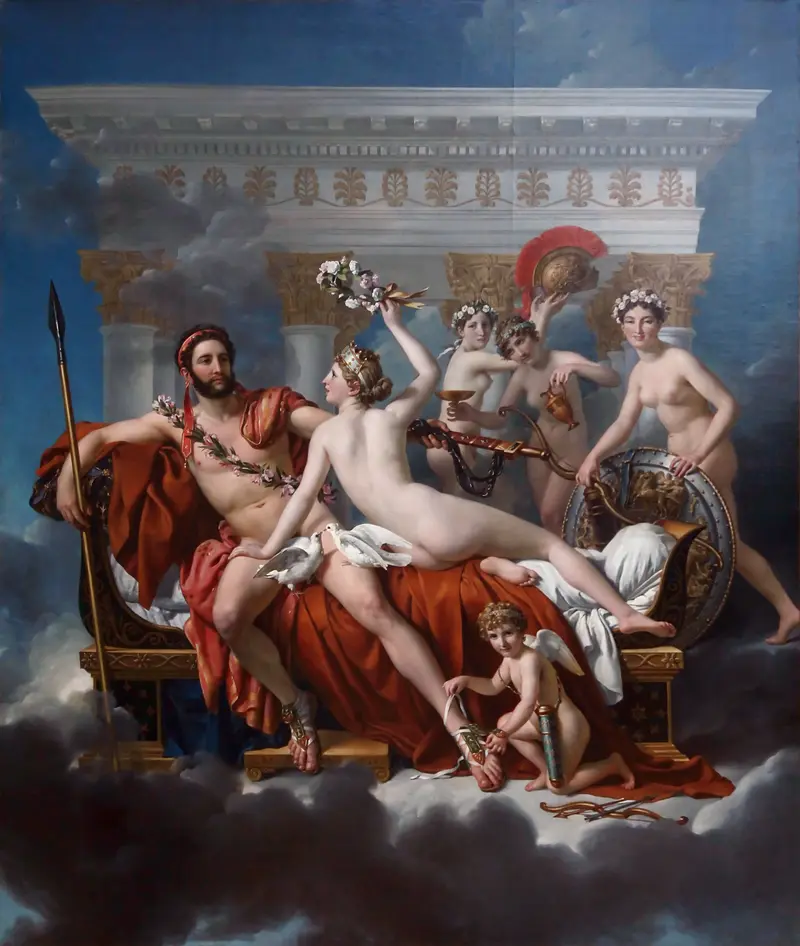 Mars Being Disarmed by VenusJacques-Louis David
Neoclassical portraits
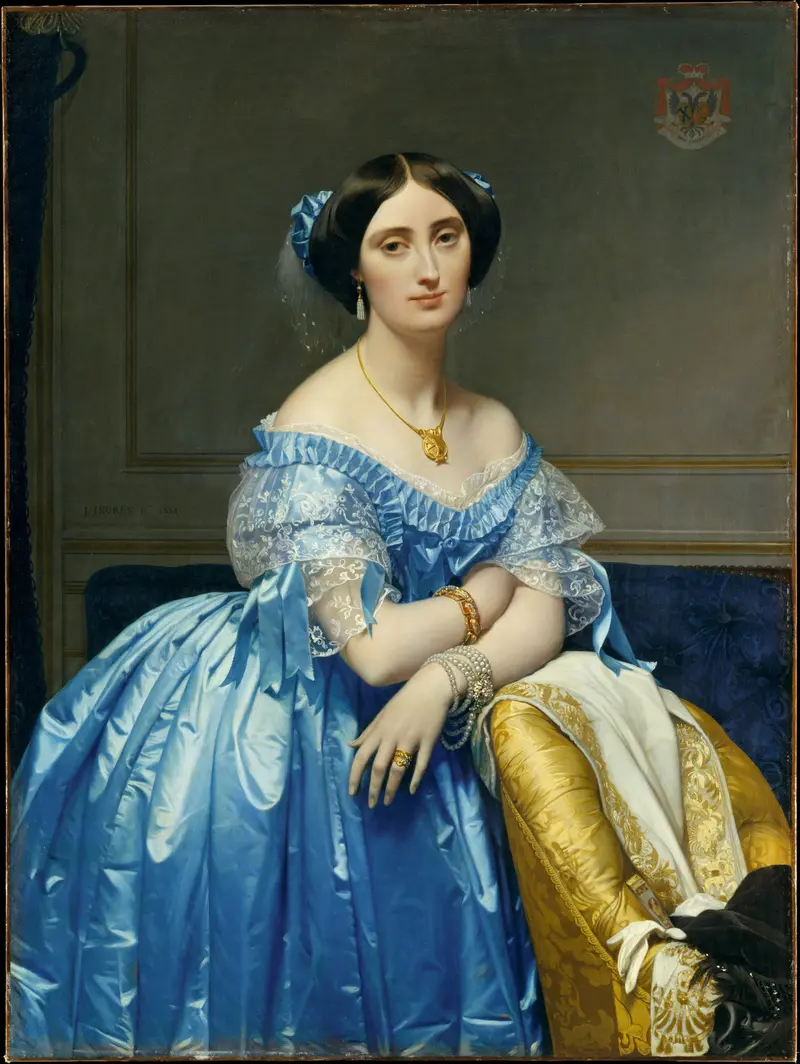
Ingres thought portraits less important than history painting, yet he is now most famous for portraits such as Madame Moitessier, the National Gallery in London says. For her pose he borrowed a goddess from a Roman wall painting found at Herculaneum.
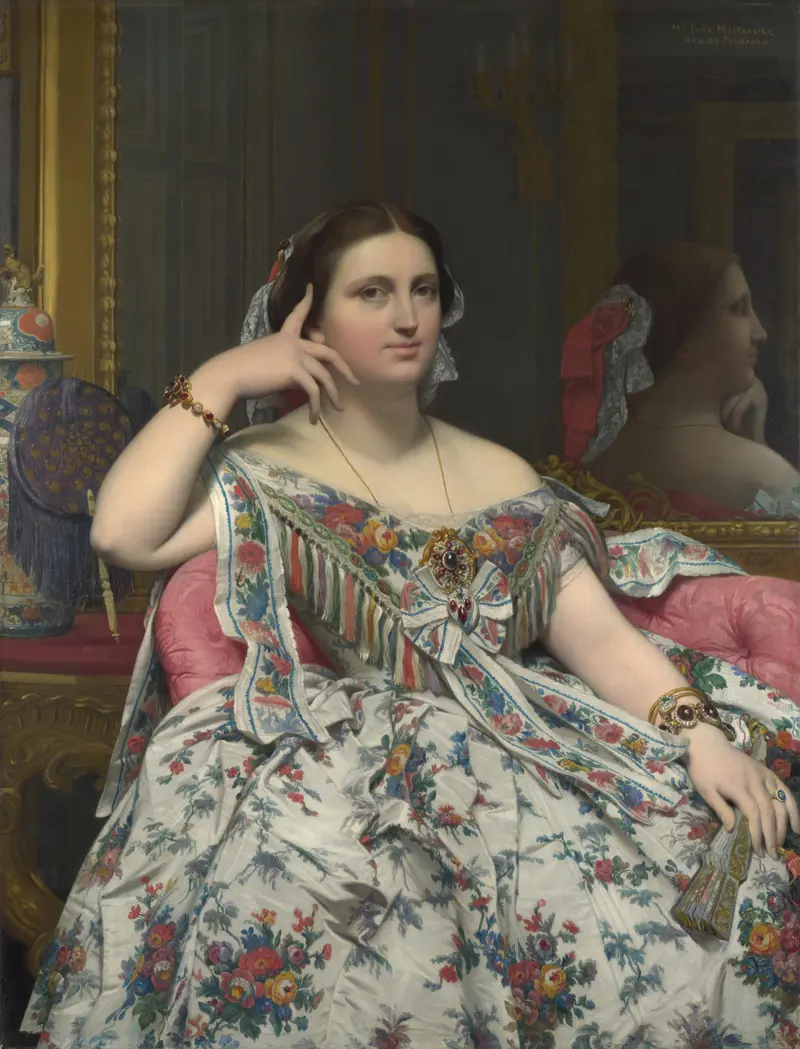 Madame MoitessierJean-Auguste-Dominique Ingres
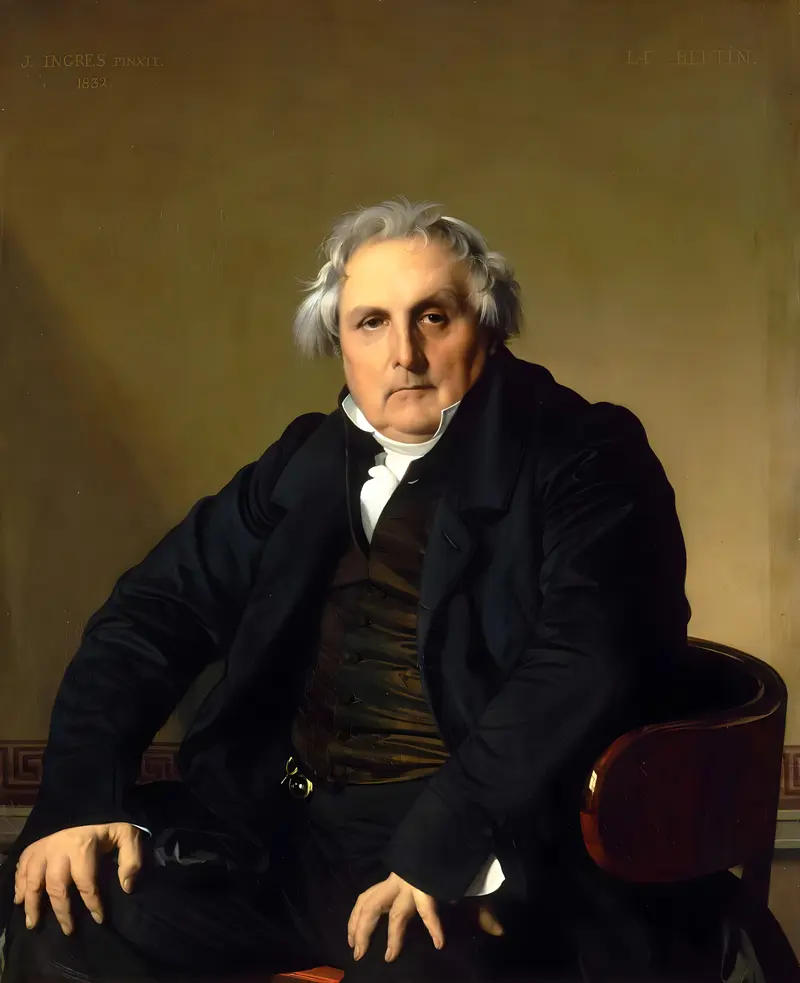 Portrait of Monsieur BertinJean-Auguste-Dominique Ingres
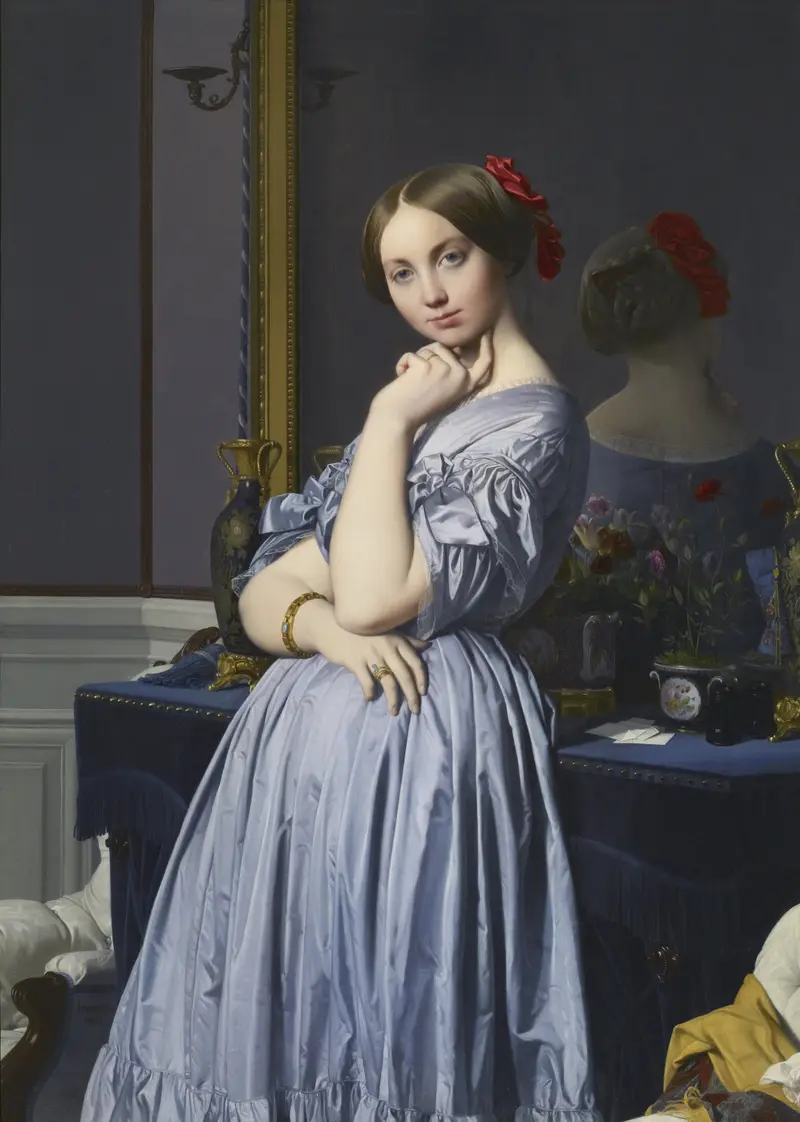 Comtesse d'HaussonvilleJean-Auguste-Dominique Ingres
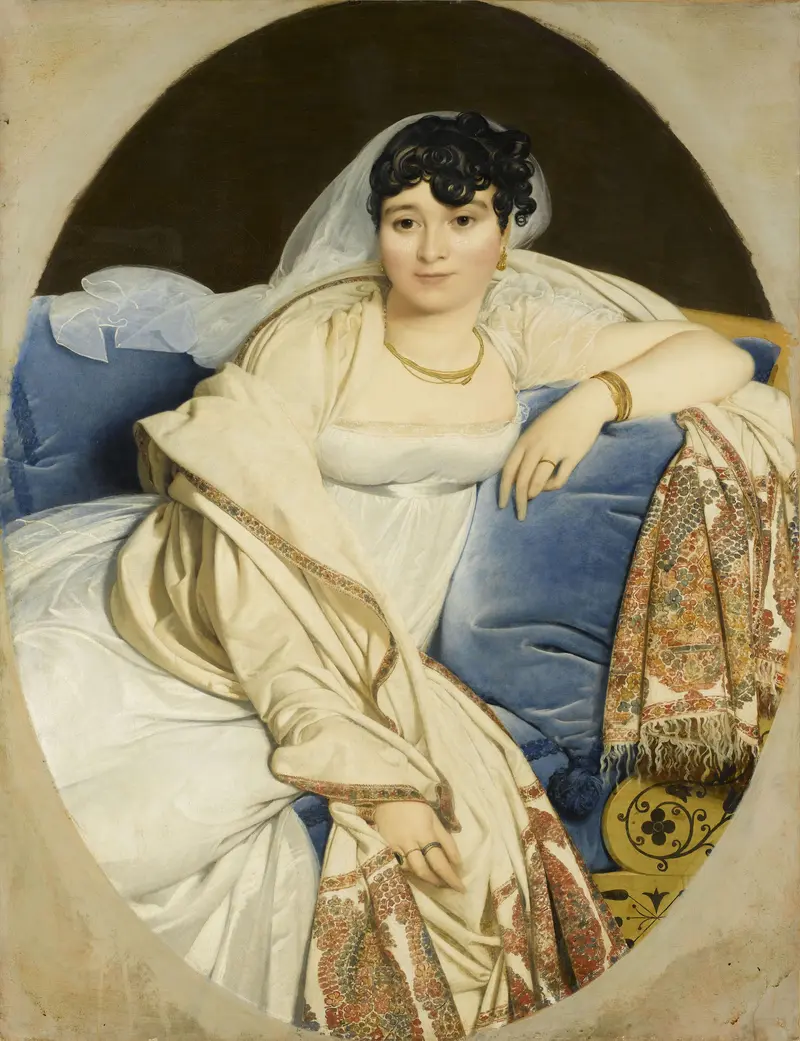
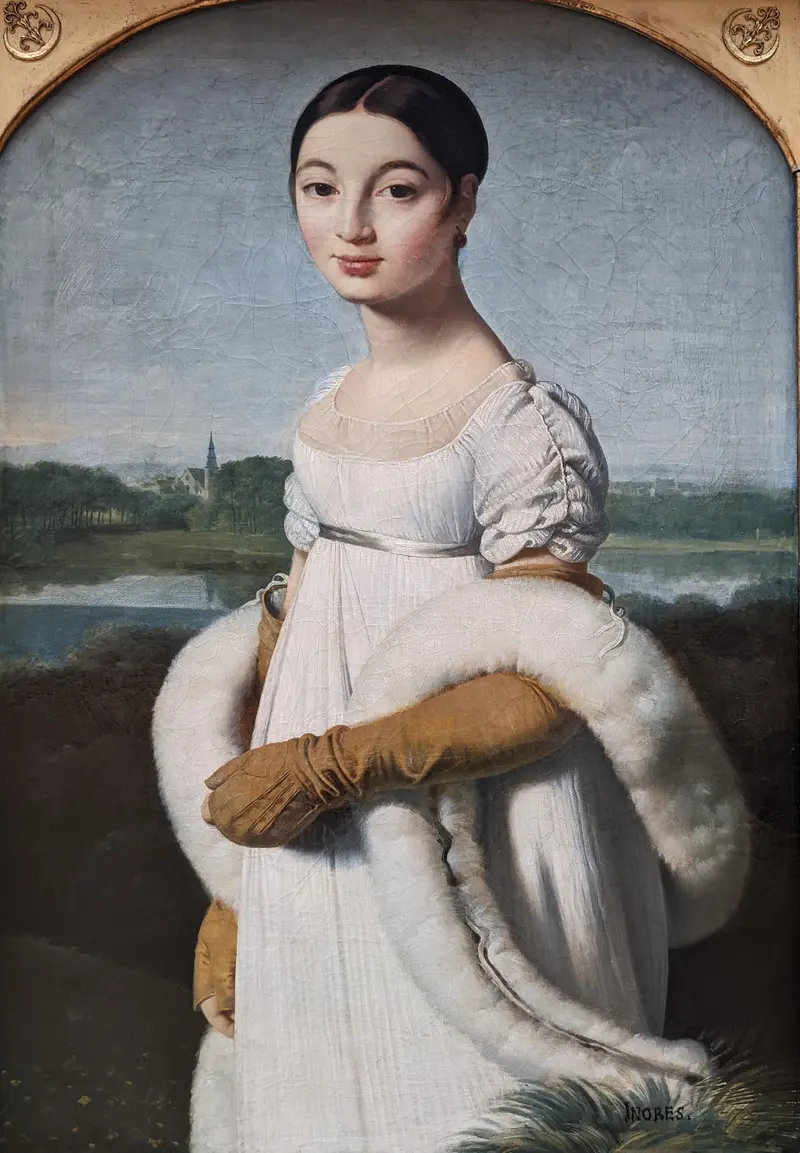 Mademoiselle Caroline RivièreJean-Auguste-Dominique Ingres
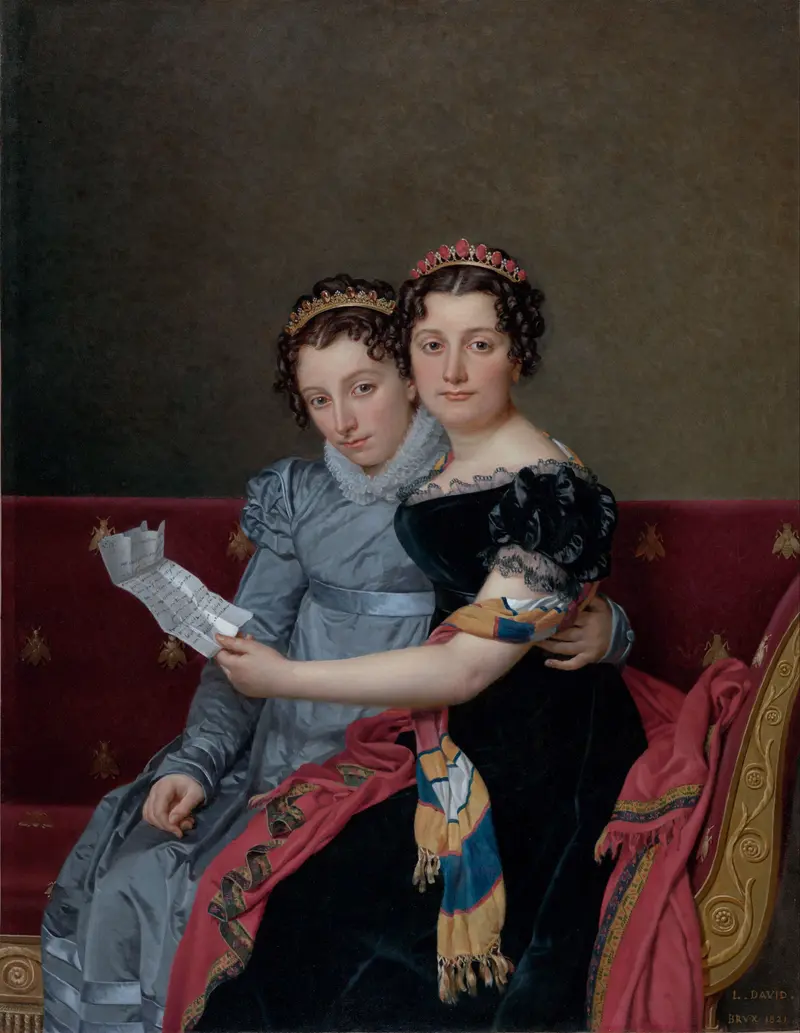 The Sisters Zénaïde and Charlotte BonaparteJacques-Louis David
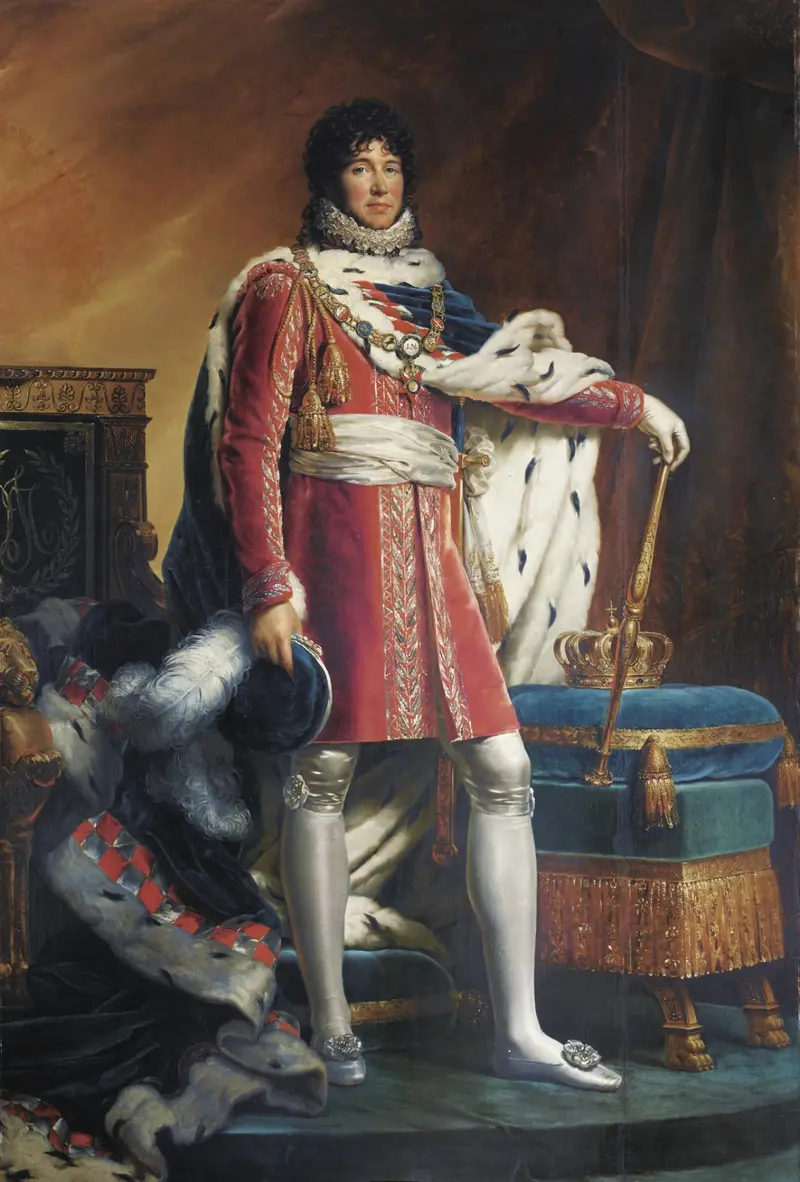 Joachim Murat, King of NaplesFrançois Gérard
Ancient Greece and Rome in Neoclassical paintings
History painting, which the academies placed above every other kind of painting, took its subjects from Greek and Roman history and myth, Tate notes. Neoclassical painters retold the stories of Oedipus, Achilles, Homer, Belisarius, Virgil and the mother of the Gracchi.
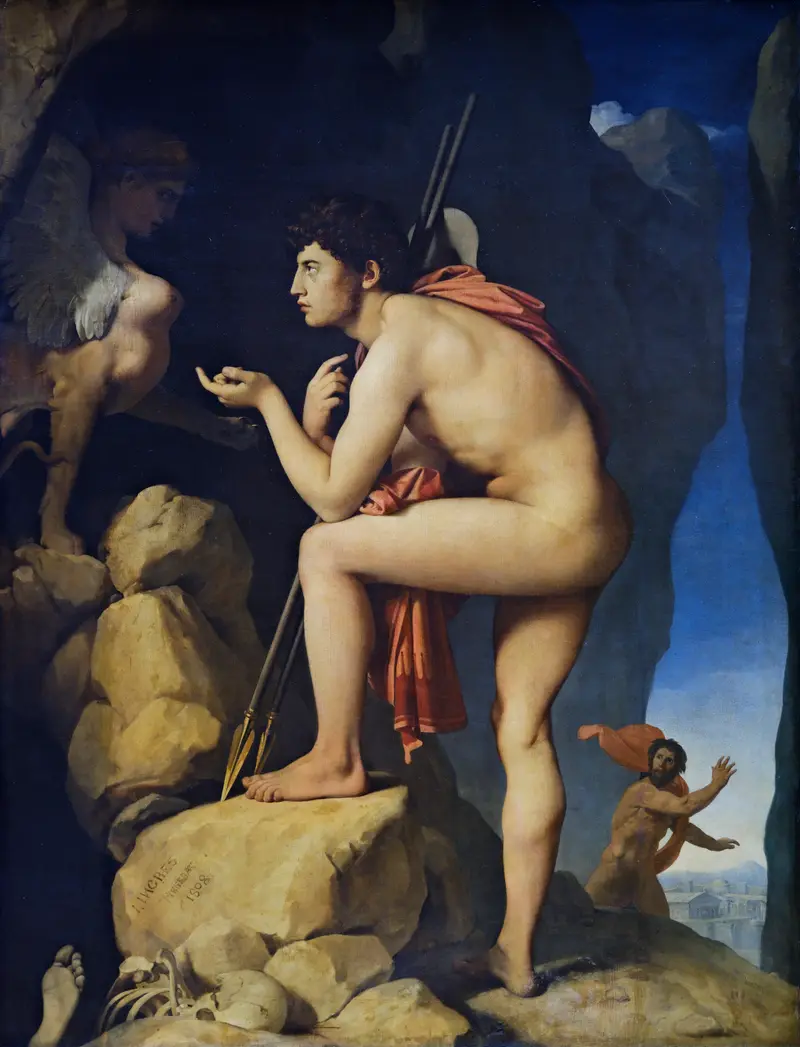 Oedipus and the SphinxJean-Auguste-Dominique Ingres
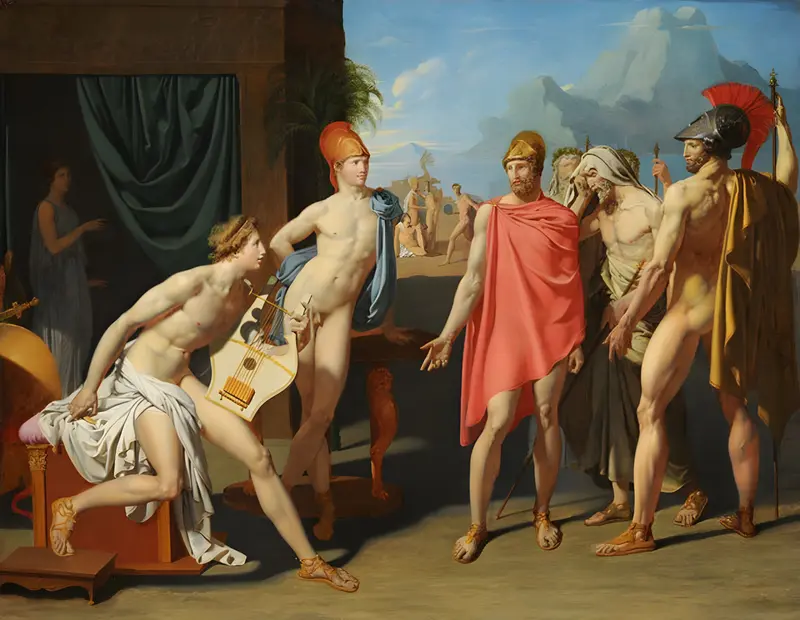 The Ambassadors of Agamemnon in the Tent of AchillesJean-Auguste-Dominique Ingres
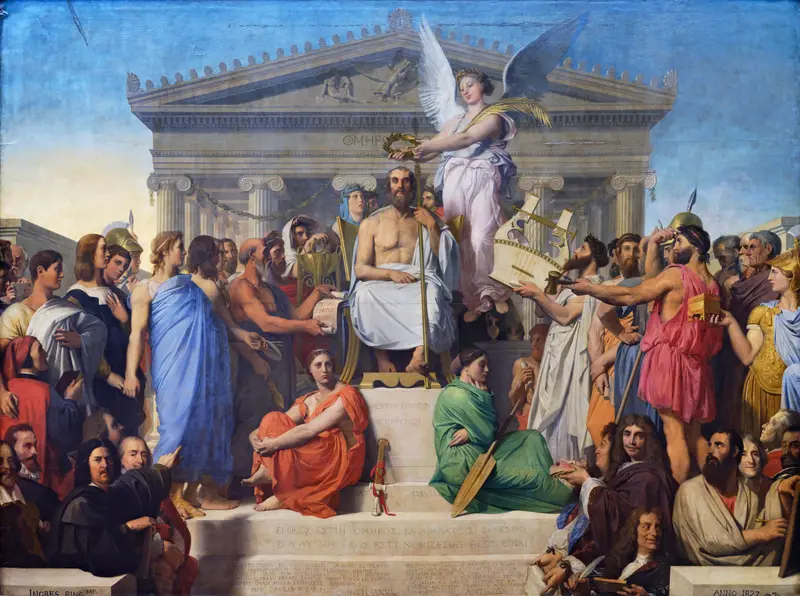 The Apotheosis of HomerJean-Auguste-Dominique Ingres
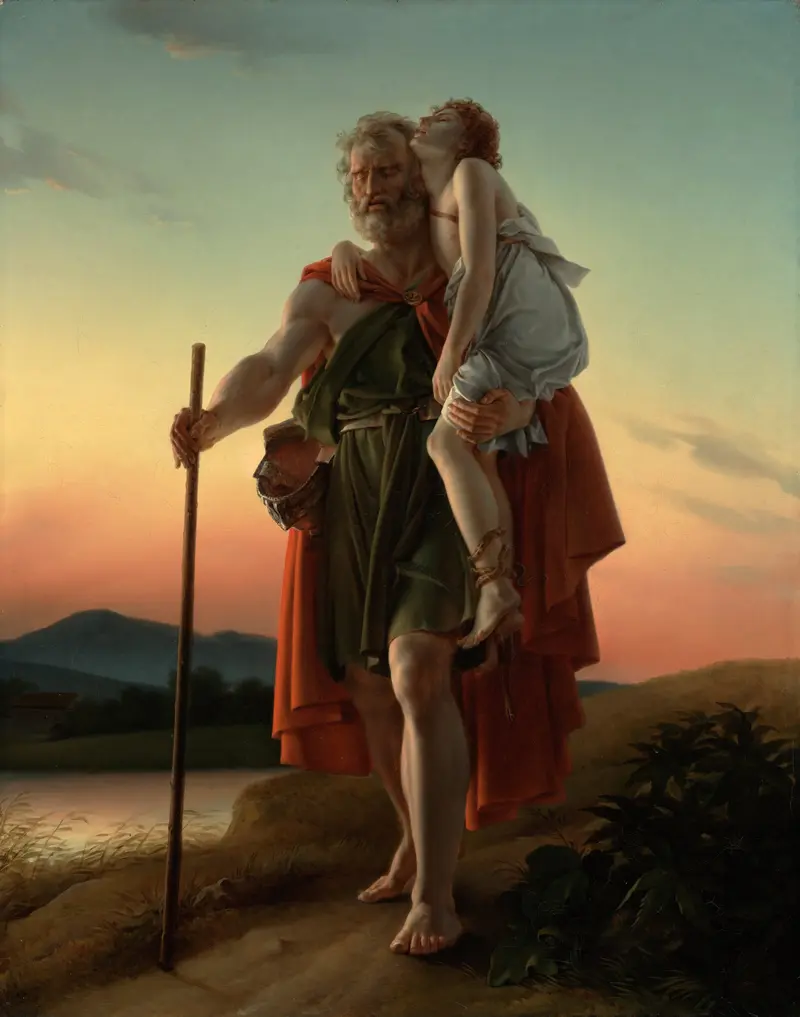 BelisariusFrançois Gérard
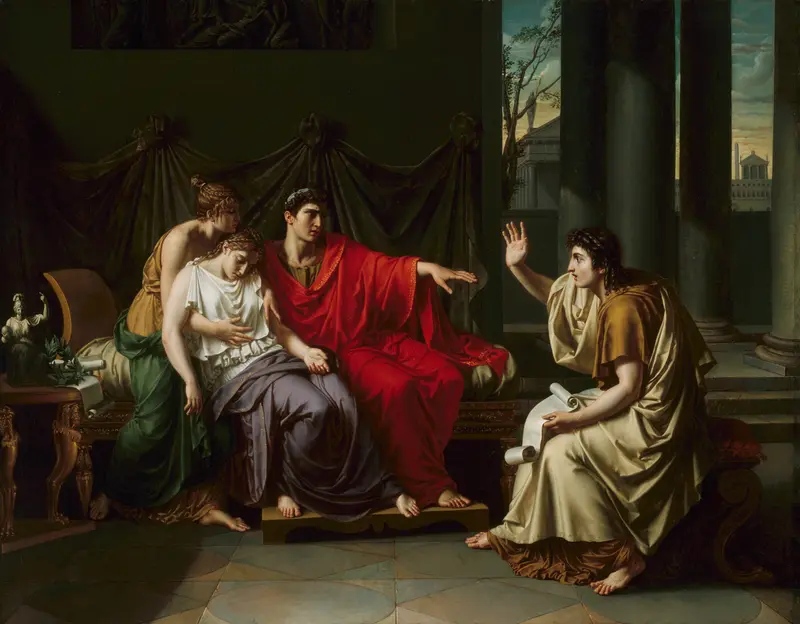 Virgil Reading the Aeneid to Augustus, Octavia and LiviaJean-Baptiste Wicar
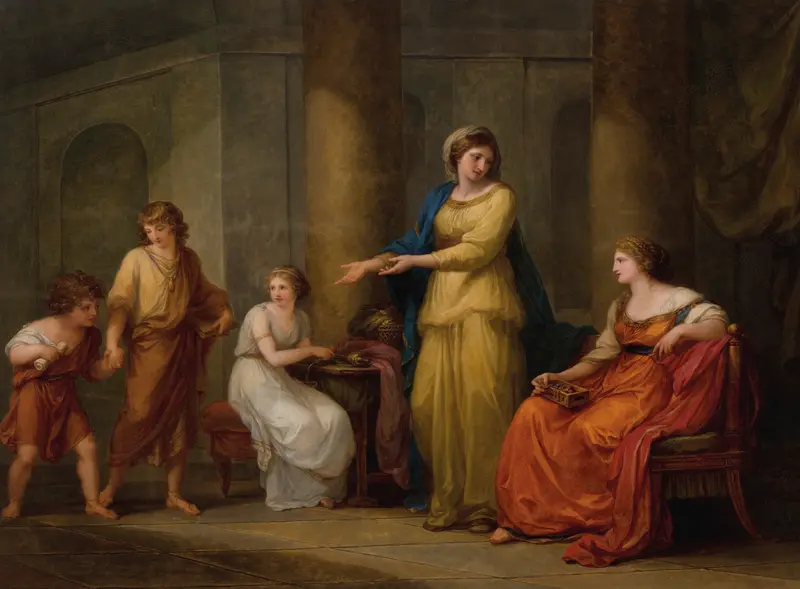 Cornelia, Mother of the GracchiAngelica Kauffmann
Characteristics of Neoclassical art: how to recognize it
Subjects from Greece and Rome
Three brothers in Roman armor and sandals swear their oath under plain stone arches. Neoclassical works imitate Greek and Roman forms and motifs, says the Getty's art vocabulary.
Oath Of The Horatii, Jacques Louis David
Crisp outlines
Ingres outlined the odalisque's long back and arm in clean, unbroken curves. The Getty's art vocabulary describes Neoclassical works as often linear.
Grande Odalisque, Jean Auguste Dominique Ingres
Balance and symmetry
Homer sits enthroned at the center before a Greek temple, crowned by a winged Victory, with his admirers ranged on either side. The Louvre says Ingres based the composition on Raphael's Parnassus; the Getty calls Neoclassical works symmetrical.
The Apotheosis of Homer, Jean Auguste Dominique Ingres
Austere, bare settings
The whole upper half of the picture is an empty wall, and Marat's desk is a plain wooden crate. The National Gallery in London says David's paintings were notable for the austerity of their design and theme.
The Death of Marat, Jacques Louis David
A lesson in virtue
Socrates keeps teaching, one hand raised, as he reaches for the hemlock, while his followers despair around him. A renewed emphasis on the public, teaching role of art helped Neoclassicism rise, the National Gallery in London says.
The Death of Socrates, Jacques Louis David
Bodies modeled on ancient art
Ingres's nude stands in a niche with her weight on one leg, like an ancient statue. His training, the National Gallery in London says, centered on the study of the nude and of classical art.
The Source, Jean Auguste Dominique Ingres
Before and after Neoclassicism
 Baroquec. 1590–1750
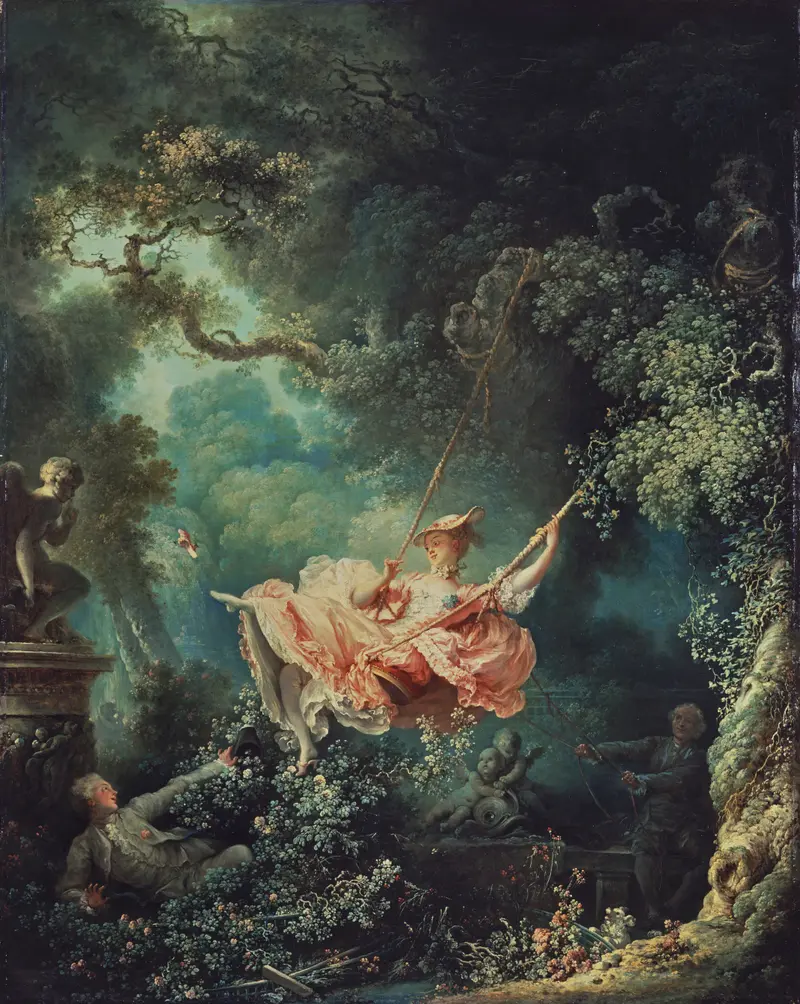 Rocococ. 1715–1770s
- Neoclassicismc. 1750–1850
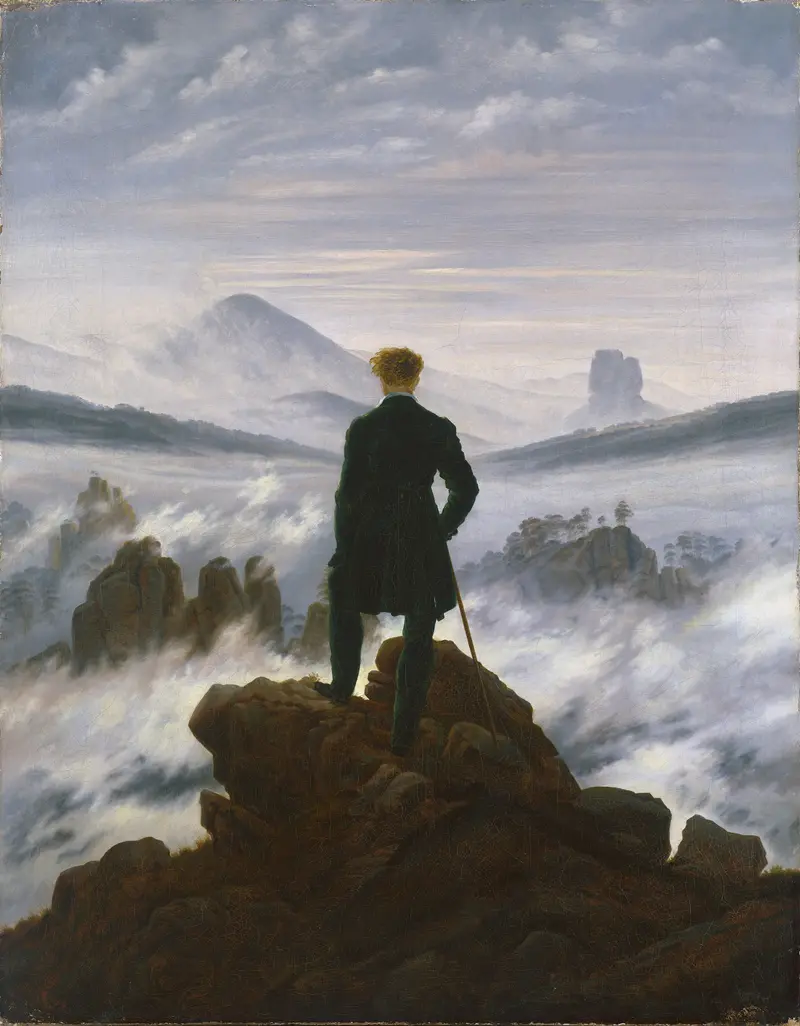 Romanticismc. 1780–1850
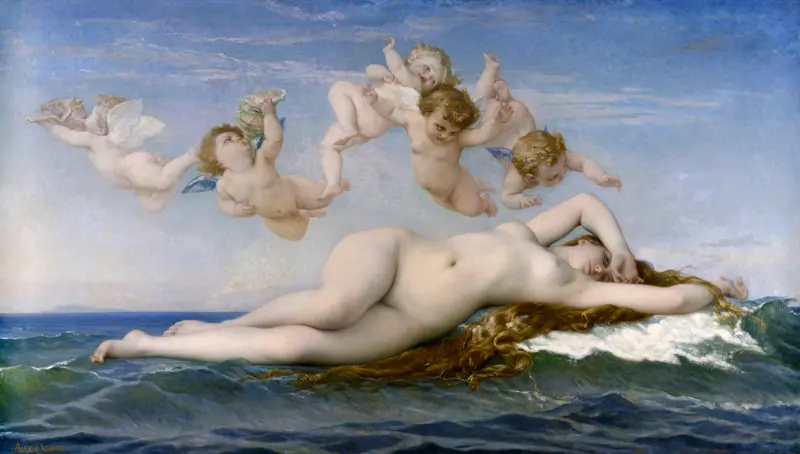 Academic artmid–late 19th century
Neoclassicism vs Rococo and Romanticism
| Compared | Rococo | Neoclassicism | Romanticism |
|---|---|---|---|
| When | c. 1715–1770s | c. 1750–1850 | c. 1780–1850 |
| Subject | Love, gaiety and sensual pleasure | Greek and Roman history and myth, modern heroes, portraits | Wild nature, storms, recent wars and revolutions, the Middle Ages, nightmares |
| Look | Light, bright colors, curves and asymmetry | Crisp outlines, symmetry, severe design | Painterly and dynamic |
| Aim | Delight and decoration | Pure classical form and a moral lesson | Emotion and individual expression |
| Famous example | Fragonard, The Swing | David, The Oath of the Horatii | Friedrich, Wanderer above the Sea of Fog |
| Key artists | Watteau, Boucher, Fragonard | David, Ingres, Kauffmann, Mengs | Friedrich, Turner, Constable, Delacroix, Goya |
List of famous Neoclassical paintings and their artists
The famous Neoclassical paintings: who painted them, when, and where each one is today.
Show the listHide the list
| Painting | Painted by | Year | Medium | Size | Located in | City |
|---|---|---|---|---|---|---|
| The Death of Socrates | Jacques-Louis David | 1787 | Oil on canvas | 129.5 × 196.2 cm (51 × 77.2 in) | Metropolitan Museum of Art | New York |
| The Oath of the Horatii | Jacques-Louis David | 1784 | Oil on canvas | 330 × 425 cm (129.9 × 167.3 in) | Louvre Museum | Paris |
| The Death of Marat | Jacques-Louis David | 1793 | Oil on canvas | 165 × 128 cm (65 × 50.4 in) | Royal Museums of Fine Arts of Belgium | Brussels |
| Grande Odalisque | Jean-Auguste-Dominique Ingres | 1814 | Oil on canvas | 91 × 162 cm (35.8 × 63.8 in) | Louvre Museum | Paris |
| The Source | Jean-Auguste-Dominique Ingres | 1856 | Oil on canvas | 163 × 80 cm (64.2 × 31.5 in) | Musee d'Orsay | Paris |
| Napoleon I on His Imperial Throne | Jean-Auguste-Dominique Ingres | 1806 | Oil on canvas | 260 × 163 cm (102.4 × 64.2 in) | Musée de l'Armée | Paris |
| The Death of General Wolfe | Benjamin West | 1770 | Oil on canvas | 152.6 × 214.5 cm (60.1 × 84.4 in) | National Gallery of Canada | Ottawa |
| Cupid and Psyche | François Gérard | 1798 | Oil on canvas | 186 × 132 cm (73.2 × 52 in) | Louvre Museum | Paris |
| The Entombment of Atala | Anne-Louis Girodet | 1808 | Oil on canvas | 207 × 267 cm (81.5 × 105.1 in) | Louvre Museum | Paris |
| Aurora and Cephalus | Pierre-Narcisse Guérin | 1810 | Oil on canvas | 254.5 × 186 cm (100.2 × 73.2 in) | Louvre Museum | Paris |
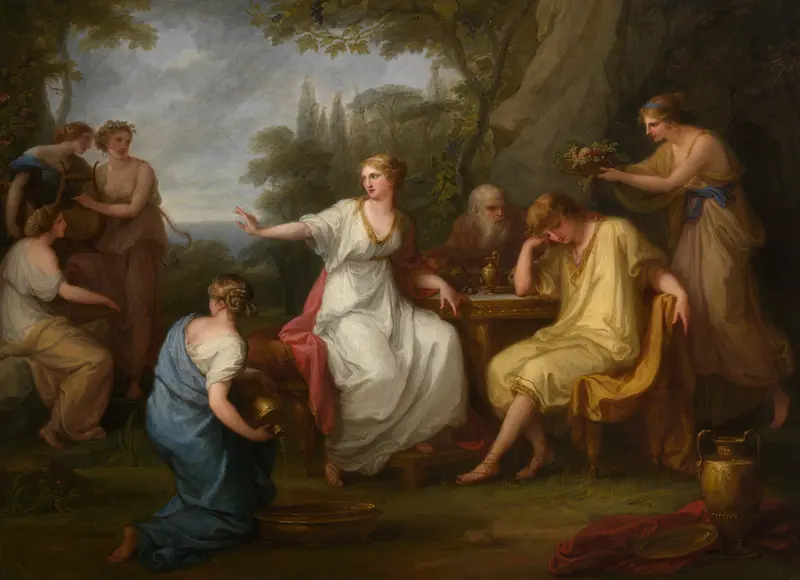
| Ariadne Abandoned by Theseus | Angelica Kauffmann | 1774 | Oil on canvas | 63.8 × 90.9 cm (25.1 × 35.8 in) | Museum of Fine Arts, Houston | Houston |
| Portrait of Madeleine | Marie-Guillemine Benoist | 1800 | Oil on canvas | 81 × 65 cm (31.9 × 25.6 in) | Louvre Museum | Paris |
| Self-Portrait with Two Pupils | Adélaïde Labille-Guiard | 1785 | Oil on canvas | 210.8 × 151.1 cm (83 × 59.5 in) | Metropolitan Museum of Art | New York |
| Scene of the Flood | Anne-Louis Girodet | 1806 | Oil on canvas | 432 × 341 cm (170.1 × 134.3 in) | Louvre Museum | Paris |
| Pygmalion and Galatea | Anne-Louis Girodet | 1819 | Oil on canvas | 253 × 202.5 cm (99.6 × 79.7 in) | Louvre Museum | Paris |
| Telemachus and the Nymphs of Calypso | Angelica Kauffmann | 1782 | Oil on canvas | 82.6 × 112.4 cm (32.5 × 44.3 in) | Metropolitan Museum of Art | New York |
| The Sorrow of Telemachus | Angelica Kauffmann | 1783 | Oil on canvas | 83.2 × 114.3 cm (32.8 × 45 in) | Metropolitan Museum of Art | New York |
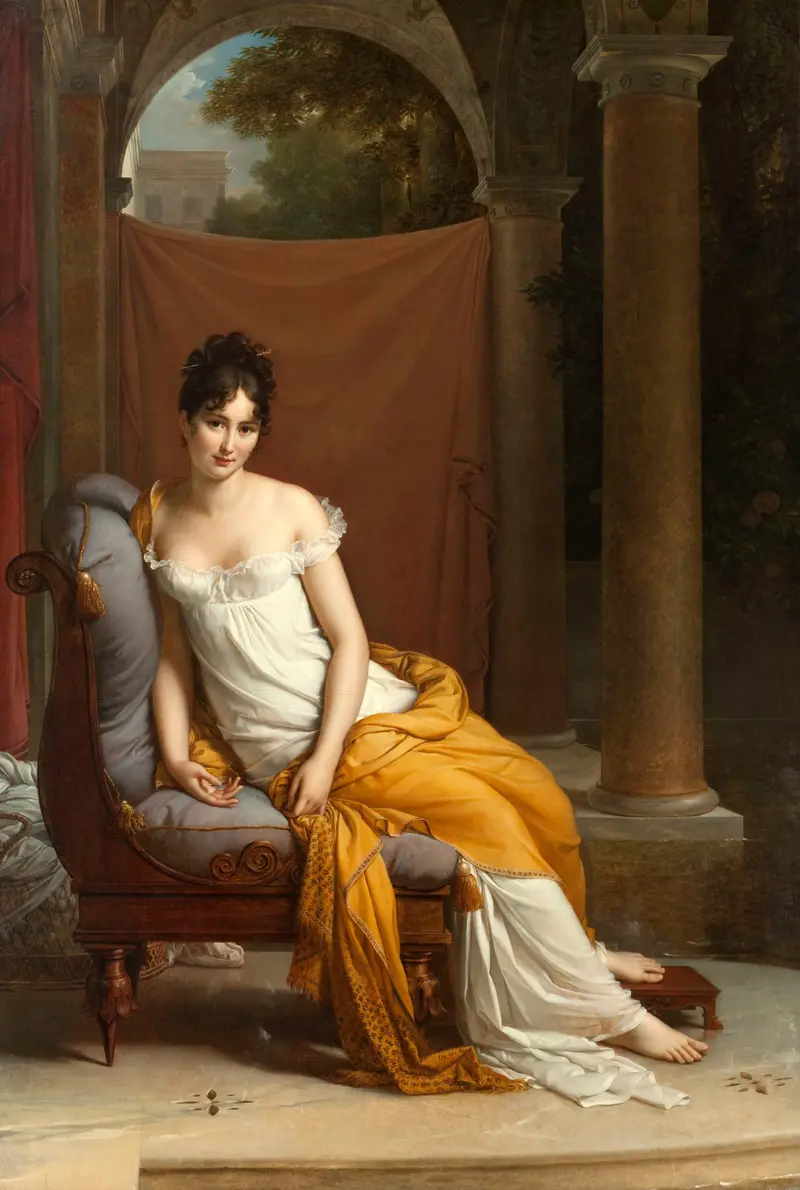
| Portrait of Juliette Récamier | François Gérard | 1802–1805 | Oil on canvas | 225 × 148 cm (88.6 × 58.3 in) | Musée Carnavalet | Paris |
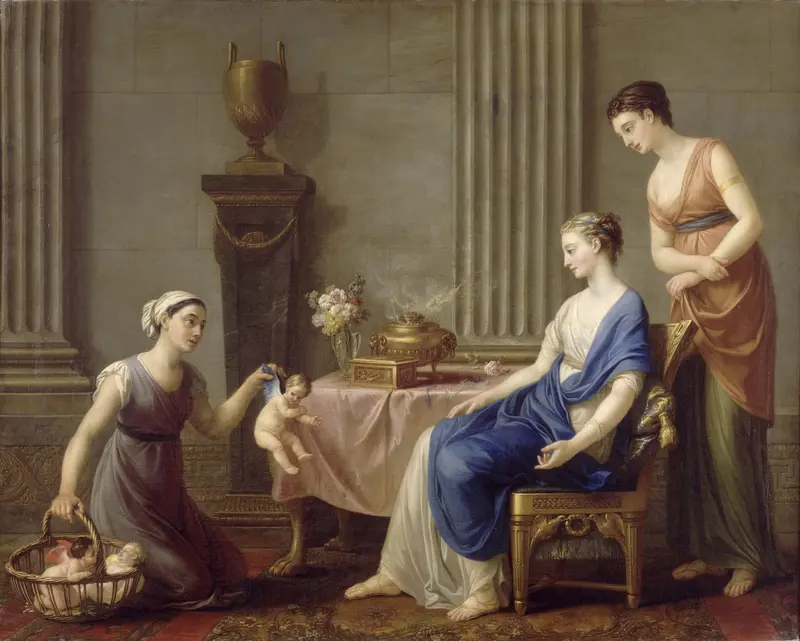
| The Cupid Seller | Joseph-Marie Vien | 1763 | Oil on canvas | 98 × 122 cm (38.6 × 48 in) | Palace of Fontainebleau | Fontainebleau |
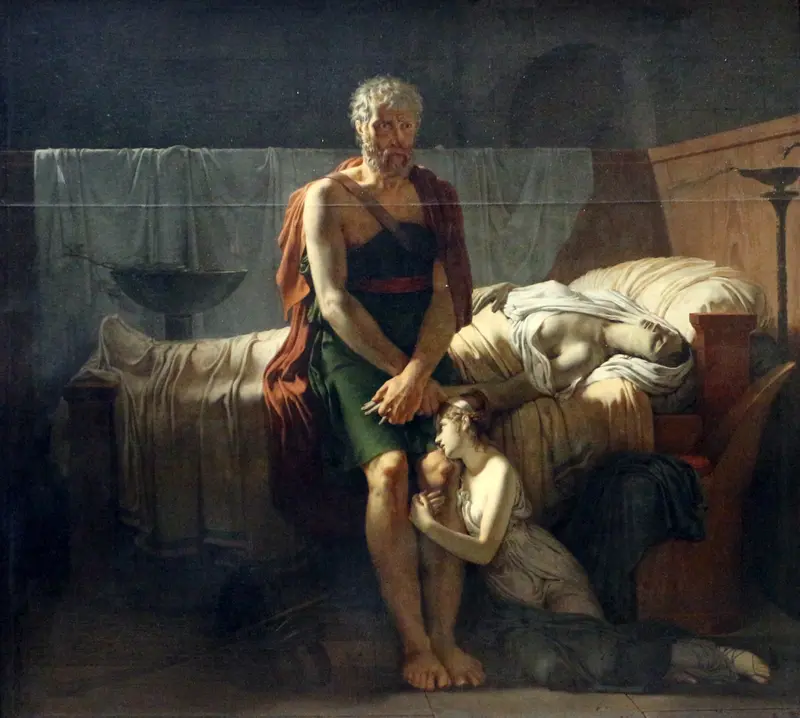
| The Return of Marcus Sextus | Pierre-Narcisse Guérin | 1799 | Oil on canvas | 217 × 243 cm (85.4 × 95.7 in) | Louvre Museum | Paris |
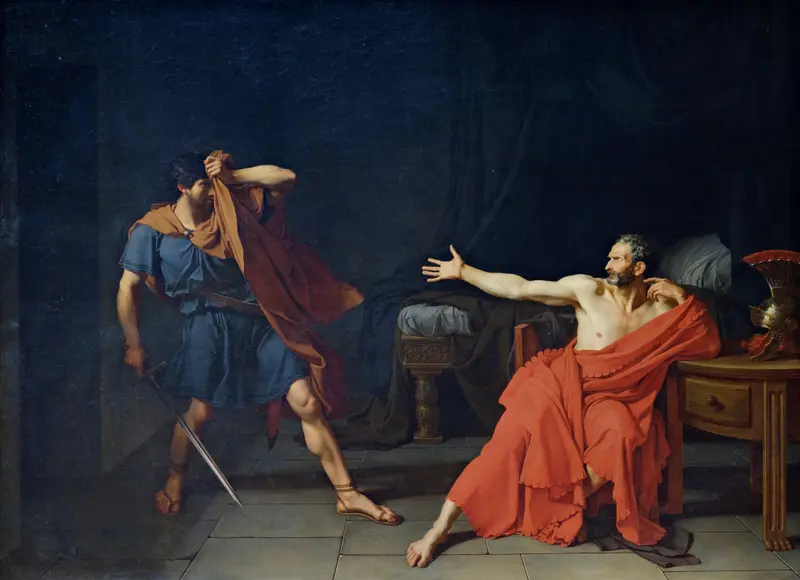
| Marius at Minturnae | Jean-Germain Drouais | 1786 | Oil on canvas | 271 × 365 cm (106.7 × 143.7 in) | Louvre Museum | Paris |
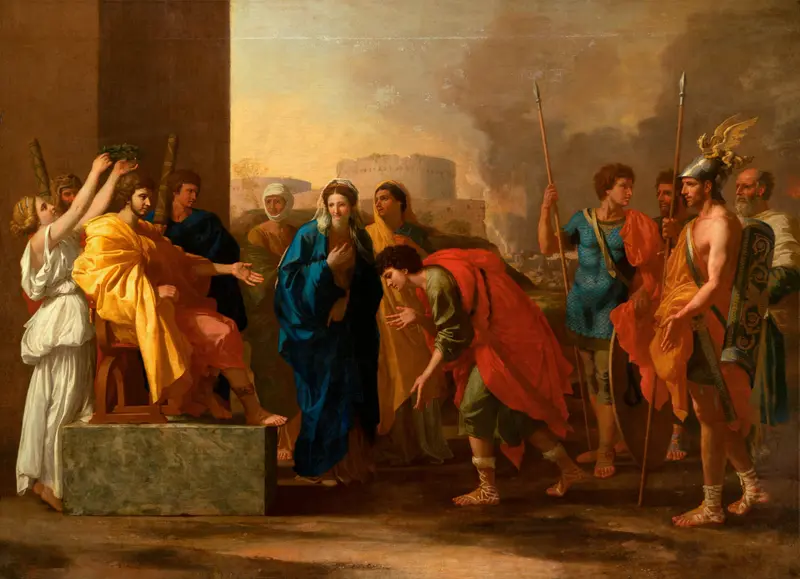
| The Continence of Scipio | Pompeo Batoni | 1771 | Oil on canvas | 226.5 × 297.5 cm (89.2 × 117.1 in) | Hermitage Museum | St. Petersburg |
| Phaedra and Hippolytus | Pierre-Narcisse Guérin | 1802 | Oil on canvas | 257 × 335 cm (101.2 × 131.9 in) | Louvre Museum | Paris |
| Charles-Maurice de Talleyrand-Périgord, Prince of Benevento | François Gérard | 1808 | Oil on canvas | 213 × 147 cm (83.9 × 57.9 in) | Metropolitan Museum of Art | New York |
Neoclassicism: questions and answers
What does Neoclassicism mean in art?
In art, Neoclassicism means a revival of the art of ancient Greece and Rome in the later 1700s and early 1800s. The National Gallery in London explains that the word literally means “new classicism”: artists consciously took up classical models, meaning both ancient art, especially architecture and sculpture, and later painters such as Raphael and Poussin who had followed it. The Getty's art vocabulary dates the style from the mid-18th to the mid-19th century, in Europe and America, and says it was inspired by archaeological discoveries in the Mediterranean.
Sources: National Gallery: Neoclassicism (glossary) · Getty AAT: Neoclassical
What are the characteristics of Neoclassical art?
Neoclassical art is clear, calm and serious: crisp outlines, balanced and symmetrical compositions, and subjects taken from Greek and Roman history and myth. The Getty's art vocabulary describes Neoclassical works as often linear, symmetrical and even severe, imitating Greek and Roman forms and motifs. The National Gallery in London says David's paintings of the 1780s, such as The Oath of the Horatii, were notable for the austerity of their design and theme, and that a renewed emphasis on the public, teaching role of art helped Neoclassicism rise.
Sources: Getty AAT: Neoclassical · National Gallery: Jacques-Louis David · National Gallery: Neoclassicism (glossary)
When was the Neoclassical period?
Neoclassicism began around 1750 and lasted until about the middle of the 19th century. Tate says it emerged from about 1750, after the discovery of the Roman ruins of Pompeii and the publication in 1764 of Winckelmann's history of ancient art. The Getty's art vocabulary dates the style from the mid-18th to the mid-19th century; in those later years Ingres, the National Gallery in London says, defended a rigid classicism against the Romanticism of Delacroix.
Sources: Tate: Neoclassicism · Getty AAT: Neoclassical · National Gallery: Jean-Auguste-Dominique Ingres
Where did Neoclassicism start?
Neoclassicism started in Rome, among artists studying the remains of antiquity there, and spread to Paris, London and the rest of Europe. The National Gallery in London names the excavation of ancient sites in Italy among its causes, and says the German painter Anton Raphael Mengs, who spent much of his life in Rome, formed his Neoclassical style under the influence of the writer Winckelmann. Jacques-Louis David painted The Oath of the Horatii in Rome and showed it in his Roman studio in 1785 before it went to the Paris Salon, the Louvre records.
Sources: National Gallery: Neoclassicism (glossary) · National Gallery: Anton Raphael Mengs · Louvre Museum · Tate: Neoclassicism
Who started Neoclassicism?
No single artist started Neoclassicism, but the German scholar Johann Joachim Winckelmann and the painter Anton Raphael Mengs, both in Rome, did much to shape it. Tate credits Winckelmann's influential history of ancient art, published in 1764, with an intense flourishing of classicism, and the National Gallery in London says Winckelmann's influence helped form Mengs's Neoclassical style. In France, Jacques-Louis David, trained by the classicizing painter Vien, became the leading painter of the movement, the National Gallery says.
Sources: Tate: Neoclassicism · National Gallery: Anton Raphael Mengs · National Gallery: Jacques-Louis David
Why did Neoclassicism start?
Neoclassicism started as a turn away from the decorative Rococo toward the serious, ordered art of antiquity, fed by new archaeological discoveries. The Getty's art vocabulary calls it a reaction to Rococo opulence, inspired by finds in the Mediterranean, and Tate links it to the discovery of the Roman ruins of Pompeii and to Winckelmann's history of ancient art. The National Gallery in London adds that a renewed emphasis on the public, teaching function of art, both inside and outside the academies, was an important factor.
Sources: Getty AAT: Neoclassical · Tate: Neoclassicism · National Gallery: Neoclassicism (glossary)
How is Neoclassicism different from Rococo?
Rococo is light, playful and decorative; Neoclassicism, which replaced it in the late 1700s, is sober, linear and serious. Tate describes Rococo as a light, sensuous, intensely decorative French style of short curves and scrolls, seen in Boucher, Fragonard and Watteau, while the Getty's art vocabulary says Rococo was superseded by the Classical Revival in the late 18th century and describes Neoclassical works as linear, symmetrical and even severe. The National Gallery in London notes that the name Rococo was first used, as an insult, by the Neoclassicists themselves.
Sources: Tate: Rococo · Getty AAT: Rococo · Getty AAT: Neoclassical · National Gallery: Rococo (glossary)
Who are the famous Neoclassical artists?
The leading Neoclassical painters are Jacques-Louis David and Jean-Auguste-Dominique Ingres in France, with Anton Raphael Mengs and Angelica Kauffmann, and among sculptors Antonio Canova. The National Gallery in London calls David the leading painter in France of the Neoclassical movement and describes Ingres, his pupil, as the defender of a rigid classicism. In Britain, Tate names the paintings of Joshua Reynolds, Benjamin West and James Barry and the sculpture of John Flaxman. Canova's marble Three Graces, carved in Rome in 1814–1817 for the Duke of Bedford, belongs to the Victoria and Albert Museum in London.
Sources: National Gallery: Jacques-Louis David · National Gallery: Jean-Auguste-Dominique Ingres · National Gallery: Anton Raphael Mengs · Tate: Neoclassicism · Victoria and Albert Museum: Canova, The Three Graces
What is an example of Neoclassical art?
A classic example of Neoclassical art is Jacques-Louis David's The Oath of the Horatii of 1784. Three brothers in Roman armor swear an oath on swords held up by their father, under plain stone arches, while the women of the family grieve. Louis XVI commissioned it; David painted it in Rome and showed it at the Salon of 1785, and the National Gallery in London says paintings like it made him famous. The Louvre hangs it in its Neoclassicism gallery, the Salle Daru.
Sources: Louvre Museum · National Gallery: Jacques-Louis David
How was Neoclassicism connected to the French Revolution and Napoleon?
In France, Neoclassicism was closely tied to the Revolution and to Napoleon, above all through Jacques-Louis David. The National Gallery in London says David took an active part in the Revolution of 1789, was elected a deputy and helped abolish the Royal Academy of Painting and Sculpture, and that his successive images of Napoleon as general, consul and emperor helped to glorify the French leader; from the Revolution to Napoleon's fall, David and his studio had a major influence on French art. His Death of Marat shows a fellow deputy murdered by Charlotte Corday in July 1793.
What are Neoclassical portraits like?
Neoclassical portraits are calm, precisely painted likenesses, and some sitters are posed like figures from ancient art. The National Gallery in London says Ingres took Madame Moitessier's pose from a Roman wall painting found at Herculaneum, showing the goddess of Arcadia, and that he painted her jewels with the smoothness and brilliance of enamel. David portrayed the chemist Antoine Lavoisier and his wife in 1788, and Gérard painted the diplomat Talleyrand in 1808; both pictures are in the Metropolitan Museum of Art in New York.
Sources: National Gallery: Ingres, Madame Moitessier · Metropolitan Museum of Art · Metropolitan Museum of Art
Where can you see famous Neoclassical paintings?
Many are in the Louvre in Paris, which hangs David's The Oath of the Horatii, The Intervention of the Sabine Women and The Coronation of Napoleon, Ingres's Grande Odalisque and Girodet's The Entombment of Atala in its Neoclassicism gallery, the Salle Daru. The Metropolitan Museum of Art in New York has David's The Death of Socrates and his portrait of the Lavoisiers, and Labille-Guiard's Self-Portrait with Two Pupils. David's The Death of Marat is in the Royal Museums of Fine Arts of Belgium in Brussels, and Ingres's The Source is on loan from the Louvre to the Musée d'Orsay.
Sources: Louvre Museum · Louvre Museum · Louvre Museum · Louvre Museum · Louvre Museum · Metropolitan Museum of Art · Metropolitan Museum of Art · Metropolitan Museum of Art · Metropolitan Museum of Art · Royal Museums of Fine Arts of Belgium (French) · Louvre Museum
Is Neoclassical art in the public domain, and can I download it free?
Yes. Every painter named on this page died by 1889, so their paintings are in the public domain in the United States and in countries where copyright ends 70 years after the artist's death. You can download them free and use them for anything, including commercial projects. A few countries have their own rules on photographs of artworks, so check them if you publish outside the U.S.
Sources: Cornell University Library: Copyright Term and the Public Domain
How we chose the famous paintings
The famous paintings on this page are the Neoclassical paintings known most widely around the world, measured by the number of languages that have an encyclopedia entry about each one, checked in November 2026. No painter has more than three of them, which is why David's Napoleon Crossing the Alps and The Intervention of the Sabine Women appear in their own row further down.
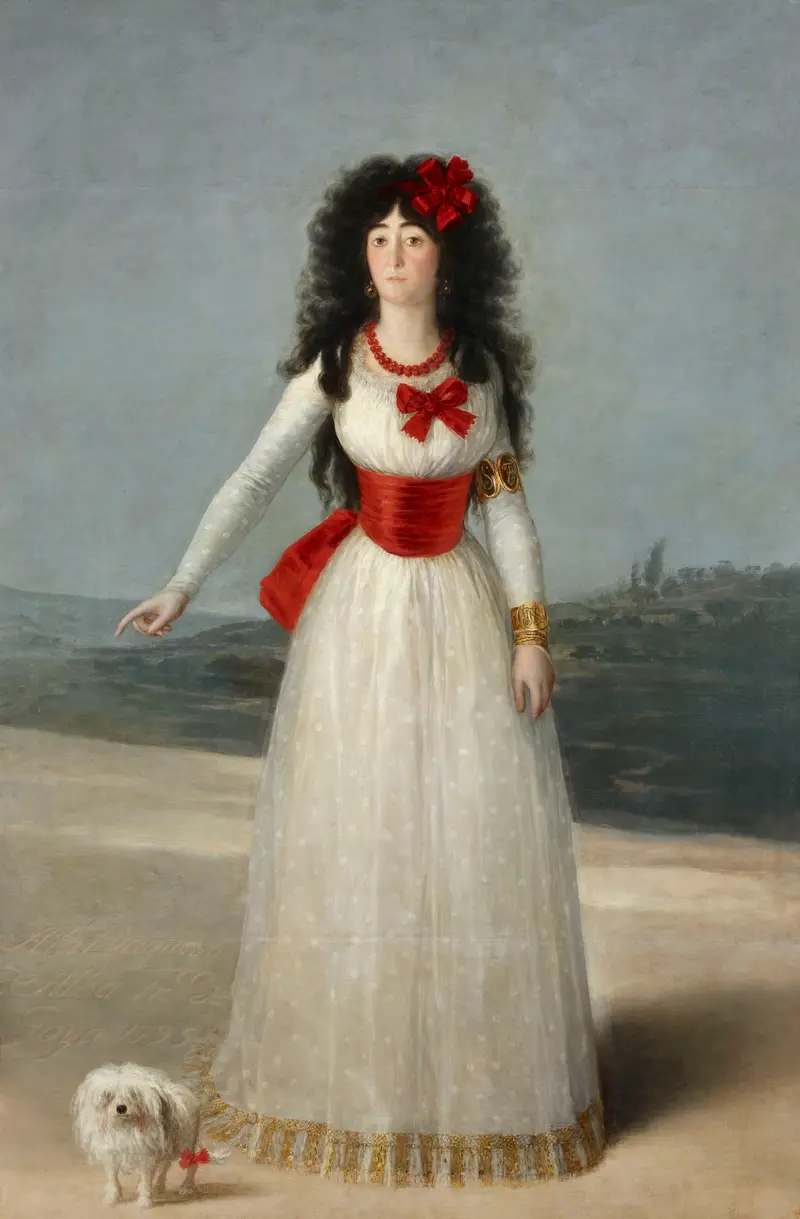
We include only paintings that the holding museum, Wikidata or our own catalogue classes as Neoclassical, and only paintings with entries in at least two languages. The Louvre hangs Ingres's Grande Odalisque in its Neoclassicism gallery, the Salle Daru, so it is here. Gros's battle pictures and Goya's early portraits are sometimes called Neoclassical too; the Louvre hangs Gros's Napoleon on the Battlefield of Eylau with its Romantic paintings, and you will find Goya on our Romanticism page.
Dates, sizes and locations come from the museums' own records and from Wikidata.
Spotted a mistake? Tell us and we will correct it.