Almlandschaft — History & Facts
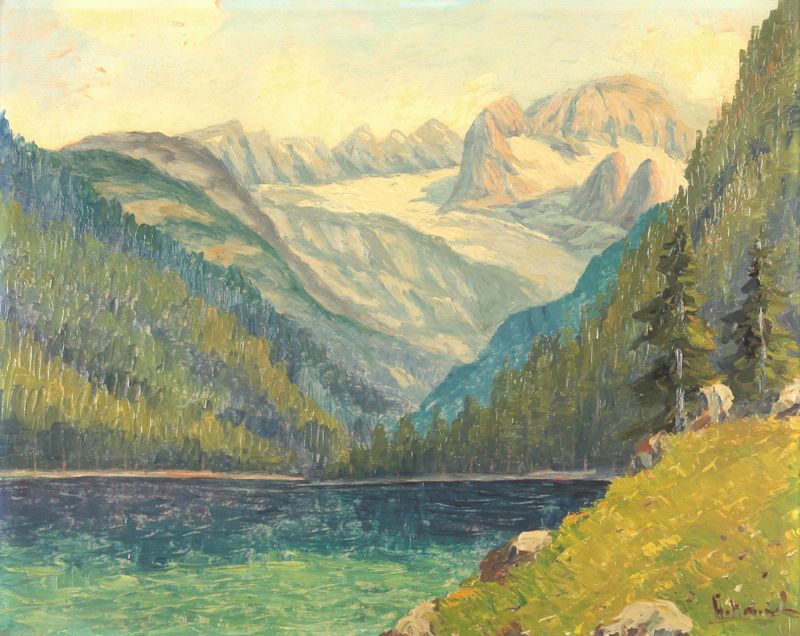
Can beauty exist without sorrow? In the silence of nature, the landscape whispers of revolutions past and the shadows of forgotten tales. Look to the foreground where rolling hills meet a soft horizon, painted in harmonious greens and golds. The gentle brushstrokes form a tapestry of textures, inviting the viewer to traverse the undulating terrain. Notice how the light dances across the canvas, illuminating patches of wildflowers and casting delicate shadows, each element meticulously placed to evoke a sense of tranquility amidst underlying tension. Amidst this serene vista, there are hints of conflict woven into the landscape.
The stark contrast between the bright, vibrant flora and the darker, looming mountains suggests an impending storm, a metaphor for the turbulence of change. Each detail, from the flutter of a distant bird to the stillness of the grass, carries with it the weight of history and the fragility of peace, reminding us that beauty often emerges from chaos. Created during an uncertain era, the artist developed this piece amidst a backdrop of social upheaval and a longing for a new order. The landscape reflects a world in flux, where nature stands as a witness to human struggles and aspirations.
At this time, the artistic community was grappling with the influence of Romanticism, seeking to capture the essence of human emotion intertwined with the vastness of the natural world, a theme Hernick explored deeply in his work.