
Along the Hudson River — History & Facts
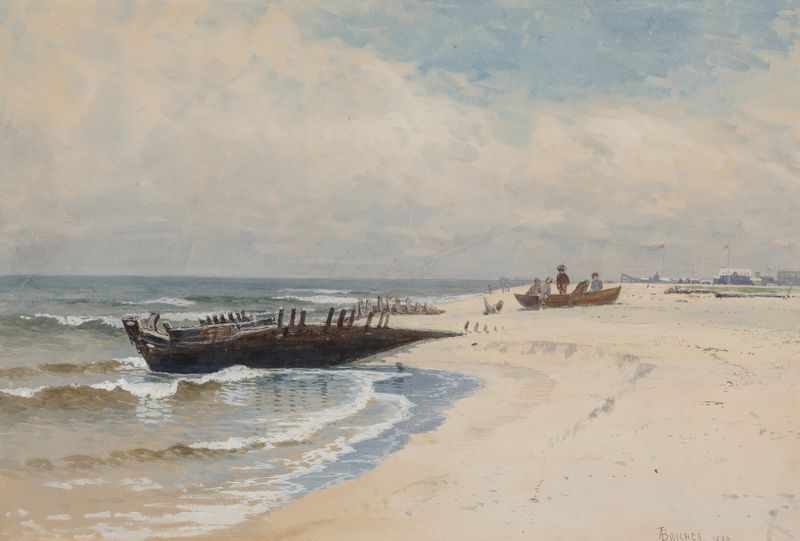
In the interplay of light and shadow, whispers of mortality linger, reminding us of the fleeting nature of existence. Focus first on the tranquil waters stretching across the canvas. Look closely at the soft ripples, their gentle movement mirroring the tranquil sky above, painted with a delicate palette of blues and whites. Notice how the horizon blurs, drawing your eye into the distance, where land meets sky in a harmonious embrace.
The artist's technique captures the sublime beauty of nature, evoking a sense of serenity that invites contemplation. Yet beneath this calm facade lies a poignant contrast — the vibrant hues of the trees on the banks stand in stark relief against the muted tones of the water. The lively greens and warm autumnal shades pulse with life, serving as a reminder of the cycle of growth and decay. As the light bathes the scene, it accentuates the subtle tension between vitality and the inevitable passage of time, prompting reflection on our own mortality. Created in 1872, this work emerged during a period of profound exploration in American landscape painting.
Bricher, a key figure in the Hudson River School, sought to capture the sublime beauty of his surroundings while grappling with themes of transience. His dedication to portraying nature’s grandeur coincided with an era that valued both realism and romanticism, culminating in a rich tapestry of American artistic expression.
More Artworks by Alfred Thompson Bricher
Browse all →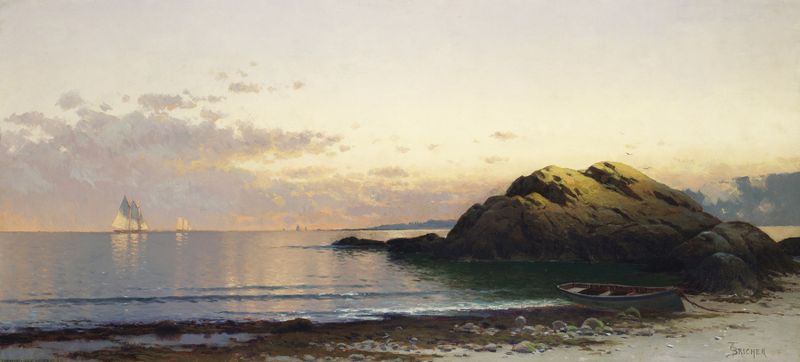
New England Coast
Alfred Thompson Bricher
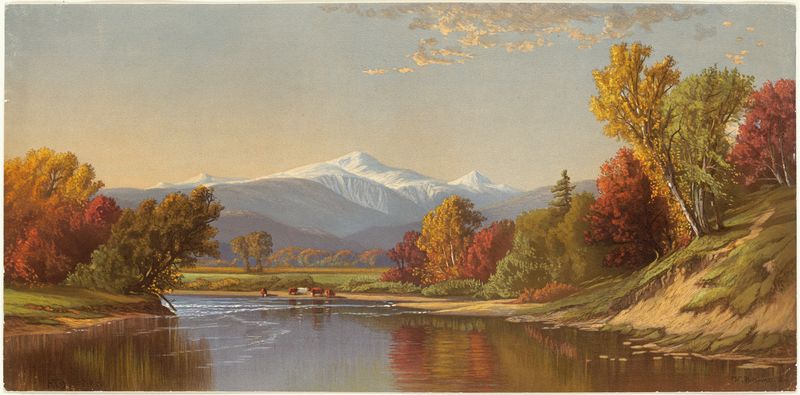
Late Autumn in the White Mountains
Alfred Thompson Bricher
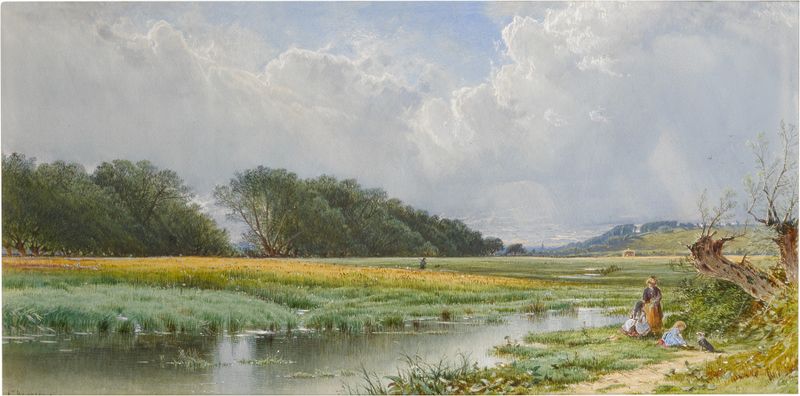
On the Meadows of Old Newburyport
Alfred Thompson Bricher

Along the Maine Coast
Alfred Thompson Bricher
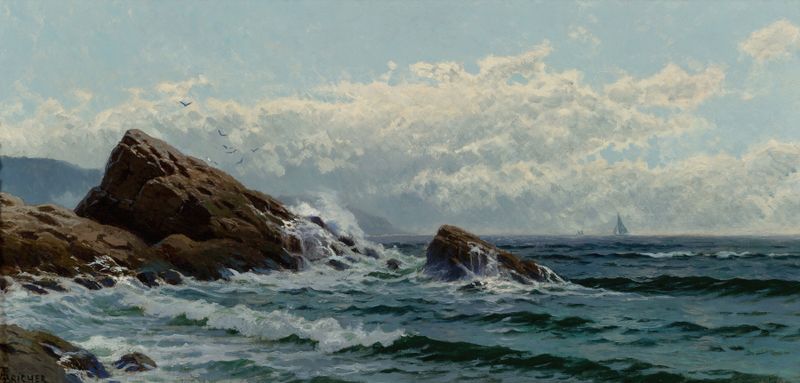
Crashing Waves
Alfred Thompson Bricher

At Water’s Edge
Alfred Thompson Bricher
Low Tide
Alfred Thompson Bricher
Sunset on the Coast
Alfred Thompson Bricher

Castle Rock, Nahant, Massachusetts
Alfred Thompson Bricher

On the Meadows of Old Newburyport
Alfred Thompson Bricher





