Alpine Lake Scene — History & Facts
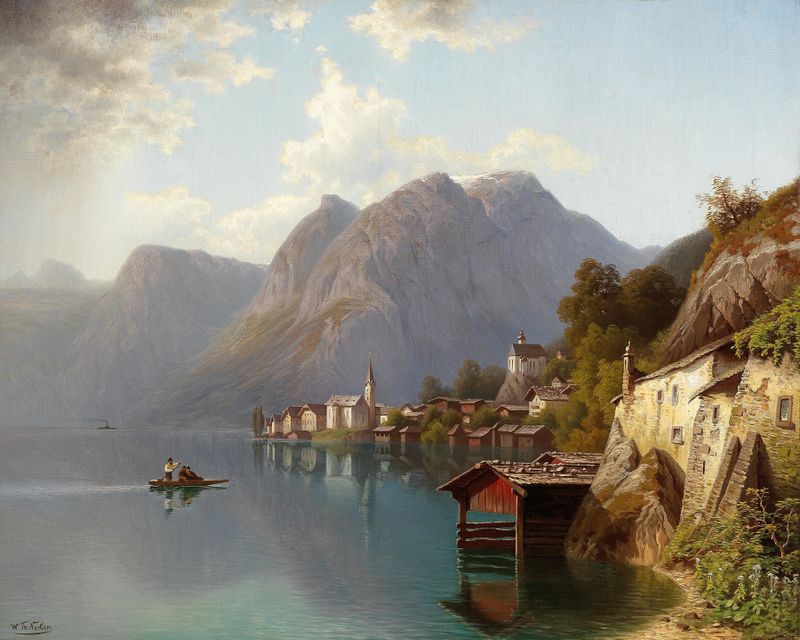
When did color learn to lie? The deceptive beauty of nature can mask truths we dare not face, presenting a serene façade while whispering secrets of betrayal beneath its surface. Look to the foreground, where the glassy surface of the alpine lake reflects the towering peaks, their rugged majesty softened by a delicate mist. Notice how the vibrant greens of the surrounding foliage contrast with the cool blues and grays of the water and mountains, inviting the viewer into a harmonious yet unsettling landscape. Each brushstroke embodies an intricate dance between light and shadow, revealing the artist’s skill in capturing both the tranquil and tumultuous elements of nature. Yet, if you delve deeper, the scene’s stillness belies a tension that speaks to isolation and conflict.
The way the clouds converge above hints at an impending storm, suggesting that beneath the picturesque surface, turmoil brews. The interplay of color and form evokes feelings of longing and despair, as though the beauty of the scene is a cruel reminder of what is fleeting and unreachable, a betrayal of nature's genuine essence. Theodor Nocken painted this arresting scene during a period when artists were exploring the boundaries of realism and impressionism, blurring the lines between representation and emotion. This era fostered a fascination with landscapes, reflecting a growing desire to capture the sublime in art.
Though the exact date remains unknown, his work emerged amid significant shifts in the art world, heralding a new approach that embraced both color and emotional depth amidst changing societal landscapes.