View of Hallstatt — History & Facts
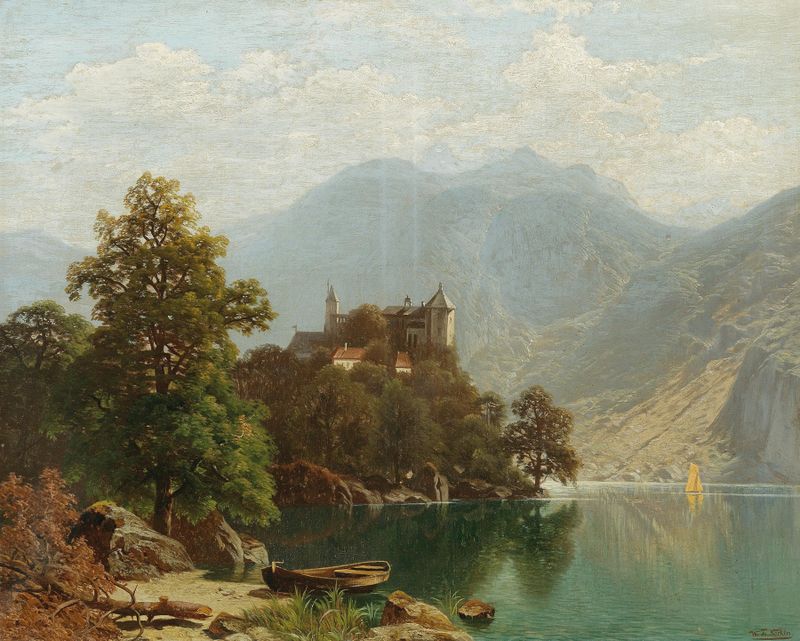
In View of Hallstatt, nostalgia spills from the canvas, weaving a tapestry of past moments that invite reflection and yearning. Focus on the serene water’s edge, where soft ripples mirror the quaint village nestled against the majestic mountains. The gentle hues of blue and green evoke a sense of calm, while pastel-colored houses intersperse the landscape, creating a harmonious blend of nature and humanity. The play of light casts intricate shadows, breathing life into the scene, drawing your gaze to the delicate interplay between the stillness of the lake and the robust presence of the mountains looming above. Delve deeper into the subtle contrasts within the painting.
The vibrant warmth of the homes stands in stark opposition to the cool, shadowy depths of the water, suggesting a delicate balance between safety and the unknown. This juxtaposition reflects the nostalgia of cherished memories and the transient nature of time. Additionally, the distant peaks, shrouded in mist, symbolize the passage of years, evoking a bittersweet longing for moments forever lost yet beautifully captured. Theodor Nocken, likely working during the late 19th century, painted this piece at a time when romanticism flourished in the art world.
Nestled within the idyllic Austrian landscape, he sought to capture the essence of a simpler time, mirroring the broader societal yearning for beauty and tranquility amidst the rapid changes of the industrial era. The painting stands as a testament to the artist’s desire to immortalize fleeting feelings through his brush.