Alpine Scene. — History & Facts
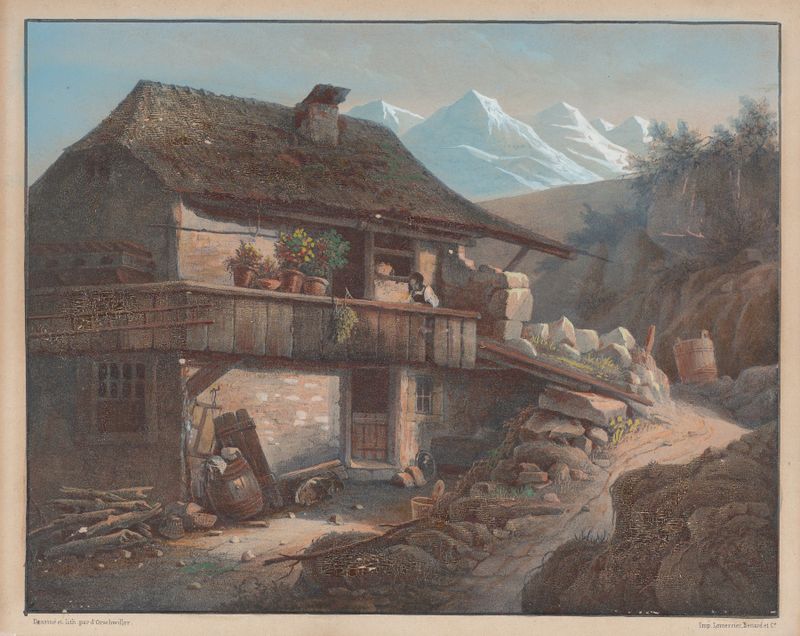
In each stroke, the wilderness transforms from a tumult of colors into a serene landscape, inviting reflection on nature's untamed beauty. Look to the left at the interplay of dark, swirling greens and browns that create the dense foliage of the Alpine trees. The peaks rise sharply in the background, their white caps shimmering with the soft touch of sunlight. Notice how the artist uses a palette of muted tones, punctuating the chaos with flashes of vibrant color—yellow wildflowers catch your eye, creating a lively contrast against the deep blues of the sky.
The composition draws the viewer's gaze upwards, as if urging one to explore the boundless horizon. Beneath the surface of this captivating scene lies a tension between tranquility and turmoil. The wildness of the brushwork evokes a sense of the unpredictable nature surrounding us, while the organized arrangement of the mountains imparts a feeling of stability. The contrasting elements suggest that within chaos lies an extraordinary harmony; nature breathes deeply, reminding us of its power and grace.
Each element, from the ominous clouds to the delicate petals, weaves together a narrative of coexistence in the face of disorder. Created during a time of exploration and innovation in the art world, the artist crafted this piece when traditional boundaries were being tested. Though the exact date remains uncertain, Boug d'Orschwiller was active in the late 19th century, a period marked by a shift towards impressionism and a deepening appreciation for plein air painting. This artwork reflects not just a moment in nature, but also the artist's personal journey through an evolving landscape of artistic expression.