
Altenhausen bei Freysing — History & Facts
Could beauty survive in a century of chaos? The question floats through the air, evoking a longing for the tranquility that art can preserve even amid turmoil. Look to the left at the lush, verdant fields, where a gentle breeze seems to sway the grasses like nature's own breath. The palette is rich with greens and golds, capturing a serene landscape under a clear sky. Notice how the light cascades softly, illuminating the distant hills, while the winding path invites the viewer's eye deeper into the scene.
The delicate brushwork creates a harmonious balance, suggesting both the majesty of the natural world and the quiet presence of life within it. Here, the contrasts are striking: the serenity of the landscape against the tumult of the times, the stability of the earth juxtaposed with the transient essence of memory. The faint outlines of a village in the distance hint at human stories intertwined with nature. This connection suggests that beauty and chaos coexist, woven together like threads in a tapestry, eternally echoing the past while offering a moment of calm reflection. In 1821, while creating Altenhausen bei Freysing, the artist was immersed in the Romantic movement, which emphasized emotion and nature.
Living in Bavaria, he captured the essence of his surroundings during a time when Europe was grappling with political upheaval and social change. His work reflects not only personal sentiment but also a broader cultural yearning for stability and beauty amid societal disruption.
More Artworks by Max Joseph Wagenbauer
Browse all →
Blick vom Ufer der Insel Mainau auf den Bodensee
Max Joseph Wagenbauer
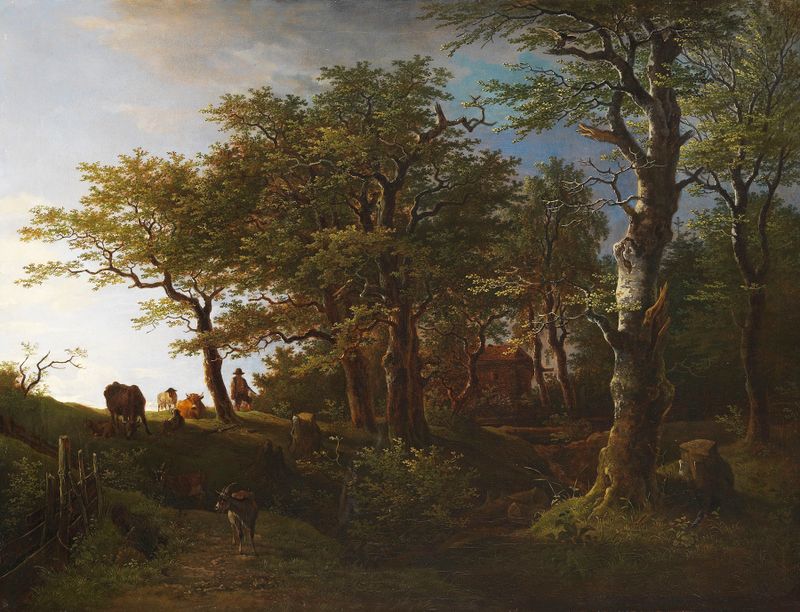
Lichte Waldlandschaft mit Vieh und Hirten
Max Joseph Wagenbauer
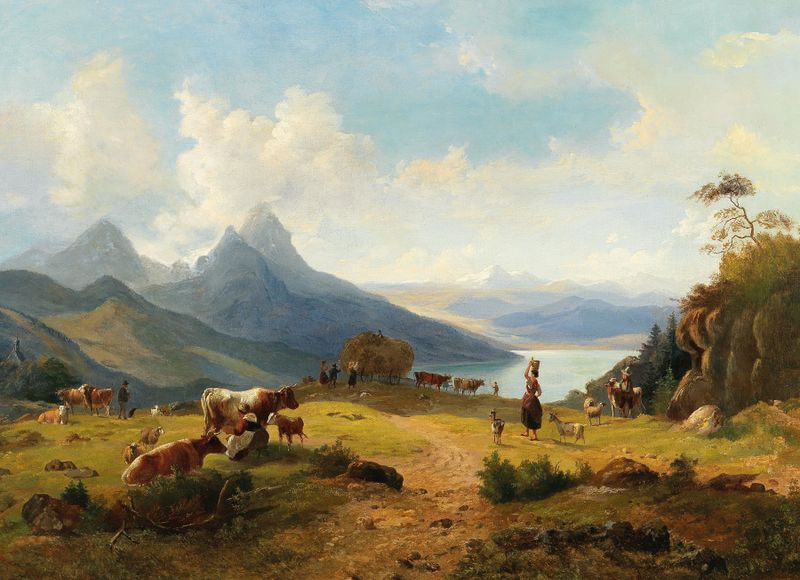
An Idyllic Mountain Landscape with a Herd of Animals and Shepherds
Max Joseph Wagenbauer

Sägemühle
Max Joseph Wagenbauer
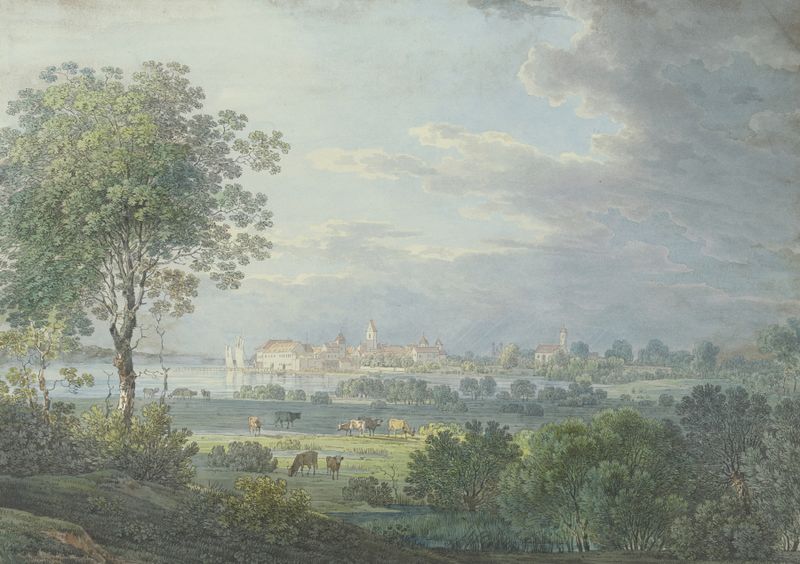
Auf dem Weg von Hofen nach Buchhorn am Bodensee
Max Joseph Wagenbauer





