Lichte Waldlandschaft mit Vieh und Hirten — History & Facts
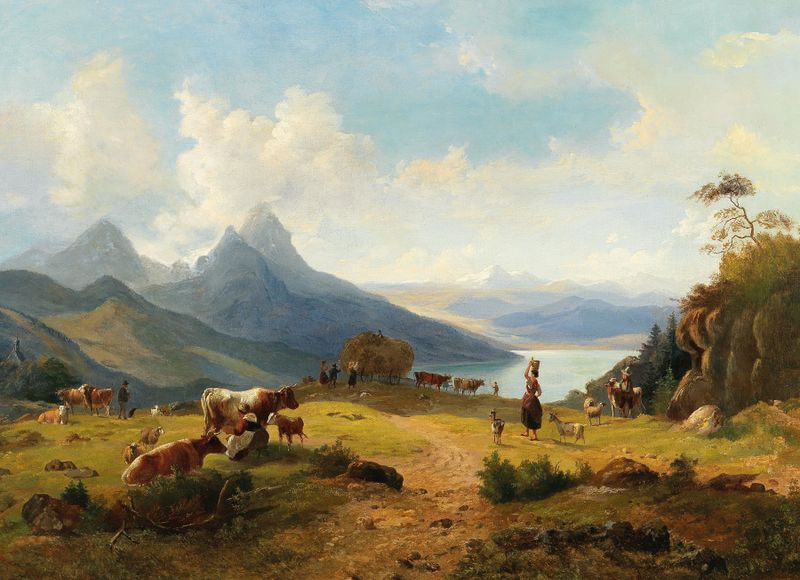
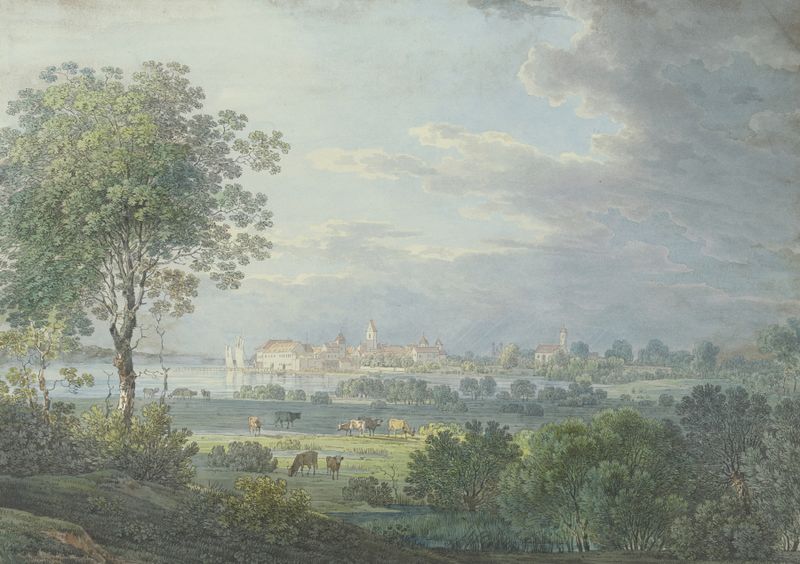
In the heart of nature, wild and untamed, beauty emerges from the tumult of the natural world. Focus first on the foreground, where the swirling greens and browns coalesce beneath the grazing cattle. Notice how Wagenbauer employs lively brushstrokes to evoke the rich texture of the landscape, breathing life into every blade of grass. The sunlight filters through the trees, casting dappled shadows across the scene, illustrating not just the vibrancy of the vegetation but also the harmony that exists between man and beast. Yet, beneath the tranquil surface lies an undercurrent of tension.
The juxtaposition of the serene cattle and the looming trees hints at the chaotic forces of nature that are ever-present, a reminder of the struggle for survival. The shepherd’s figure, slightly hunched and wrapped in gentle light, embodies the delicate balance between pastoral peace and the unpredictability of the wild. Each element reflects a coexistence of harmony and discord, encapsulating the essence of rural life. In 1807, Max Joseph Wagenbauer painted this work amidst the Romantic movement's embrace of nature's beauty and complexity.
During this period, artists sought to connect with nature in ways that acknowledged both its grandeur and its chaos. Living in Bavaria, Wagenbauer was influenced by the changing landscapes around him and the burgeoning appreciation for rural life, framing a moment of tranquility against the backdrop of nature’s unpredictable spirit.