
Sägemühle — History & Facts
Can beauty exist without sorrow? In Sägemühle, the essence of longing permeates the stillness, a poignant reminder of what was lost and what remains. Look closely at the left side of the canvas, where the aged wooden beams of the sawmill stand resolute against the waning light. The interplay of shadow and warmth creates a heart-wrenching contrast—golden hues mingle with deepening blues, suggesting the twilight of an era. Notice how each brushstroke captures the texture of the wood, inviting a tactile connection that evokes the ghosts of labor and time.
The serene river reflects this duality, its surface a mirror of both tranquility and turmoil. As you delve deeper, consider the figures in the background: silhouetted workers engage in their tasks, embodying a silent struggle between necessity and dream. Their labor, rendered with such graceful detail, speaks of perseverance tinged with unfulfilled aspirations. The juxtaposition of the natural landscape against the man-made structure evokes a striking tension between humanity’s ambitions and its ephemeral existence.
It is a moment suspended in time—beauty wrapped in melancholy. Max Joseph Wagenbauer created this work in 1815, a period marked by profound change in Europe. During this time, the artist was influenced by Romantic ideals, which celebrated nature and emotion amidst the backdrop of industrialization. Living in Bavaria, he witnessed the transformation of landscapes and lifestyles, reflecting these complexities in his art as he sought to capture the essence of a world caught between tradition and innovation.
More Artworks by Max Joseph Wagenbauer
Browse all →
Blick vom Ufer der Insel Mainau auf den Bodensee
Max Joseph Wagenbauer
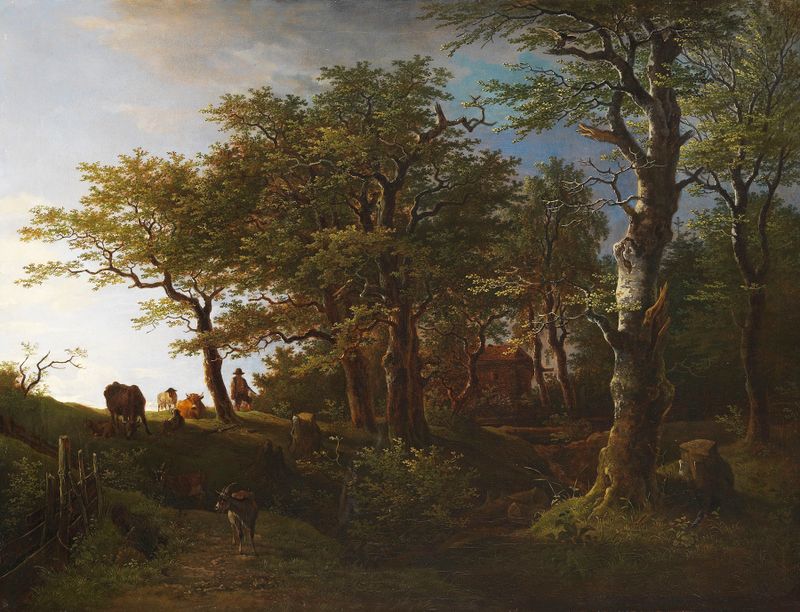
Lichte Waldlandschaft mit Vieh und Hirten
Max Joseph Wagenbauer
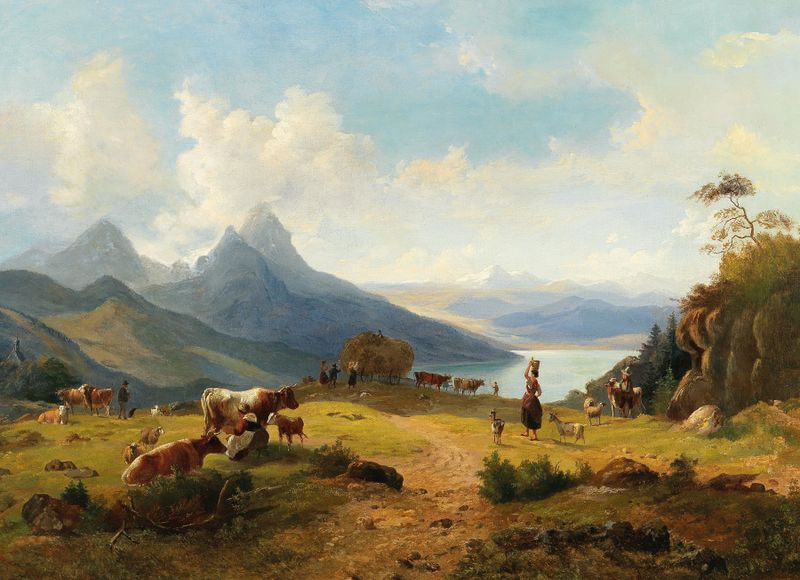
An Idyllic Mountain Landscape with a Herd of Animals and Shepherds
Max Joseph Wagenbauer
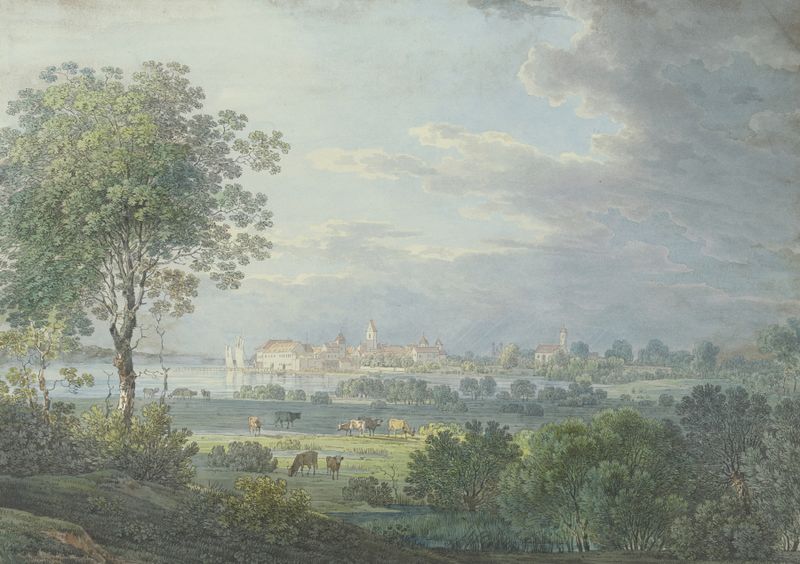
Auf dem Weg von Hofen nach Buchhorn am Bodensee
Max Joseph Wagenbauer

Altenhausen bei Freysing
Max Joseph Wagenbauer





