Am Markt — History & Facts
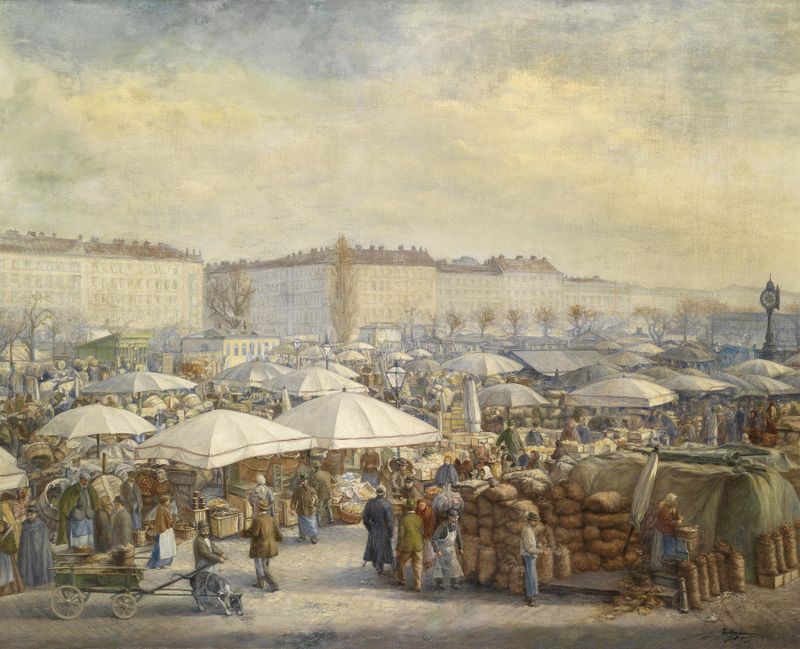
In the stillness of a bustling market, the weight of unspoken sorrow lingers. How can vibrant life coexist with hidden grief? This question resonates in the layers of color and brushwork. Focus on the left side of the canvas where figures in traditional attire barter with lively gestures, their expressions a tapestry of emotions. Notice how the warm ochres and reds of their garments contrast sharply against the cooler tones of the cobblestone street, creating a dance of life and vibrancy.
The chaos of the marketplace hums with energy, yet an undertone of melancholy seeps through the artist's careful strokes, inviting you to explore the nuances beneath the surface. As you delve deeper, observe the solitary figure in the background, removed from the lively exchange. This person, shrouded in shadow, embodies a profound sense of longing or loss. The juxtaposition of jubilant marketgoers and this solitary presence heightens the emotional tension, suggesting that amidst communal joy, personal grief persists.
The swirling mists of color further accentuate this contrast, hinting at the fragility of happiness against an unseen sorrow. Carl Massmann painted Am Markt in 1898 during a time of personal and societal change. Living in Germany, he was influenced by the shifting art movements of the late 19th century, which pushed towards realism yet often hinted at deeper emotional truths. While grappling with his own experiences of loss, Massmann captured a scene that reflects the duality of existence—where joy and grief intertwine, eternally connected.