
Am Ufer der Waal — History & Facts
In Am Ufer der Waal, the interplay between nature and mortality is rendered in delicate strokes, evoking a sense of fleeting beauty that resonates deeply within the viewer. Look to the lower right, where the tranquil waters of the Waal shimmer under a soft dawn light, drawing your gaze into the serene landscape. The gradient of blues and greens blends harmoniously, while gentle brushwork captures the rippling surface, suggesting both movement and stillness. The trees lining the bank are painted with a rich green that almost seems to whisper stories of seasons past, inviting reflection on the transient nature of life. Yet, beneath the surface beauty, there lies an emotional tension; the fading light hints at endings, while the vibrant foliage celebrates life.
The juxtaposition of the calm water and the towering trees suggests both harmony and the inevitability of change. Each element—the reflection in the water, the rustling leaves—whispers of moments lost to time, urging the viewer to contemplate their own existence amidst nature's relentless cycle. In 1880, Schönleber was working in Germany, a period marked by a growing interest in capturing the ephemeral qualities of light and atmosphere. During this time, the art world was shifting towards impressionism, revealing a deeper exploration of emotion and perception.
This painting reflects that transition, as Schönleber deftly navigates the line between realism and the evanescent, creating an indelible reminder of life’s fragility.
More Artworks by Gustav Schönleber
Browse all →
Venezianisches Fischerboot
Gustav Schönleber
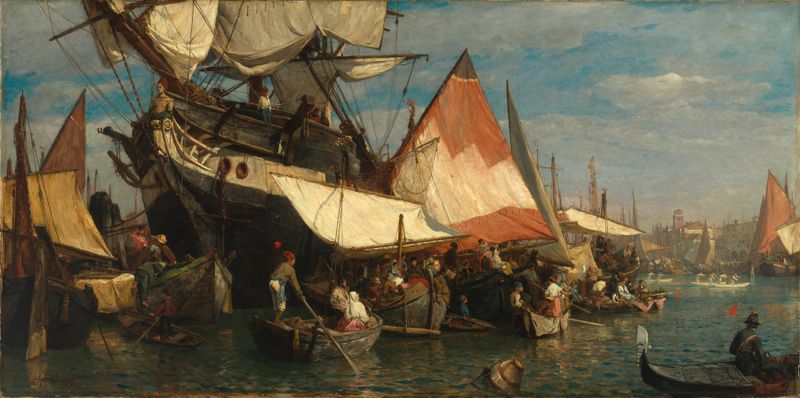
Regatta in Venedig
Gustav Schönleber
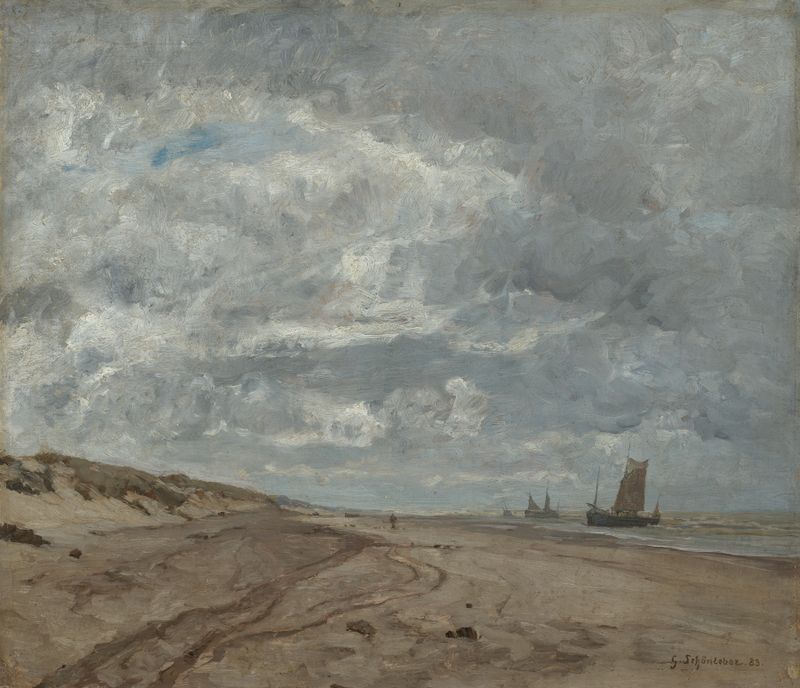
Strand von Scheveningen
Gustav Schönleber

San Fruttuoso
Gustav Schönleber

Quinto al Mare (Genua)
Gustav Schönleber

Venezianische Häuser an einem Kanal
Gustav Schönleber
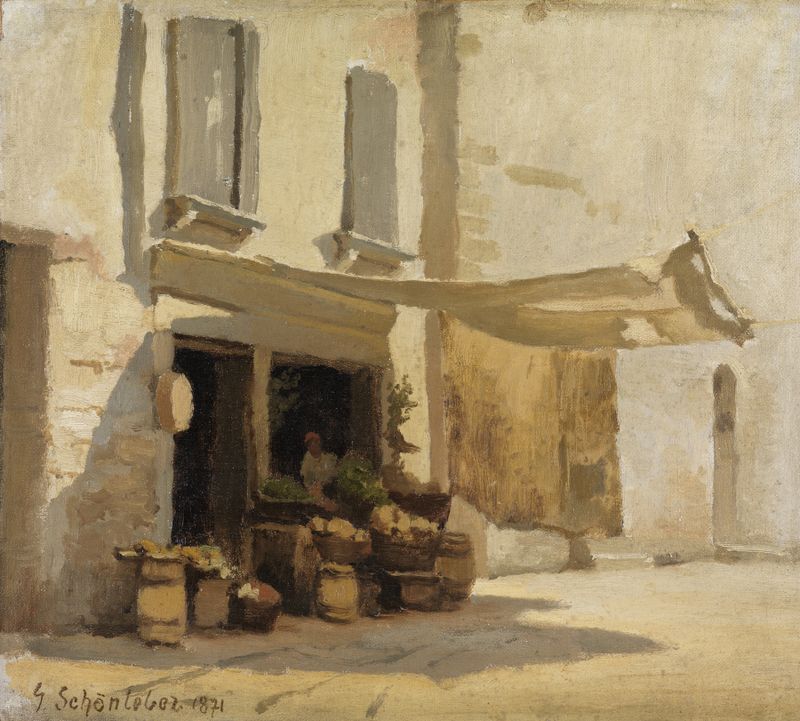
Obstbude in Venedig
Gustav Schönleber
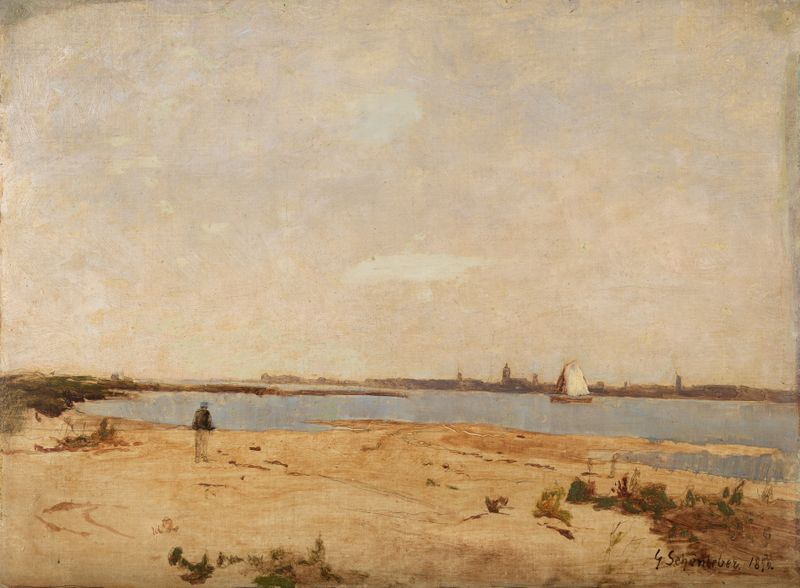
Blick auf Gorkum
Gustav Schönleber

Hafeneinfahrt von Vlissingen
Gustav Schönleber

Molo in Genua
Gustav Schönleber





