
Blick auf Gorkum — History & Facts
Can paint confess what words never could? In Blick auf Gorkum, the artist captures a moment steeped in nostalgia and the whispers of history, inviting viewers into a dialogue where brush and canvas speak of legacy and memory. Look to the left at the warm, golden hues of the evening sky, where clouds swirl gently, their soft textures contrasting against the sharp contours of Gorkum's architecture. Focus on the meticulous details of the buildings, their reflections shimmering subtly in the water below, as if the city is cradled in a dream. The palette, rich with browns and blues, evokes both tranquility and a sense of longing, while the fluid brushwork flows harmoniously, guiding the eye through the landscape. Amidst this serene tableau lies a tension between permanence and transience.
The vibrant colors capture the vitality of a lively city, yet the still water suggests moments frozen in time, evoking a sense of fleeting beauty. Each brushstroke tells a story of resilience, as the structures endure the passage of time, serving as a silent witness to the lives that unfold within their walls. This juxtaposition of the bustling life and the calm of nature speaks to the duality of existence, suggesting that all things, even cities, are ephemeral. In 1876, Gustav Schönleber painted this enchanting scene during his stay in the Netherlands, a period marked by a growing fascination with capturing the essence of everyday life and landscapes.
The artist, influenced by the Impressionist movement, sought to blend light and color in innovative ways, reflecting a broader shift in the art world towards more emotive and atmospheric representations. His work at this time was pivotal in establishing a legacy that would resonate with future generations of artists.
More Artworks by Gustav Schönleber
Browse all →
Venezianisches Fischerboot
Gustav Schönleber
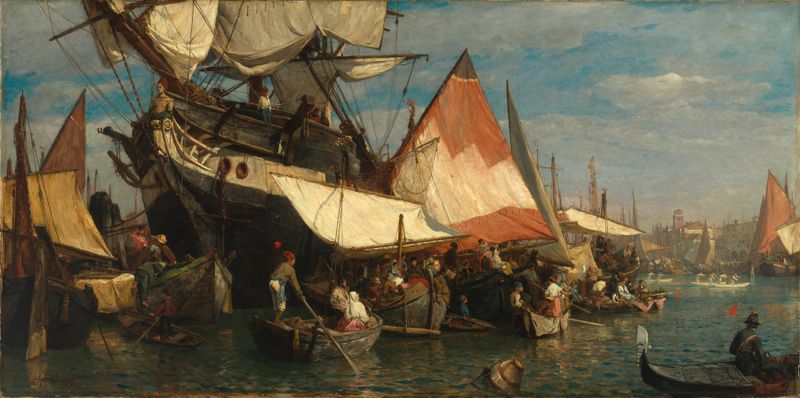
Regatta in Venedig
Gustav Schönleber
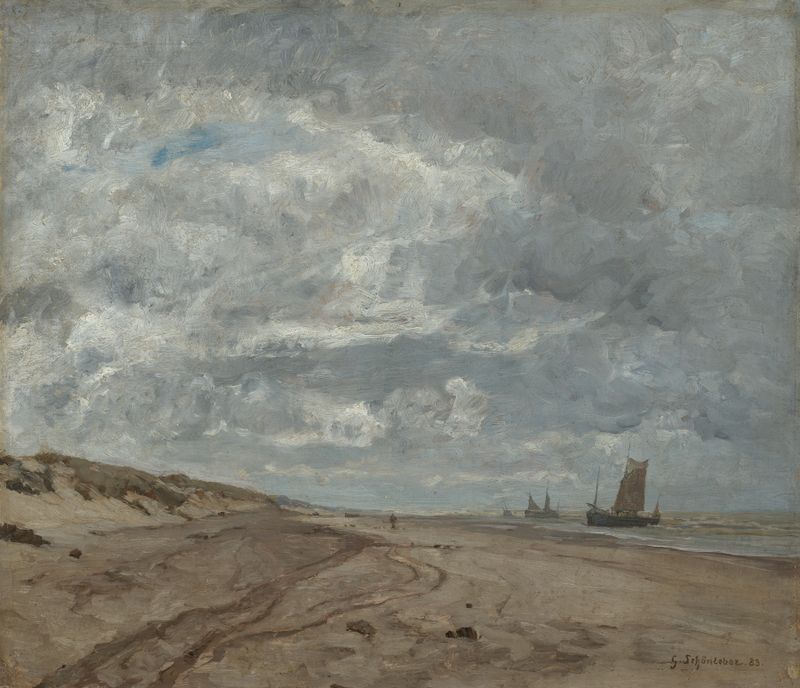
Strand von Scheveningen
Gustav Schönleber

Am Ufer der Waal
Gustav Schönleber

San Fruttuoso
Gustav Schönleber

Quinto al Mare (Genua)
Gustav Schönleber

Venezianische Häuser an einem Kanal
Gustav Schönleber
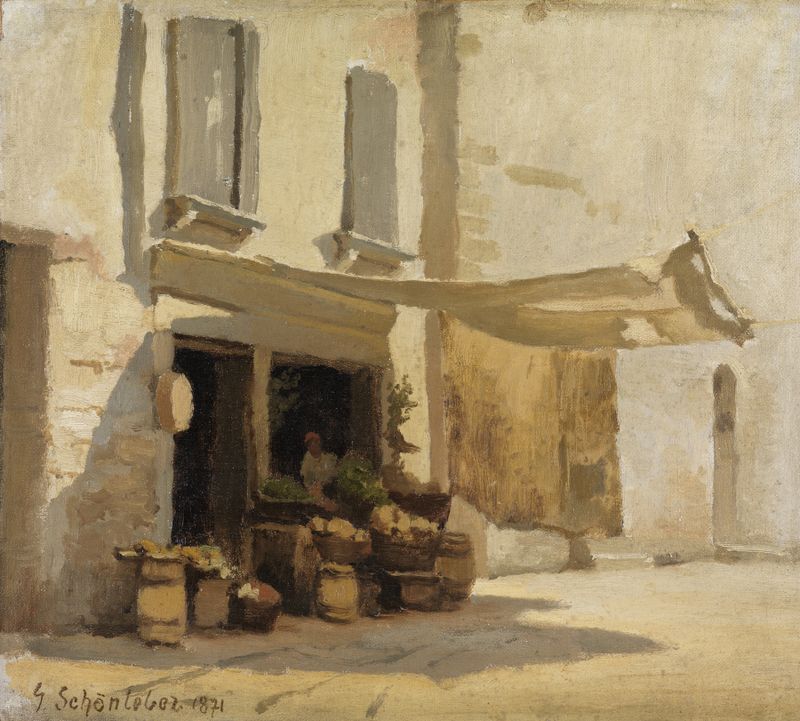
Obstbude in Venedig
Gustav Schönleber

Hafeneinfahrt von Vlissingen
Gustav Schönleber

Molo in Genua
Gustav Schönleber





