
Ambushing an Army Convoy — History & Facts
Did the painter know this moment would outlive them? In Ambushing an Army Convoy, a scene of grief unfolds amidst the turmoil of war, capturing the fragile line between life and death. Look to the center of the canvas where the chaotic confrontation between armed soldiers erupts. The figures, frozen in a violent ballet, are dramatically highlighted by a stark contrast of light and shadow. Notice how the ochre and muted greens invoke the somber atmosphere, while the brushwork creates a sense of urgency, as if the viewer could almost hear the clattering of hooves and the distant cries of anguish.
The meticulous detail of their expressions and postures draws the eye, compelling one to absorb the gravity of the unfolding tragedy. Delve deeper into the emotional undercurrents that permeate this artwork. The ambushers, their faces painted with a mix of fear and determination, reflect the internal struggle of those who resort to violence driven by desperation or loss. In the distance, the fading light hints at both the literal dusk approaching and the metaphorical decline of hope.
The looming trees on the periphery serve as silent witnesses to this agonizing moment, emphasizing the isolation of the conflict against the vastness of nature. Pieter Post, an influential Dutch painter, created this work in 1631 while socio-political tensions in Europe brewed. Living in a time when the Thirty Years' War was ravaging the continent, he navigated an artistic landscape where historical narratives were gaining prominence. This piece, resonant with the somber realities of his era, reflects his commitment to portraying the visceral nature of human conflict through art.
More Artworks by Pieter Post
Browse all →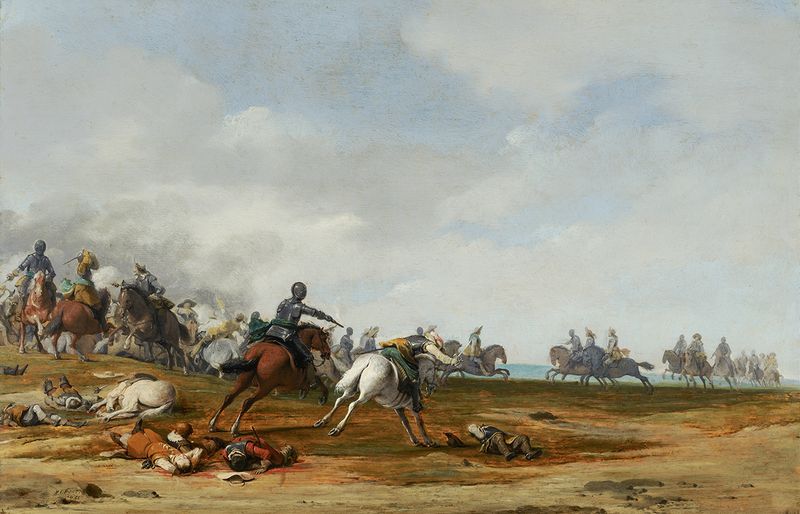
More Historical Art
Browse all →
The Night Watch Militia Company of District II under the Command of Captain Frans Banninck Cocq
Rembrandt van Rijn
Lincoln Memorial
Henry Bacon
The Third of May 1808
Francisco de Goya

Isaac and Rebecca, Known as ‘The Jewish Bride’
Rembrandt van Rijn
The Charge of the Mamelukes (1814)
Francisco de Goya

De vier ruiters van de apocalyps
Albrecht Dürer