An Afternoon In Cairo — History & Facts
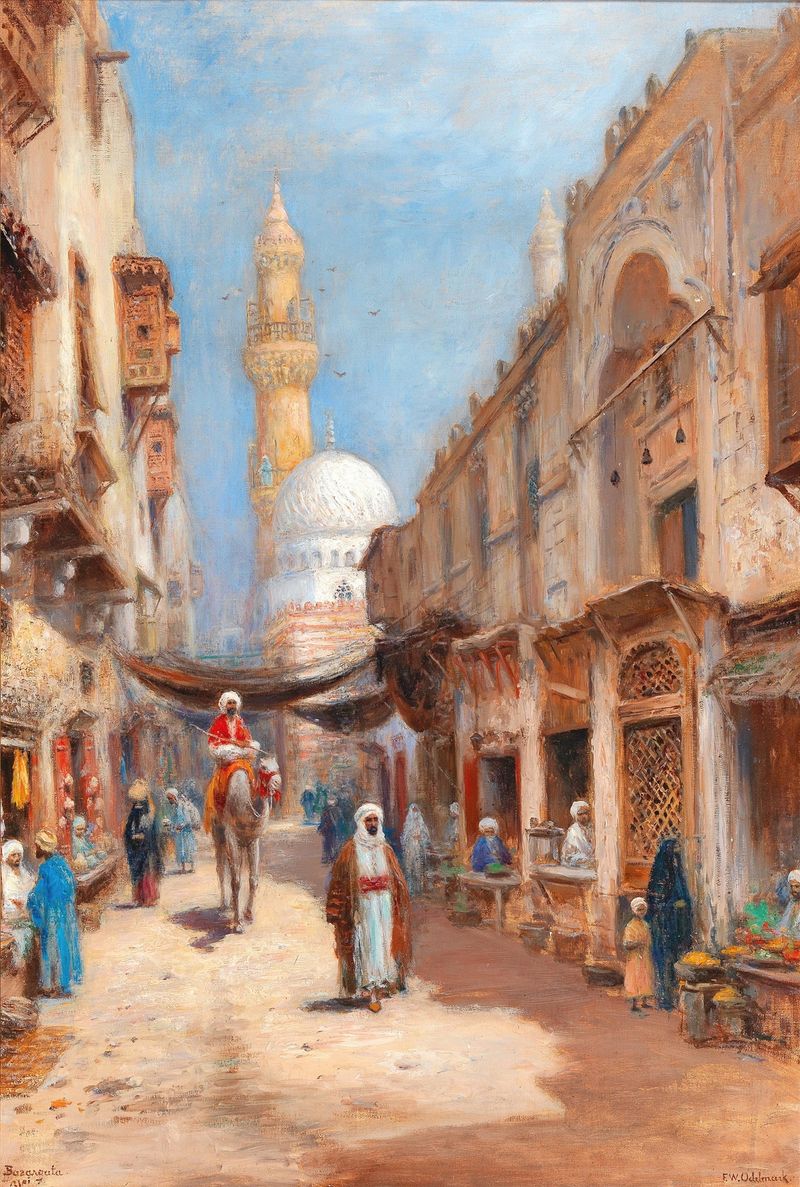
Who listens when art speaks of silence? In the hushed expanse of An Afternoon In Cairo, a world of rebirth unfolds beneath the warm embrace of a golden sun. The interplay of light and shadow invites us to reflect on the moments that linger, suspended in time. Look to the center of the canvas, where the sun-drenched figures come alive. Notice how the warm ochres and deep blues dance together, creating a vibrant yet serene atmosphere.
The artist's brushstrokes weave a tapestry of intricate details, from the folds of flowing garments to the delicate architecture in the background. Each element draws you inward, urging your eyes to roam and discover the harmony within this everyday scene. Yet beneath this apparent tranquility lies a palpable tension. The juxtaposition of bustling life and the stillness of the figures evokes a sense of contemplation—perhaps a moment of pause within the chaos of the world.
The viewer can sense the emotional weight borne by each character, as if they carry stories untold, bridging the gap between past and present. This artwork captures the essence of rebirth, not only in the physical landscape but also in the spirits of its people. Frans Wilhelm Odelmark painted this piece during a time when the art world was shifting, embracing new styles and perspectives. Little is known about the exact date of its creation, but his works often reflect a fascination with cultural landscapes and intimate human connections.
This period, marked by exploration and discovery, allowed Odelmark to develop his unique voice, positioning him among the era's notable artists.