
An Allegory of Summer — History & Facts
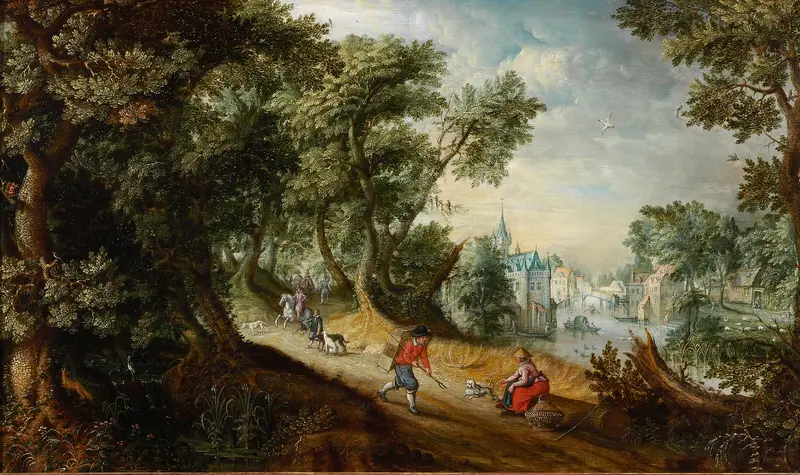
The first thing that draws the eye in An Allegory of Summer by Adriaen van Stalbemt is the gentle, almost theatrical wash of light that spills across the fields, as if the sun itself has paused to linger over the labors of the season. The windmill stands sentinel at the left, its sails frozen in a moment of stillness, while figures below bend to their work or trundle baskets up the path. Every gesture in this landscape is purposeful: the bowed heads and laden arms speak of harvest, of the quiet industry that fills the long days.
The palette is cool and clear, with the green of the grass and the blue of the sky given equal weight, inviting the viewer to wander from the shaded foreground to the sunlit farms beyond. Rather than a grand narrative, the painting offers a tapestry of rural life, each small drama contributing to the larger rhythm of summer. Painted between 1610 and 1662, this work belongs to a tradition of allegorical landscapes that flourished in the Low Countries, where artists like van Stalbemt found inspiration in the cycles of nature and the daily rituals of the countryside. Such paintings were often commissioned by prosperous burghers or collectors who sought reminders of the harmony between human labor and the land—a theme that resonated in a time of economic growth and social change.
Though little is recorded about the specific journey of this painting, its presence in a modern collection speaks to the enduring appeal of these scenes. Looking again, one finds new details: a figure resting in the shade, sheep scattered like punctuation across the meadow, the distant shimmer of a village—each a reminder of how summer, in art as in life, is made up of a thousand quiet moments.
More Artworks by Adriaen van Stalbemt

Countryside landscape with staffage
Adriaen van Stalbemt
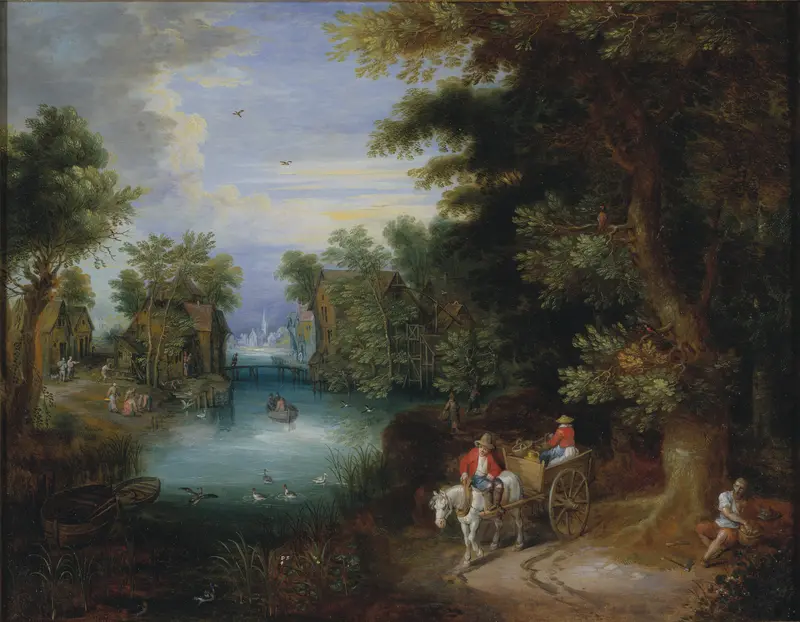
River Landscape with Peasants
Adriaen van Stalbemt
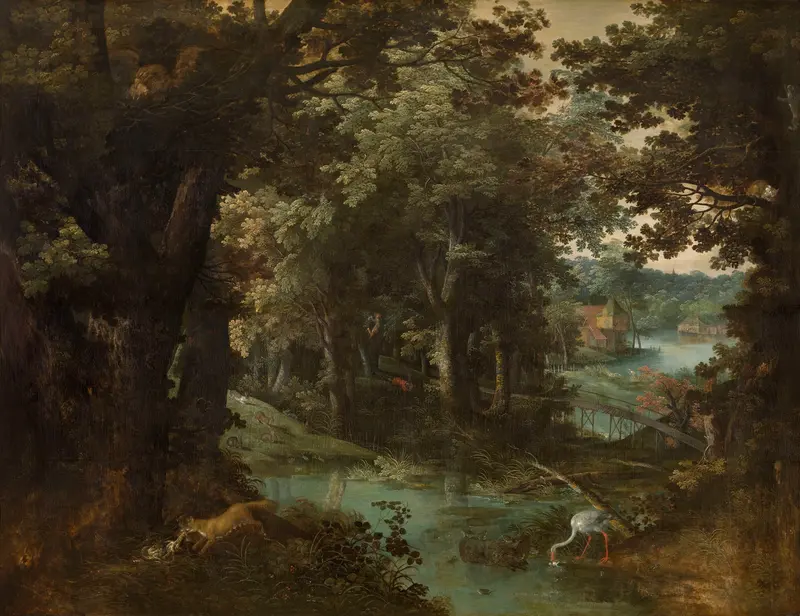
Landscape with Beast Fables
Adriaen van Stalbemt
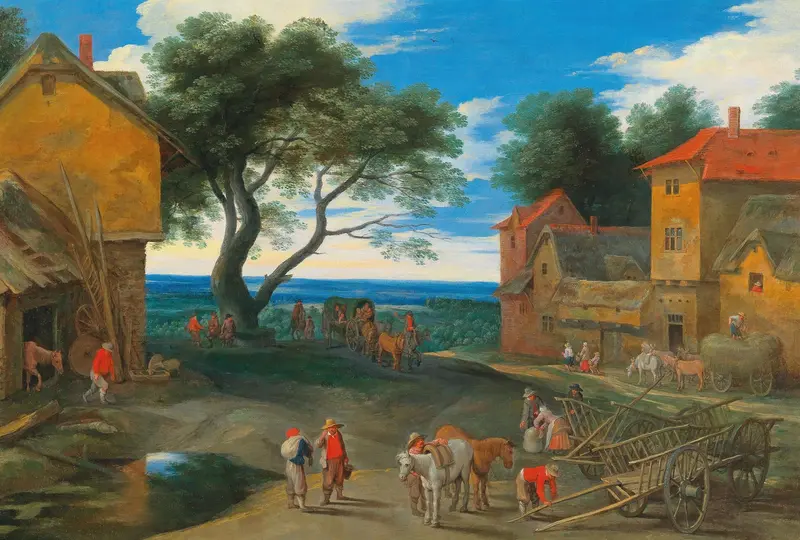
Travellers in a landscape with buildings
Adriaen van Stalbemt
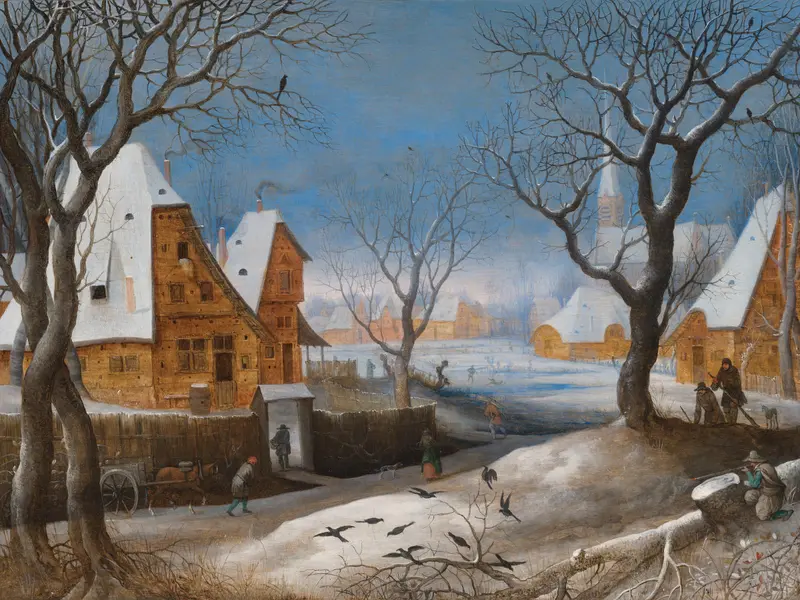
A winter landscape, with figures in a village
Adriaen van Stalbemt
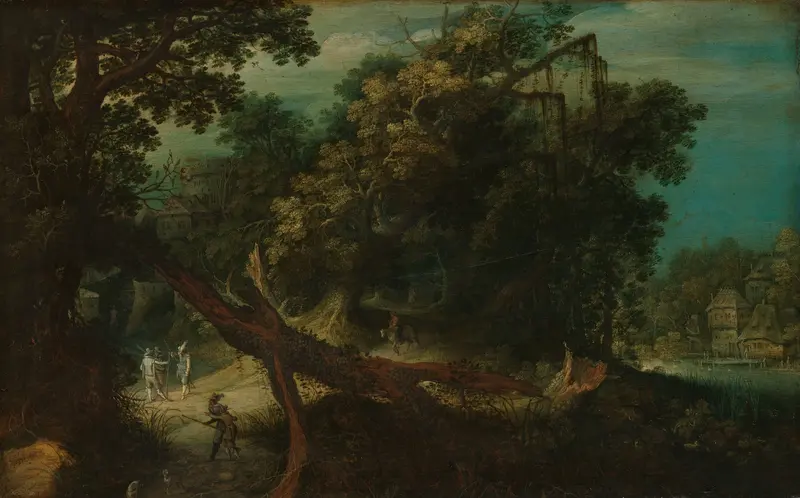
Shooters in a Forest Glade
Adriaen van Stalbemt
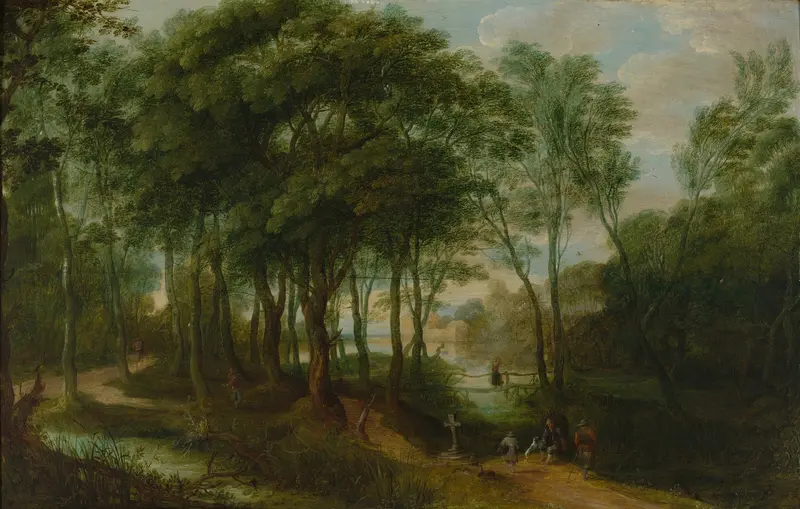
Figures On A Wooded Path, With A Building Behind
Adriaen van Stalbemt
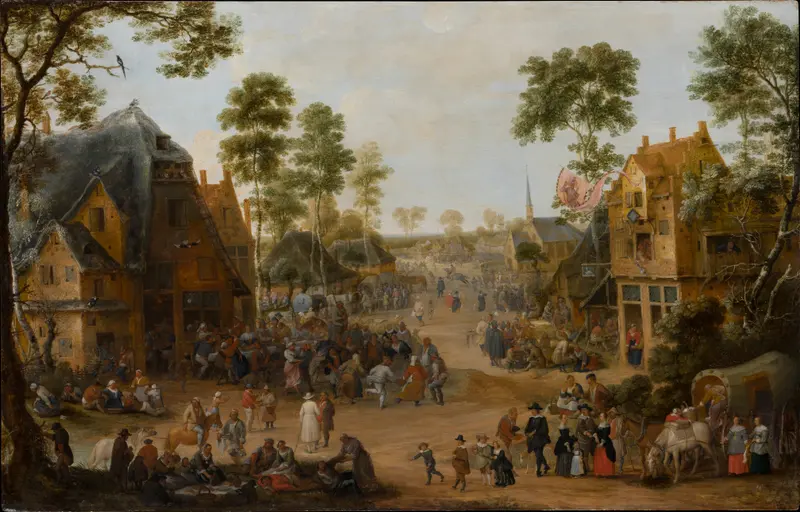
Village Church Festival
Adriaen van Stalbemt
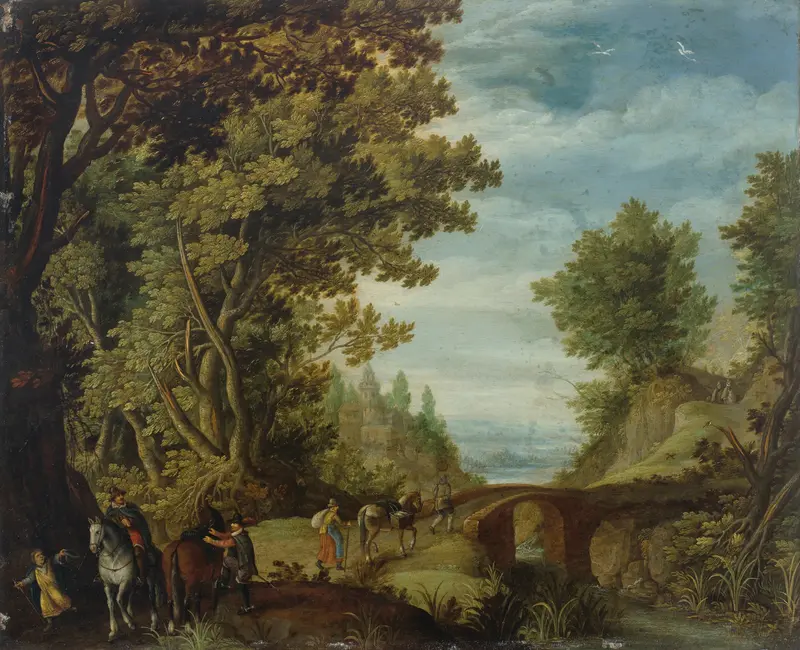
A wooded landscape with travelers crossing a bridge
Adriaen van Stalbemt
Landschap met rivier
Adriaen van Stalbemt





