An der Abzucht (in Goslar) — History & Facts
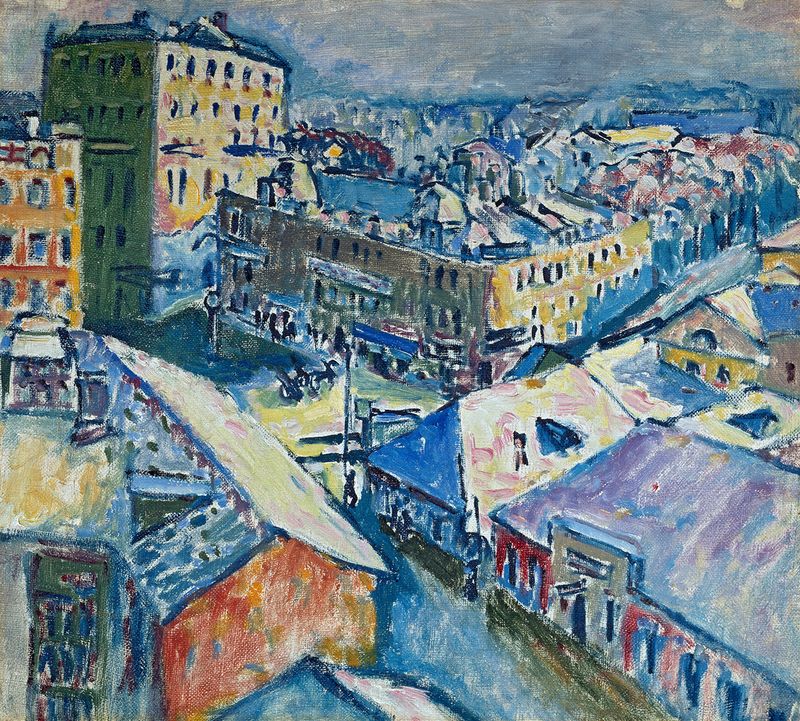
Is this a mirror — or a memory? In An der Abzucht, light dances on the surface, creating a dialogue between reality and reflection, illuminating the tensions of existence and the balance we often seek. Look to the left at the bold, swirling forms of an abstract landscape, where earthy tones meet deeper shades, offering a grounding presence. Notice how the interplay of shadow and light draws your gaze to the central figure, poised along the water's edge, which hints at both serenity and uncertainty. The composition invites contemplation, with the fluid lines leading your eye, crafting a sense of movement that is both tranquil and dynamic. Within this artwork, the stillness of the water contrasts sharply with the swirling brushstrokes that evoke the chaotic nature of life.
The figure, seemingly lost in thought, captures the delicate balance between introspection and the external world. Each element — from the whispering trees to the reflective surface — suggests the quest for harmony amidst inner turmoil, urging us to find equilibrium within our own experiences. Rudolf Wacker painted An der Abzucht in 1932 while living in Germany, a time marked by political upheaval and artistic experimentation. As part of the New Objectivity movement, he sought to balance realism with emotional depth, reflecting not just his personal experiences but also the collective anxieties of a changing society.
This work showcases his exploration of form and feeling during a period when art became a means to question the world around him.