Bodenseelandschaft — History & Facts
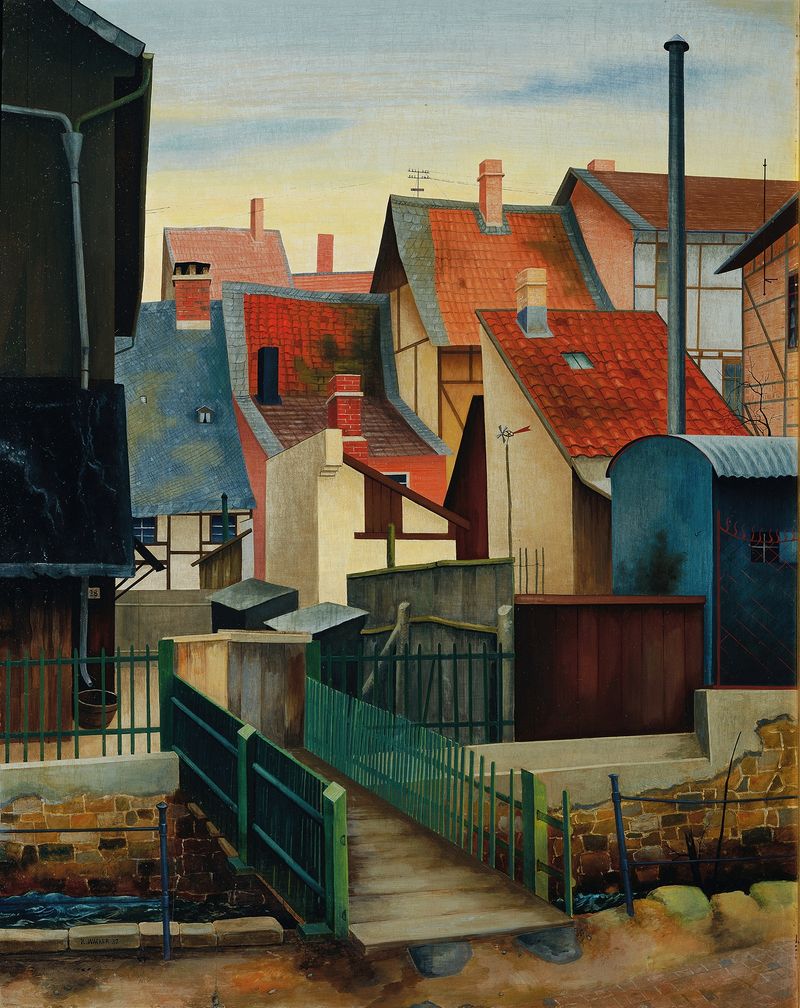
This tension between disorder and beauty dances through the layers of color and form, inviting contemplation on the nature of existence itself. Focus your gaze on the vibrant interplay of blues and greens, where the depths of the lake meet the undulating hills. Notice how the artist masterfully blends the hues, creating a sense of movement that suggests the water's currents and the whisper of the wind. Look closely at the textured strokes that form the lush vegetation; they pulse with life, evoking an energy that belies the serene landscape.
Each layer seems to vibrate, pulling you deeper into this dynamic world. Beneath the surface, the painting hints at the fragility of harmony in nature. The bright, chaotic splashes of color mirror the unpredictability of life, while the gentle curves of the hills suggest a comforting stability. This contrast invites the viewer to reflect on the tension between chaos and order, perhaps hinting at the struggles and triumphs that coexist in any landscape, both physical and emotional.
The balance struck here speaks to the duality of perception, where beauty often emerges from turbulent beginnings. In 1928, Wacker was immersed in the art scene of interwar Germany, a time of both personal exploration and societal upheaval. Living in the picturesque surroundings of Lake Constance, he drew inspiration from the natural beauty that enveloped him. During this period, as artists grappled with the remnants of World War I and the shifting cultural landscape, Wacker's work evolved to capture the essence of nature, infusing his scenes with both tranquility and an undercurrent of chaos that reflects the complexities of the human experience.