Gruyères — History & Facts
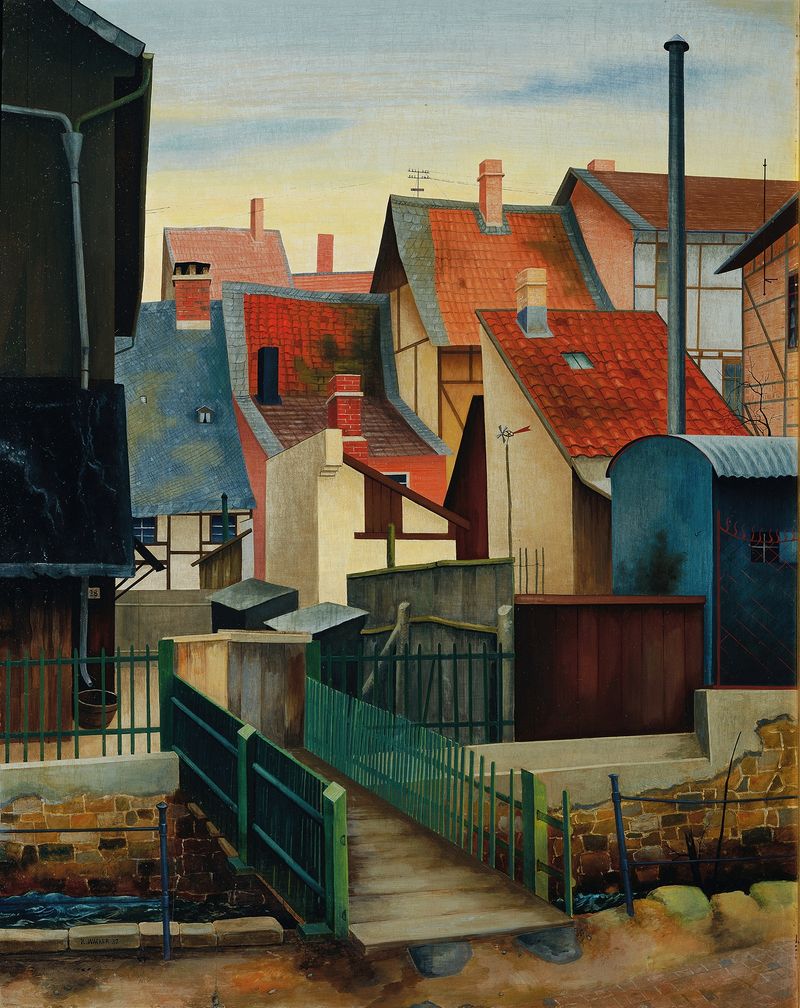
In the stillness of Gruyères, shadows weave through the landscape, revealing an unspoken tension beneath the surface. This moment captures not just a place, but the weight of history that lingers like ghostly whispers among the hills. Look to the left at the swirling clouds painted in hues of deep blue and grey, as they loom over the rugged terrain. Notice how the artist contrasts the soft, inviting greens of the valley with the jagged lines of the mountains, creating a visual conflict that draws the eye upward.
The starkness of the structures nestled within the landscape hints at human presence, while the muted palette evokes a somber mood, inviting contemplation of the violence that may have shaped this serene vista. There is an underlying tension in the work, where nature's beauty collides with an unsettling reminder of turmoil. The rocky formations, with their sharp edges, could symbolize the harsh realities of existence, while the serene valley below belies the potential for conflict. Here, the landscape is both inviting and foreboding, a duality that reflects the complexities of the human experience. In 1930, Wacker created this piece during a period of personal exploration and artistic innovation.
Living in Switzerland, he was influenced by the tumultuous political climate of Europe, which echoed the emerging modernist movements in art. At this time, he was refining his approach to representational forms, blending realism with emotional depths that would resonate throughout his career.