An der Klostermauer in Opocno (früher auch Opocen; deutsch Opotschno), Tschechien — History & Facts
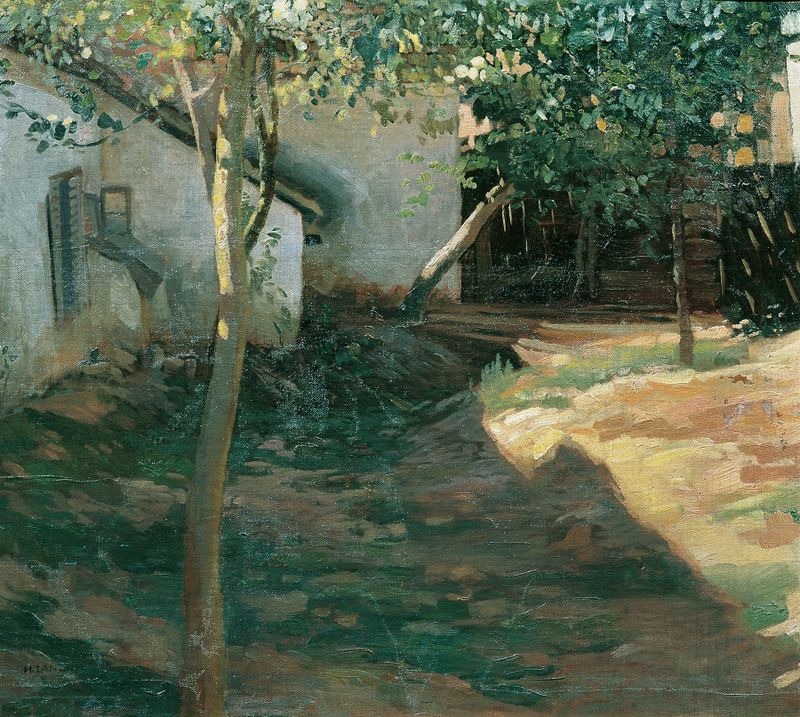
In a world where moments dissolve into the ether, art becomes a vessel of revelations, capturing the essence of fleeting existence. Begin your exploration to the left, where the weathered stone wall stands resolute, its texture rich with history. Notice the play of soft light that caresses its surface, illuminating the contours and casting gentle shadows that breathe life into the structure. The lush green foliage that clings to the wall contrasts against the starkness of the stone, and the slightly overcast sky adds a sense of introspection to the overall composition.
Each brushstroke seems deliberate, inviting the viewer to ponder the passage of time and the stories held within this serene yet poignant scene. As you delve deeper, consider the juxtaposition of nature and architecture, where the wall represents human endeavor and the surrounding foliage symbolizes the relentless pursuit of nature to reclaim space. The quiet solitude evokes a sense of reflection, suggesting a dialogue between humanity and the environment. The hidden layers within the colors and textures seem to whisper of lost moments, of lives once lived against this backdrop, prompting an emotional resonance that transcends the mere visual. Hubert Landa created this work in 1930 while living in Czechoslovakia, amidst the interwar period—a time marked by hope, uncertainty, and a burgeoning sense of modernism in art.
The tensions of the era influenced his exploration of identity and memory, as he sought to capture not just the physical world but the emotional landscapes within it. Here, in An der Klostermauer in Opocno, he masterfully intertwines the historical and the personal, offering a glimpse into a time that feels both distant and immediate.