Donaulandschaft — History & Facts
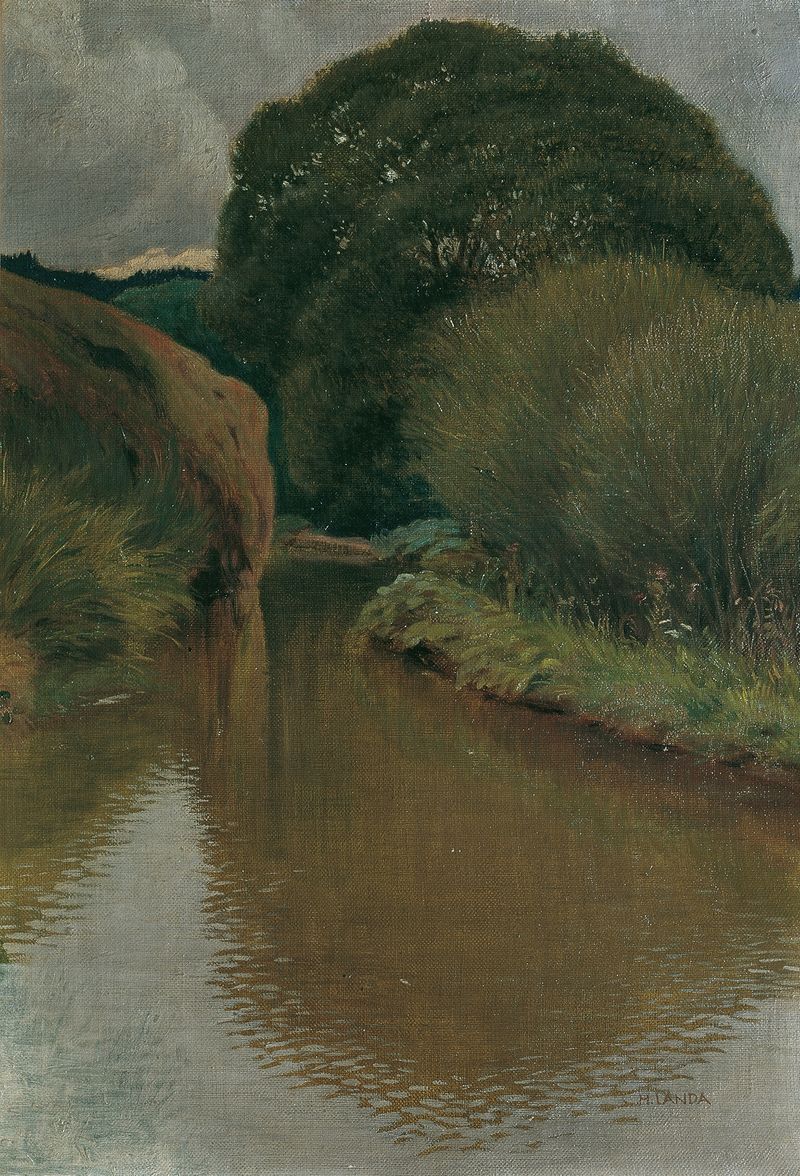
Can beauty exist without sorrow? In Donaulandschaft, the interplay between gentle landscapes and a hint of melancholy invites us to ponder this profound question. Focus first on the horizon, where soft, undulating hills embrace the river, a ribbon of shimmering blue that dances with the sunlight. The artist employs a palette of cool greens and warm golds, creating a vibrant, yet tranquil atmosphere. Notice how the light falls upon the water, casting reflections that seem to ripple with the promise of movement, suggesting both the passage of time and the fleeting nature of beauty.
Each stroke reveals an intimate knowledge of nature, capturing not only landscapes, but the emotions they evoke. Delve deeper into the canvas, and you’ll discover the tension between serenity and an underlying sense of longing. The expansive sky, dotted with soft clouds, hints at the vastness of the world beyond this idyllic scene, while the flowing river symbolizes both life and the inevitability of change. Small figures in the distance, almost imperceptible, remind us of human presence, evoking a sense of solitude amidst the grandeur of nature.
This duality creates a poignant atmosphere, echoing the idea that beauty often exists in tandem with the awareness of loss. In 1895, Hubert Landa was immersed in the burgeoning art scene of Vienna, where the influence of Impressionism was shaping new perspectives on light and color. Living amid a time of significant social and artistic change, he sought to capture nature's ephemeral moments, reflecting both the beauty and transience of life. The world was filled with innovation and turmoil, and Landa's work emerged as a testament to the delicate balance of joy and melancholy found in the natural landscape.