Im Zwetschkengarten (Waldviertel) — History & Facts
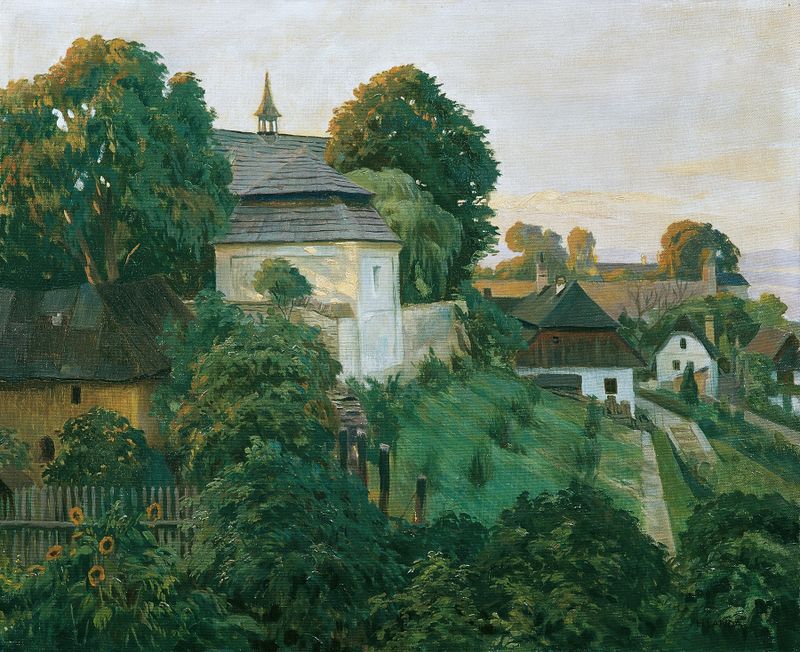
In the delicate interplay of light and shadow, the quiet depths of the natural world reveal the complexity of existence. Look to the center of the composition, where the lush greenery of trees interlaces with the sun-dappled ground. Notice how the shadows of branches stretch and twist into intricate patterns, creating a dance between light and dark that invites contemplation. The muted hues of greens and browns speak of serenity, while hints of golden sunlight break through, illuminating the vibrant life beneath the canopy.
The careful brushwork and layered textures add depth, drawing the viewer into a moment suspended in time. Yet, beneath this surface beauty lies a tension that suggests longing and solitude. The shadows, while enchanting, also evoke feelings of concealment—a reminder that not all is as it seems in this garden. Each play of light hints at hidden stories, whispering of the complexities of nature and the human experience intertwined within it.
This duality transforms the serene landscape into a poignant reflection on the interplay of joy and sorrow, life and the unseen burdens we carry. During the years 1910-1911, the artist crafted this work in the Waldviertel region of Austria, a time when he was deeply engaged in exploring the essence of his surroundings. Emerging from a background rich in the traditions of Austrian art, his focus on the natural world reflects both the influence of early 20th-century movements and a personal quest for authenticity in an increasingly modern society.