An Elopement by Moonlight — History & Facts
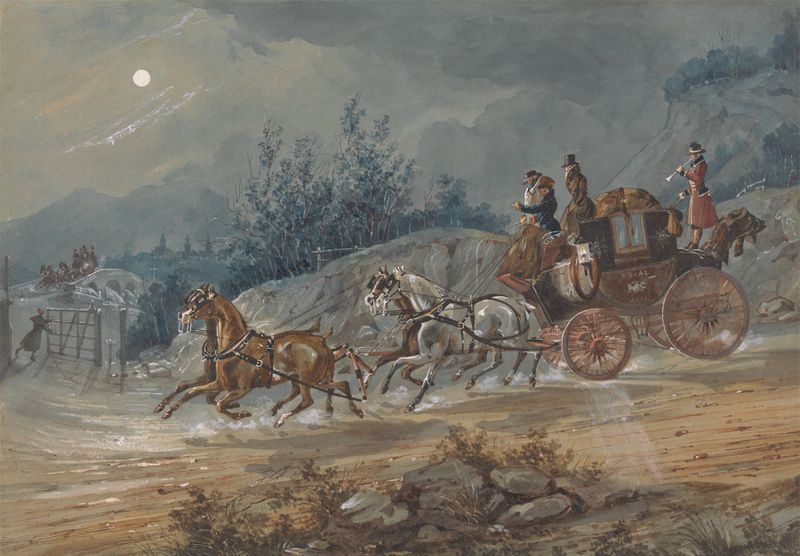
Is this a mirror — or a memory? In An Elopement by Moonlight, the tranquil yet charged atmosphere captures the essence of clandestine love, where the boundaries of reality and fantasy intertwine. Look to the center of the canvas, where a couple stands hand in hand, illuminated by the silvery glow of the moon. The lush greenery surrounding them frames their intimate moment, while the soft hues of blue and silver blend seamlessly into the night sky. Notice how the artist’s brushwork captures the delicate interplay of light and shadow, evoking a sense of mystery and enchantment.
The shimmering water reflects their figures, blurring the line between their presence and the dreamlike quality of the scene. Delve deeper into the painting, and you'll uncover layers of meaning. The couple's tender expressions convey a mix of ecstasy and anxiety, embodying the thrill of elopement against societal expectations. Additionally, the contrast between the serene landscape and the couple’s charged emotions serves as a reminder of the dichotomies of love—joy intertwined with risk, freedom accompanied by the weight of consequence.
The moon, a symbol of secrecy and revelation, oversees their union, enhancing both the romance and the potential for peril. In 1834, the artist created this work during a period when romanticism was flourishing in art, drawing inspiration from the natural world and human emotion. Newhouse, an American painter, was known for his ability to capture the nuances of light and atmosphere, and this piece reflects both his technical prowess and the broader artistic movements of his time, as artists sought to explore the depths of human connection and experience.