The London-Dover Royal Mail — History & Facts
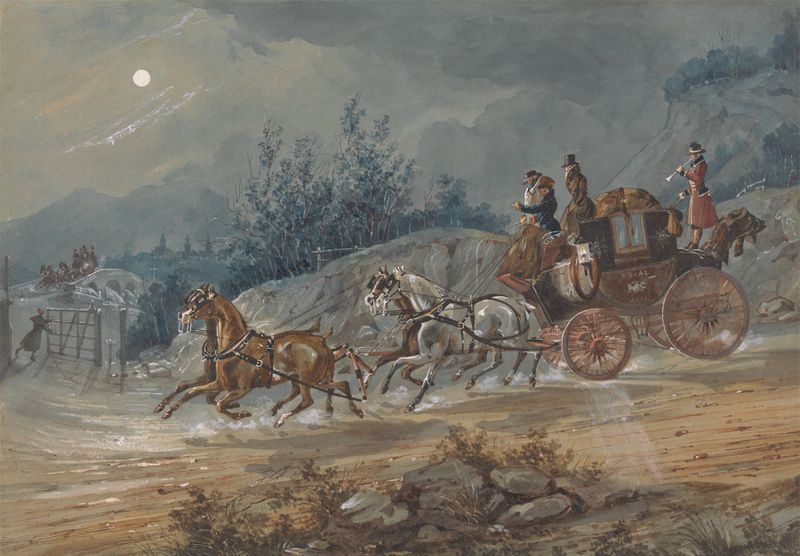
When did color learn to lie? In a world painted with vibrant hues, the search for deeper truths often remains obscured beneath the surface. Look to the foreground, where the royal mail coach bursts forth, its horses straining against the weight of tradition and expectation. Notice the way the bright reds and yellows of the coach contrast sharply with the muted tones of the landscape, emphasizing the urgency and importance of the journey. The billowing clouds and golden light suggest both the promise of dawn and the uncertainty of the road ahead, inviting viewers to explore the tension between motion and stillness. As you feel the rhythm of the galloping horses, consider the dual nature of progress and nostalgia inherent in this scene.
The coach represents not only the transportation of letters but also the rapid expansion of communication in the early 19th century, a time when the world was becoming smaller yet more complex. The artist’s choice of color and form reflects the tumult of an era on the brink of industrialization, pushing against the boundaries of what was known and what lay ahead. Charles B. Newhouse created this work between 1830 and 1840, a pivotal moment in his career when he was beginning to gain recognition.
Working in London, he was influenced by the burgeoning railways and the transformative impact of modernity on society. During this time, the art world was grappling with Romanticism, which celebrated emotion and individualism, making Newhouse’s depiction of the Royal Mail not just a snapshot of transportation but a commentary on the shifting sands of truth in an evolving world.