An Evening Landscape with a Stork — History & Facts
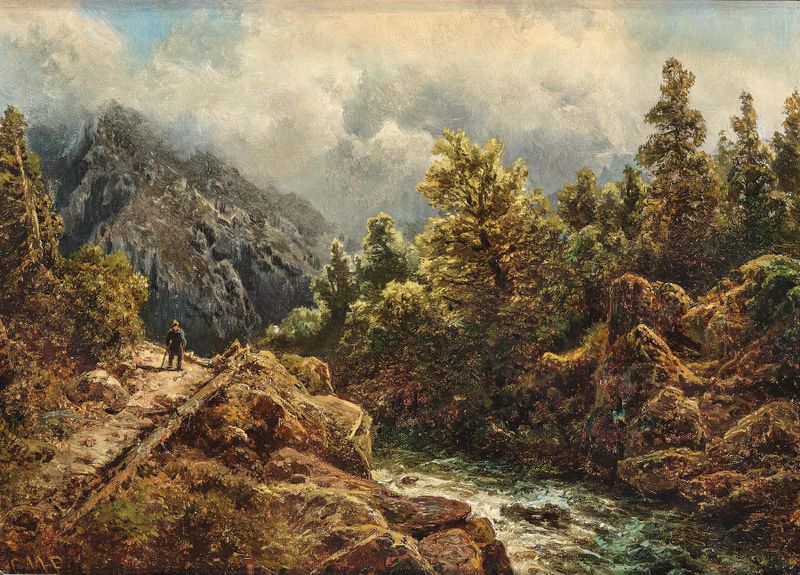
What if beauty was never meant to be finished? In the ethereal twilight of An Evening Landscape with a Stork, the horizon blurs into a dreamscape, where reality intertwines with the imagination. Look to the center, where the stork stands gracefully against the fading light, its silhouette a striking contrast to the soft, muted hues of the evening sky. Notice how the artist employs delicate brushstrokes to create a serene atmosphere, allowing the colors—lavenders and soft blues—to merge seamlessly. The composition draws you in, inviting you to ponder the tranquil setting that surrounds the solitary figure, evoking a sense of stillness amid the impending night. As you explore further, subtle details reveal deeper themes of solitude and transience.
The stork, often a symbol of hope and renewal, evokes a haunting sense of longing, while the gentle ripples in the water suggest the passage of time. Light dances delicately upon the surface, reflecting an inner world of dreams and aspirations. This juxtaposition of the stork's steadfast presence against the ephemeral landscape encourages a contemplation of the eternal versus the fleeting. Charlotte Piepenhagen-Mohr created this artwork during an era marked by a growing interest in nature and the sublime.
Little is known about her specific life circumstances at the time of painting, but the late 19th to early 20th century was a period rich with artistic experimentation. Influenced by her contemporaries, she sought to capture the emotional resonance of landscape, contributing to a broader movement that blended impressionism with personal expression.