An Extensive River Landscape With Mercury And Argus — History & Facts
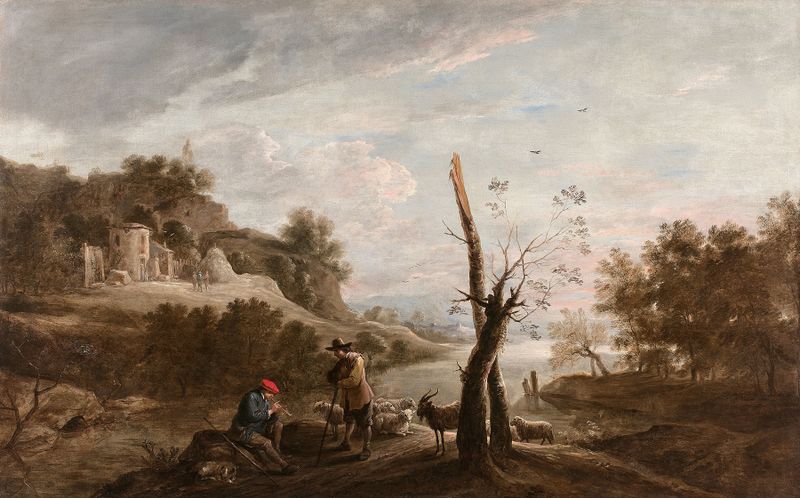
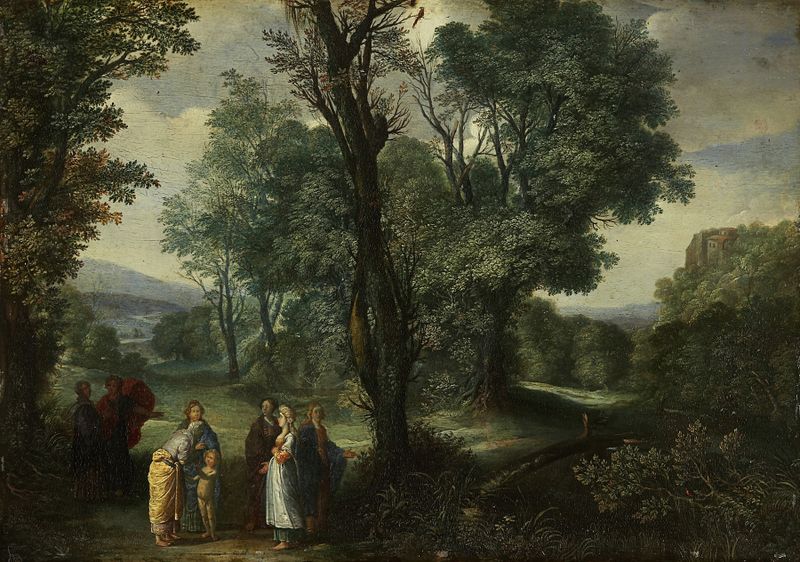
When did color learn to lie? In the lush expanse of a river landscape, the vibrant palette seduces the eye, masking a deeper madness beneath its tranquil surface. Look to the right at the shimmering waters, where strokes of blue and green dance together, creating an illusion of serenity. The meticulous attention to detail draws focus to the figures of Mercury and Argus, each rendered with a careful blend of light and shadow that imbues them with life. Notice how the golden rays of sunlight filter through the trees, illuminating the leaves while casting darkened pools of shadow below, echoing the tension between clarity and concealment. Beneath this picturesque façade lies an intricate narrative of vigilance and deception.
Mercury, the swift messenger, stands poised in the foreground, his expression a blend of urgency and cunning, while Argus, burdened with the weight of his many eyes, reflects an unshakeable vigilance that borders on madness. This contrast invites viewers to ponder the themes of perception versus reality, suggesting that beauty can often veil deeper truths, compelling us to question our understanding of the world. David Teniers The Elder painted this work during a time of flourishing artistic innovation in 17th-century Flanders. His mastery in combining genre scenes with mythological themes mirrored the broader transition in the art world, as artists sought to intertwine everyday life with the fantastical, illuminating the complexities of human emotion within a rapidly changing society.