
An Old Farmstead, Near St Albans — History & Facts
Did the painter know this moment would outlive them? In An Old Farmstead, Near St Albans, the passage of time becomes both a companion and a haunting specter, wrapped delicately in layers of illusion. Look to the soft, muted hues that wash over the canvas, inviting you in like the gentle light of dawn breaking through a morning mist. Notice how the rustic architecture of the farmstead emerges, kissed by golden sunlight that dances off the weathered walls, casting subtle shadows that elongate across the fertile ground. The careful brushstrokes create a texture that breathes life into the scene, drawing your gaze first to the quaint structure at the center before inviting exploration of the fields that stretch endlessly behind it. Within this pastoral tranquility lies an emotional tension between permanence and transience.
The farmstead stands resolute against the elements, yet the encroaching shadows hint at the inevitable passage of time, evoking a sense of nostalgia for a simpler life. The illusion of serenity masks a deeper truth: progress is relentless, and nature, though beautiful, carries the weight of change. Each blade of grass swaying in the breeze whispers stories of those who have come and gone, intertwining the lives of past generations with the landscape. In 1829, as he painted this work in England, Patrick Nasmyth was immersed in the Romantic movement, which celebrated nature and emotion.
Living in a changing world marked by industrialization, he sought to capture the essence of rural life and its fleeting beauty. The blending of realism and romantic idealism in his work reflects both his personal experiences and the artistic currents of his time, making this piece a testament to the landscape he cherished.
More Artworks by Patrick Nasmyth
Browse all →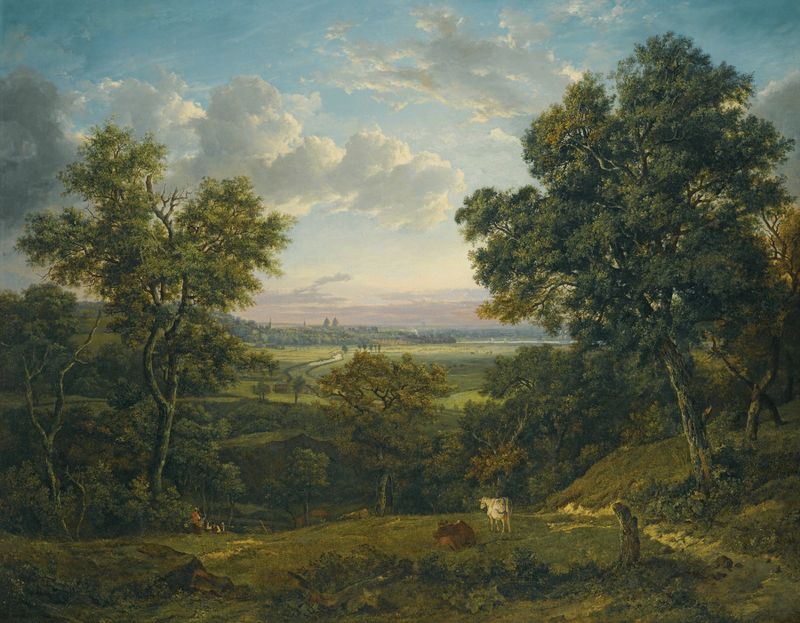
View Of Greenwich, From Charlton Wood, Near Woolwich
Patrick Nasmyth
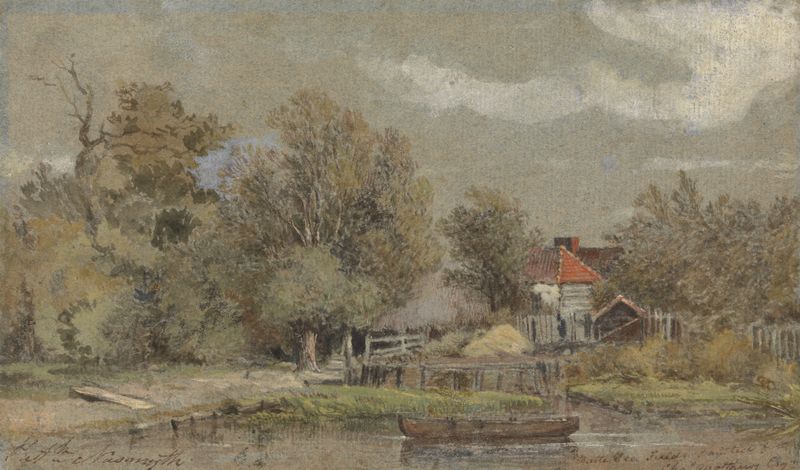
Battersea Fields
Patrick Nasmyth
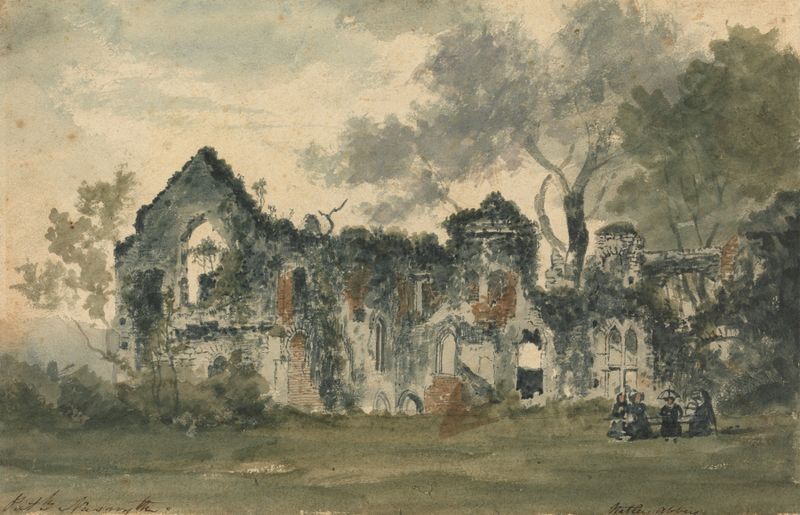
Netley Abbey
Patrick Nasmyth
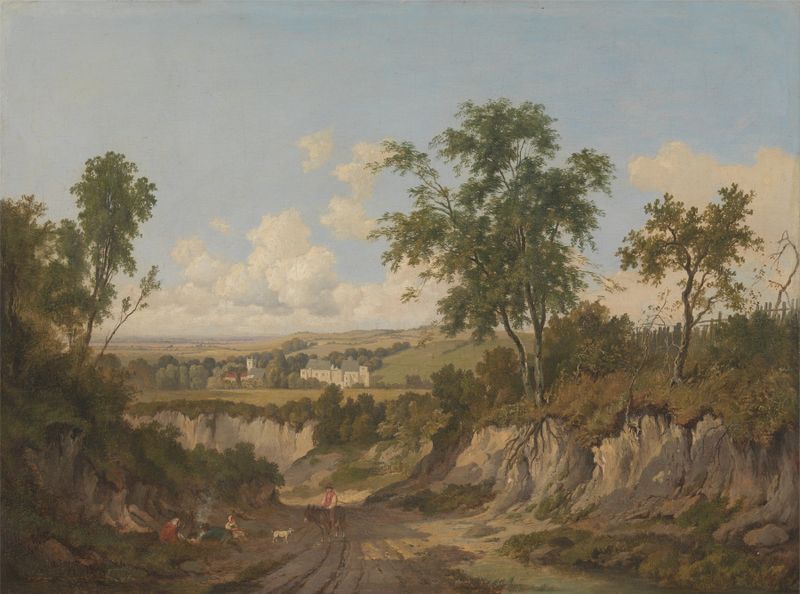
Penshurst Place, Kent
Patrick Nasmyth
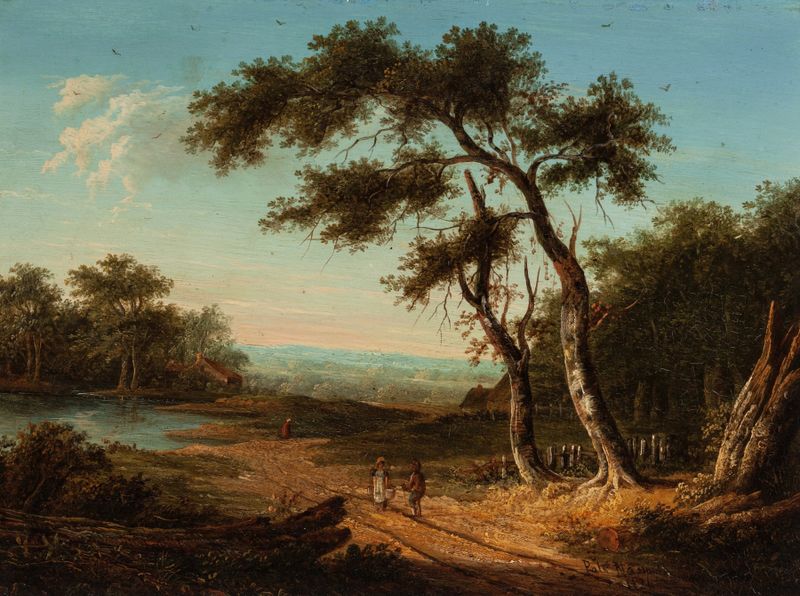
Figures on a Sunlit Country Road
Patrick Nasmyth
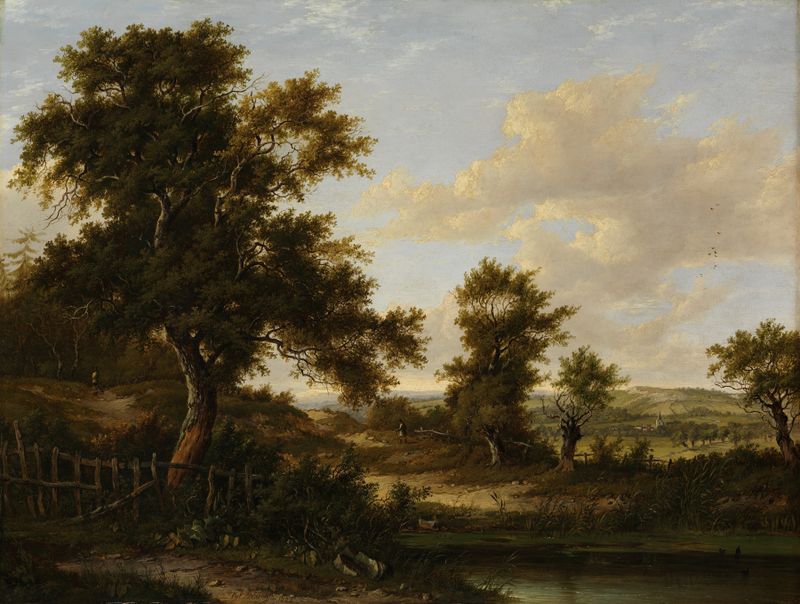
Near Penshurst, Kent
Patrick Nasmyth
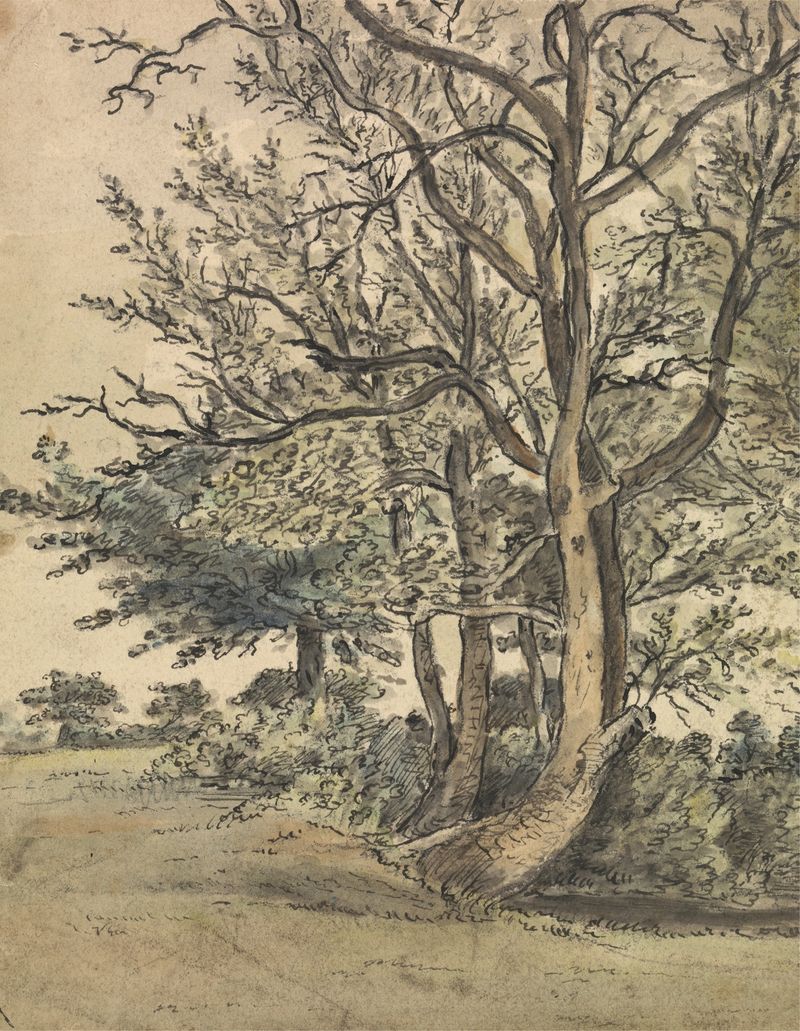
Part of Regent’s Park
Patrick Nasmyth
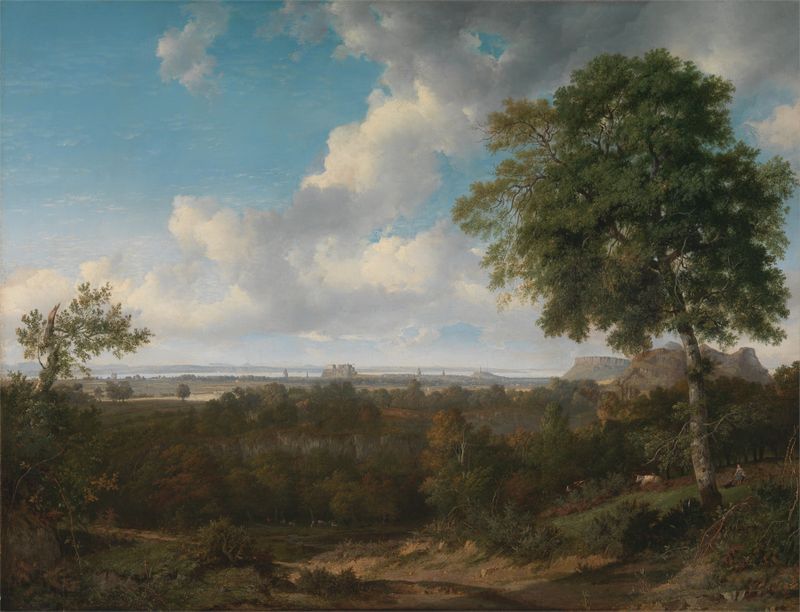
Edinburgh from the Braids
Patrick Nasmyth
A View of Cessford and the Village of Caverton, Roxboroughshire in the Distance
Patrick Nasmyth
An Open Road
Patrick Nasmyth





