Anchorage at Bremerhaven — History & Facts
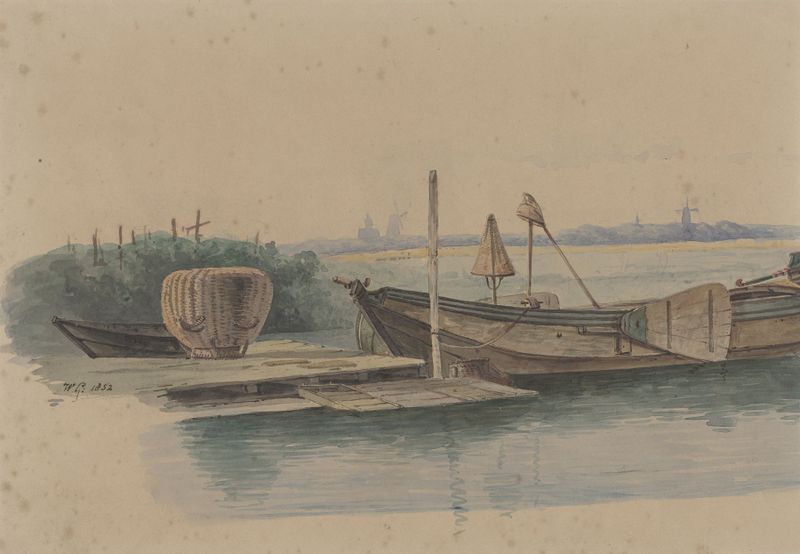
Could a single brushstroke hold eternity? In Anchorage at Bremerhaven, nostalgia breathes through the layered waves of color, inviting contemplation of seamless moments caught between past and present. Look to the left at the slender silhouettes of ships, their masts reaching like fingers toward a cloud-streaked sky. The warm golden hues wash over the water, where the interplay of light and shadow captures the fleeting magic of dusk. Notice how the gentle ripples mirror the sky's palette, creating a harmonious dance that suggests both tranquility and restlessness.
The artist's deft handling of color and texture speaks to a craftsman in tune with nature’s rhythms, blending realism and impressionism to convey a poignant sense of longing. Deep beneath the surface, the painting pulses with layers of emotional tension. The juxtaposition of bustling vessels against the stillness of the water evokes a sense of transition—a moment caught before the inevitable departure. Each ship represents aspirations and dreams, while the tranquil harbor embodies the bittersweet comfort of home.
This delicate balance between movement and stillness reflects not only the physical landscape but also the inner landscapes of the human heart, where familiarity meets the unknown. Willem Gruyter jr painted Anchorage at Bremerhaven in 1868, during a period when maritime trade was rapidly evolving. Living in the Netherlands, he was influenced by the changing tides of modernity as he captured the essence of maritime life. The work reflects both his personal experiences and a broader cultural shift, as artists began to explore new perspectives on nature and humanity, paving the way for the advent of modern art.