Steiger met visserschuiten — History & Facts
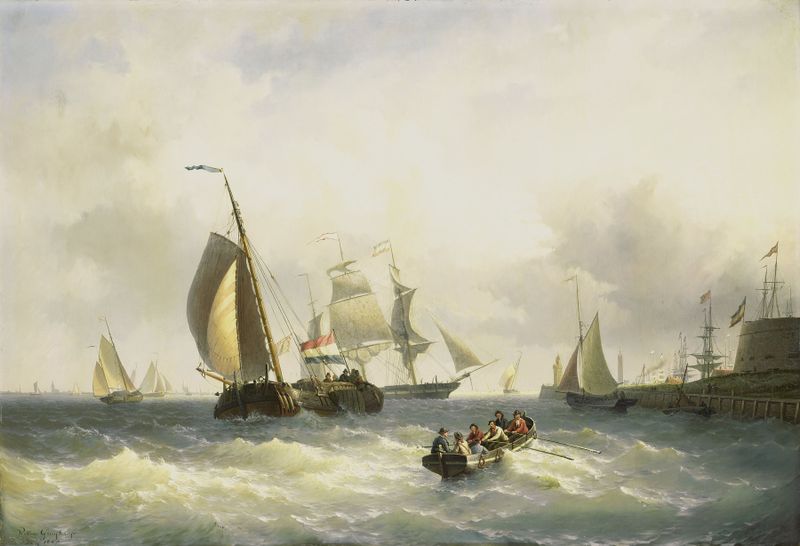
What if beauty was never meant to be finished? In this exquisite moment frozen in time, the allure of the unfinished beckons, inviting us into a world where ecstasy dances just beyond reach. Look to the left at the delicate play of light on the water, shimmering like scattered diamonds beneath a soft, embracing sky. The fishing boats, silent yet animated, rest gently against the shore, their forms both sturdy and tender against the backdrop of a tranquil landscape. Notice how the colors are layered—subtle earth tones mingle with soft blues, creating a harmonious symphony that reflects the peace of a day well-lived. Beneath the serene surface, hidden tensions unfold.
The juxtaposition of the boats’ laboring purpose against the stillness of the scene evokes a sense of yearning—what lies beneath the calm? The rhythmic shapes of the vessels imply stories of journeys and encounters, while the undulating waves whisper secrets of lost time. The painting encapsulates the essence of fleeting beauty, a moment that hints at both arrival and departure. In 1852, the artist painted this piece during a period of artistic exploration in the Netherlands. Gruyter found himself amidst a burgeoning romanticism that sought to harmonize nature and culture.
As the world around him underwent rapid transformation, he turned to familiar landscapes, capturing the gentle embrace of his surroundings while reflecting a deeper quest for meaning in tranquil moments—a timeless pursuit that continues to resonate.