
Ancien Hôtel-Dieu, cour de Saint-Julien-le-Pauvre — History & Facts
Who listens when art speaks of silence? In the hushed reverence of Ancien Hôtel-Dieu, cour de Saint-Julien-le-Pauvre, the echoes of nostalgia resonate profoundly, capturing the essence of a forgotten moment in time. Look to the left at the intricate stone arches that frame the courtyard, their weathered surfaces telling stories of resilience and history. Notice how the muted palette of ochres and soft blues envelops the scene, inviting the viewer into a tranquil embrace. The gentle play of light filtering through the trees adds a delicate warmth, creating a sense of intimacy that contrasts with the timeless solidity of the architecture. As you delve deeper, reflect on the juxtaposition of life and stillness.
The absence of figures signifies solitude, suggesting a longing for connection or lost conversations. Each detail—the overgrown ivy, the distant shadows—whispers of memories, begging to be revisited. This interplay of presence and absence evokes a bittersweet yearning, reminding us of what once was and what still lingers in our hearts. In 1882, Charles-Alexis Apoil created this poignant piece amidst a flourishing era of French Romanticism, where artists sought to evoke deeper emotional truths through their work.
Living in Paris during a time of great artistic innovation, he captured this serene courtyard, a site rich in historical significance, emphasizing the profound connections between art, space, and the echoes of time.
More Artworks by Charles-Alexis Apoil
Browse all →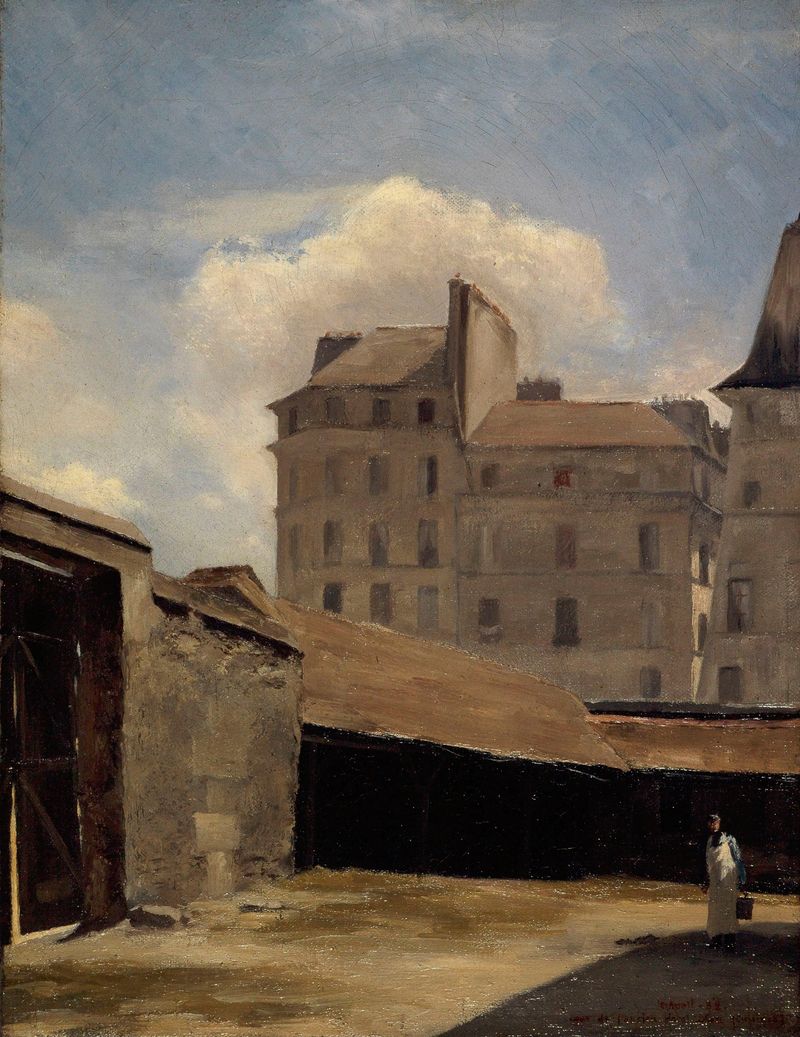
More Architecture Art
Browse all →
The statue of Liberty
Frédéric Auguste Bartholdi

View of Houses in Delft, Known as ‘The Little Street’
Johannes Vermeer

View of Houses in Delft, Known as ‘The Little Street’
Johannes Vermeer

The Cathedral in Rouen. The portal, Grey Weather
Claude Monet

The yellow house
Vincent van Gogh

The Church in Auvers-sur-Oise, View from the Chevet
Vincent van Gogh