
Ancien Hôtel-Dieu, cour des cuisines — History & Facts
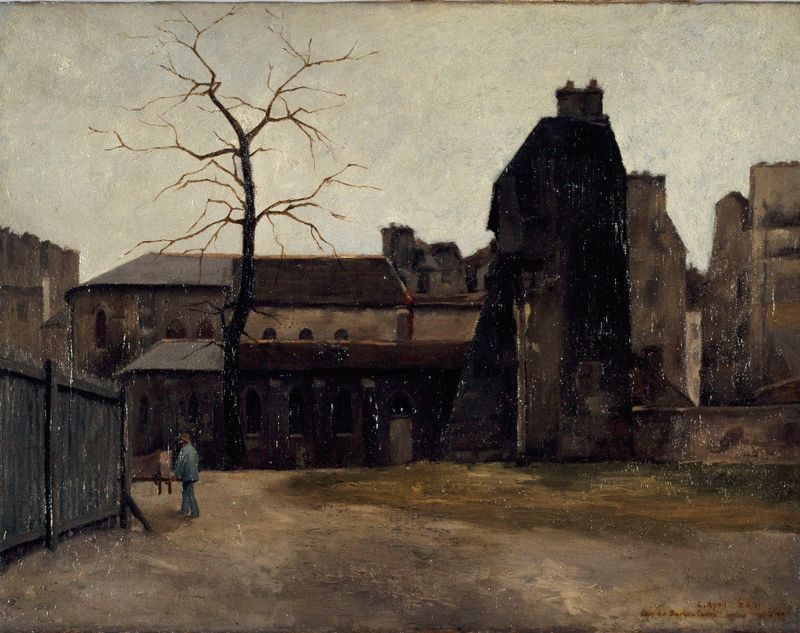
This painting captures an obsessive gaze upon a forgotten space, where history clings to the walls like whispers of the past. Look closely at the intricate details of the courtyard. Focus on the weathered stone arches that frame the scene, each crack and crevice telling tales of time. Notice how the muted palette of browns and grays contrasts with delicate hints of verdant green, inviting the viewer to linger on the life that still breathes within a seemingly desolate place.
The play of light casts gentle shadows, emphasizing the architecture’s solemnity while suggesting a lingering vibrancy, a reminder of what once was. Yet, beneath the surface, a deeper story unfolds. The juxtaposition of decaying walls against the lush foliage symbolizes the relentless passage of time, reflecting our own fleeting existence. The absence of figures in the scene compels contemplation, evoking feelings of solitude and nostalgia.
One can't help but feel an obsession with preservation, as if the artist seeks to immortalize this moment before it fades completely from memory. In 1882, the painter created this work while living in France amidst a burgeoning art scene that wrestled with the challenges of modernity. The Realist movement was gaining momentum, challenging artists to depict the world with honesty and integrity. In this context, the artist sought to capture the quiet beauty of a historical site, intertwining personal obsession with a broader artistic commitment to authenticity.
More Artworks by Charles-Alexis Apoil
Browse all →
More Architecture Art
Browse all →
The statue of Liberty
Frédéric Auguste Bartholdi

View of Houses in Delft, Known as ‘The Little Street’
Johannes Vermeer

View of Houses in Delft, Known as ‘The Little Street’
Johannes Vermeer

The Cathedral in Rouen. The portal, Grey Weather
Claude Monet

The yellow house
Vincent van Gogh

The Church in Auvers-sur-Oise, View from the Chevet
Vincent van Gogh