
Ancien Hôtel-Dieu, cour du bureau central — History & Facts
What if beauty was never meant to be finished? In the hushed stillness of a forgotten courtyard, a sense of unease teeters beneath the elegant façade, whispering secrets of time and decay. Look to the center of the composition, where the architectural lines converge, leading the eye toward the grand entrance. The meticulous detailing of the stonework reveals the artist's dexterity, capturing both shadow and light to suggest a delicate dance of presence and absence. Notice the muted palette, where soft grays and warm earth tones create an atmosphere both inviting and foreboding, hinting at the building’s storied past. Amid the grandeur, small, almost hidden elements speak volumes: a cracked windowpane, a creeping vine, and the faintest trace of wear on the walls.
These contrasts between beauty and neglect evoke a deep emotional tension, reflecting not only the physical space but also the weight of history and the inevitable passage of time. Perhaps there lies a fear of what was lost, a poignant reminder that beauty, once vibrant, is often left to fade away. In 1882, while capturing this poignant scene, the artist was enmeshed in a world that oscillated between romantic idealism and the stark realities of industrialization. Working in France during a time of significant artistic innovation, he was part of a movement that grappled with the themes of modernity, often repurposing historical subjects to comment on contemporary anxieties and aspirations.
This work emerges from that rich tapestry, a moment where beauty is both celebrated and mourned.
More Artworks by Charles-Alexis Apoil
Browse all →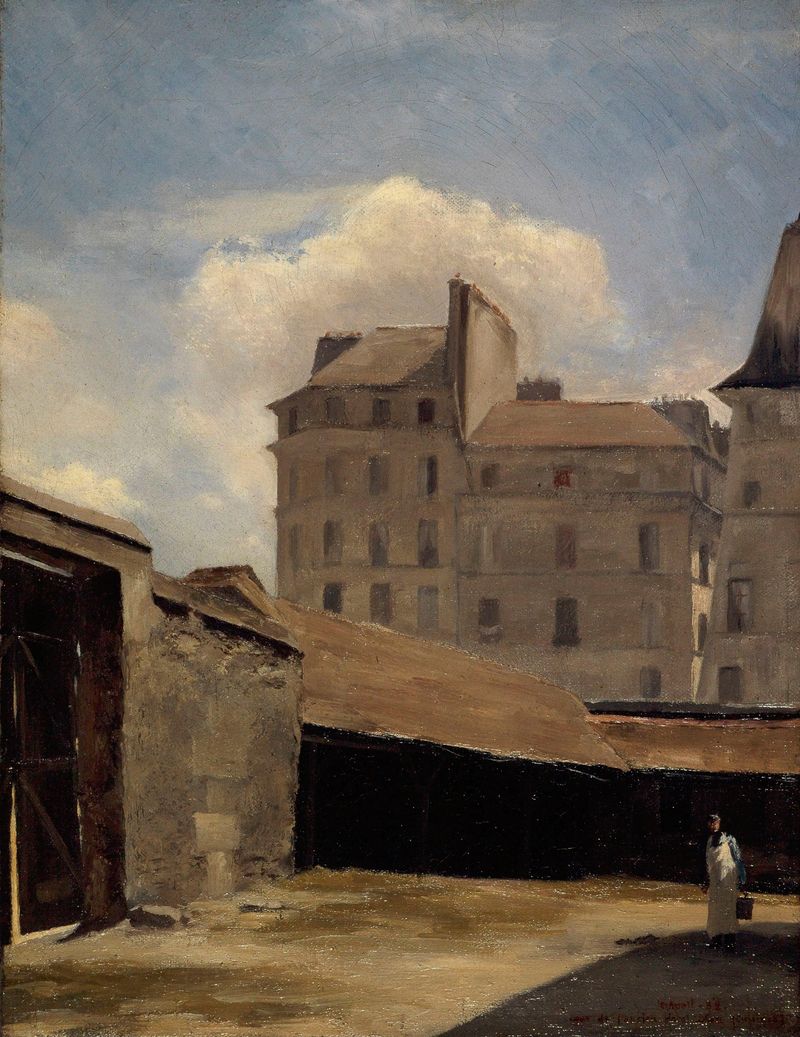

More Architecture Art
Browse all →
The statue of Liberty
Frédéric Auguste Bartholdi

View of Houses in Delft, Known as ‘The Little Street’
Johannes Vermeer

View of Houses in Delft, Known as ‘The Little Street’
Johannes Vermeer

The Cathedral in Rouen. The portal, Grey Weather
Claude Monet

The yellow house
Vincent van Gogh

The Church in Auvers-sur-Oise, View from the Chevet
Vincent van Gogh