
Ancient Abbey of St. Valery, France — History & Facts
When did color learn to lie? The hues of dusk cast a haunting charm over the ancient structure, drawing the observer into its mysterious narratives of time and innocence. Each brushstroke serves as a whisper, urging viewers to delve into the soul of the scene, revealing complexities that lie beneath the surface beauty. Look to the foreground, where the weathered stones of the abbey seem to breathe, each crack a testament to the passage of years. Observe how the light dances across the textured façade, illuminating patches of moss and lichen that cling to its surface.
The muted palette of earth tones is punctuated by soft blues and greys, evoking a sense of tranquility that belies the wear and tear of history etched into every corner. As you explore further, subtle contrasts emerge. The stillness of the abbey stands in stark opposition to the vibrant life depicted in the surrounding landscape, where delicate brushstrokes suggest movement and growth. This juxtaposition invites contemplation on the innocence of nature versus the enduring solidity of man-made structures, hinting at the passage of time and the inevitable decay of all things.
The painting invites viewers to ponder their place within this continuum of existence, where innocence faces the relentless march of history. In 1862, the artist found himself rooted in the American landscape as he explored the romantic ideals of nature and architecture. Living in a time when the Hudson River School was gaining prominence, he sought to capture the essence of the places he painted, blending the natural with the constructed. This piece reflects both personal and contemporary artistic trends, as Kellogg embraced the serene beauty of the past, skillfully bridging the gap between the innocence of nature and the weight of history.
More Artworks by Miner Kilbourne Kellogg
Browse all →
General Andrew Jackson
Miner Kilbourne Kellogg
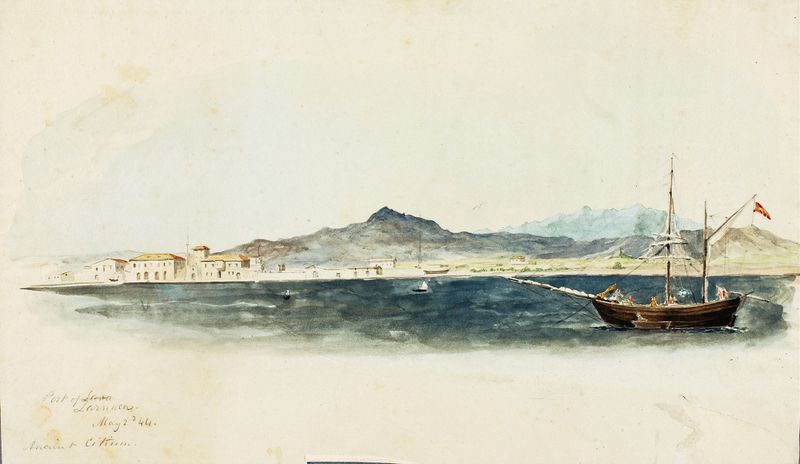
Port of Larnaca
Miner Kilbourne Kellogg
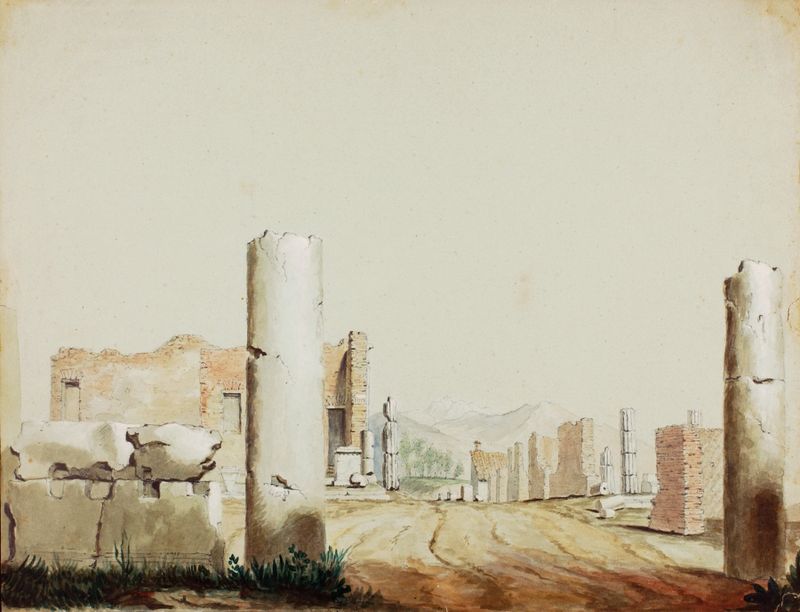
Pompeii, Italy
Miner Kilbourne Kellogg
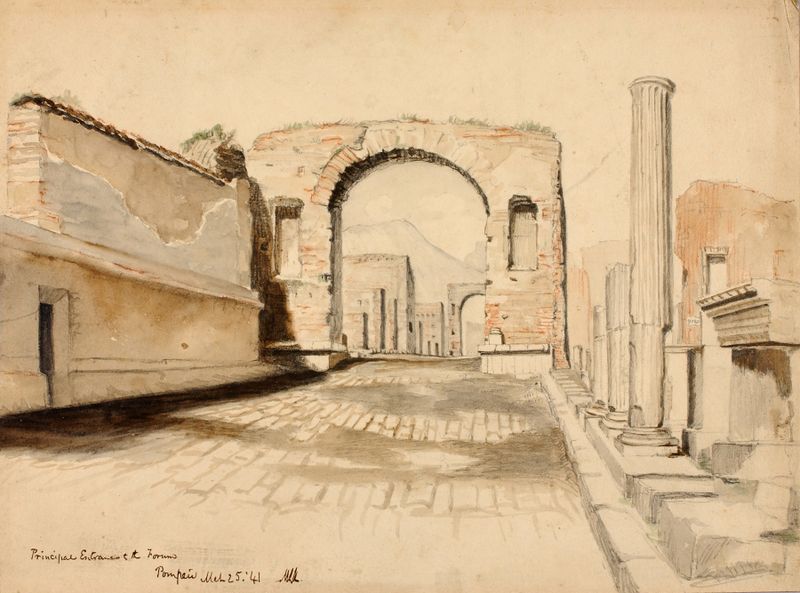
Principal Entrance To The Forum, Pompeii
Miner Kilbourne Kellogg

Tomb of Virgil, Naples
Miner Kilbourne Kellogg

Ancient And Modern Egypt
Miner Kilbourne Kellogg

Adalia, Asia Minor
Miner Kilbourne Kellogg

Fire Island Lighthouse
Miner Kilbourne Kellogg

Saltwood Castle
Miner Kilbourne Kellogg

Glacier And Falls
Miner Kilbourne Kellogg
More Architecture Art
Browse all →
The statue of Liberty
Frédéric Auguste Bartholdi

View of Houses in Delft, Known as ‘The Little Street’
Johannes Vermeer

View of Houses in Delft, Known as ‘The Little Street’
Johannes Vermeer

The Cathedral in Rouen. The portal, Grey Weather
Claude Monet

The yellow house
Vincent van Gogh

The Church in Auvers-sur-Oise, View from the Chevet
Vincent van Gogh