
Ancient Ruins — History & Facts
Could beauty survive in a century of chaos? In Ancient Ruins, the artist immerses viewers in a world where remnants of grandeur stand defiant against the ravages of time and turmoil. Look to the left, where the skeletal remains of crumbling columns reach toward the sky, their once-proud forms now draped in the shadows of decay. Notice how the warm hues of ochre and burnt sienna intertwine with cool greys, creating a haunting harmony that reflects both beauty and destruction. The careful attention to detail in the textural contrast of the stone and foliage invites you to explore the nuances within the chaos, revealing a landscape that is both melancholic and awe-inspiring. Within the composition lies a tension between nature and human endeavor.
The encroaching greenery hints at the resilience of life, thriving in the midst of ruins, while the scattered fragments evoke a sense of loss and nostalgia. Each stone tells a story of past civilizations, whispering of aspirations now dimmed by history’s relentless march. This delicate balance encapsulates fear—not just of destruction, but of forgetting the beauty that once was. Jean-Claude-Richard de Saint-Non painted Ancient Ruins in 1756, during a time of great upheaval in France, as the Enlightenment began to challenge traditional values.
His exploration of classical themes reflects a broader interest in antiquity among artists of his era. As he engaged with the ruins, he sought to capture not only their physical presence but also the profound emotional resonance they hold amidst the uncertainties of his time.
More Artworks by Jean-Claude-Richard de Saint-Non
Browse all →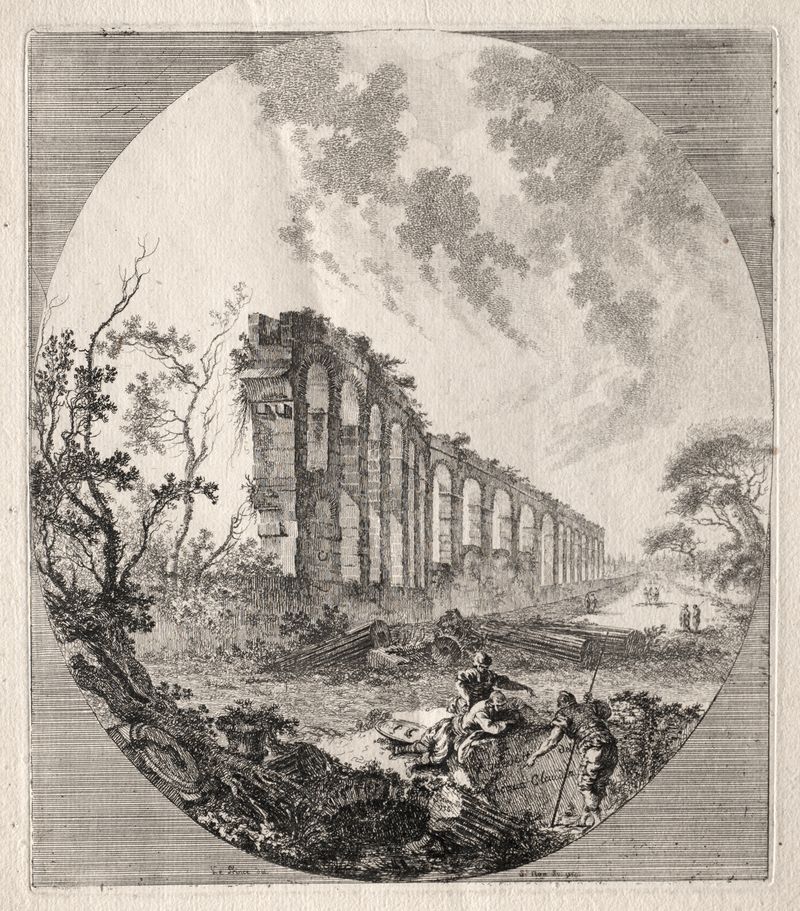

More Architecture Art
Browse all →
The statue of Liberty
Frédéric Auguste Bartholdi

View of Houses in Delft, Known as ‘The Little Street’
Johannes Vermeer

View of Houses in Delft, Known as ‘The Little Street’
Johannes Vermeer

The Cathedral in Rouen. The portal, Grey Weather
Claude Monet

The yellow house
Vincent van Gogh

The Church in Auvers-sur-Oise, View from the Chevet
Vincent van Gogh