
Angle des rues Saint-Denis et des Prêcheurs — History & Facts
The canvas doesn’t lie — it simply waits. In the embrace of chaos, art reveals the world in all its unpredictable rhythm and pulse. Look to the left at the towering buildings, their facades crumbling under the weight of time. Notice how the light splashes against the cobblestones, illuminating the scene with an almost theatrical glow—each shadow lengthening, hinting at the lives that scurry through this urban maze.
Rich ochres and deep blues collide, emphasizing a bustling intersection where paths intertwine, and destinies converge like the chaotic entwining of threads in a tapestry. Within this vibrant chaos, the artist captures a moment that speaks to the transient beauty of city life. The hurried figures, painted in soft brushstrokes, seem to blur together, embodying the frenetic energy of their surroundings. Their postures, dynamic yet ambiguous, evoke a sense of urgency, suggesting that they are mere players in a larger, unrelenting narrative.
Each detail, from the weathered lamppost to the distant spires, emphasizes the contrast between the mundane and the sublime. Alfred Bonnardot painted Angle des rues Saint-Denis et des Prêcheurs in 1840, during a period of significant transformation in Paris. As the city began to modernize, the art world was rife with experimentation, shifting away from realism towards more impressionistic styles. Bonnardot, immersed in this atmosphere, sought to capture the vibrant chaos of urban life, reflecting both the energy and the disarray that defined mid-19th century Paris.
More Artworks by Alfred Bonnardot
Browse all →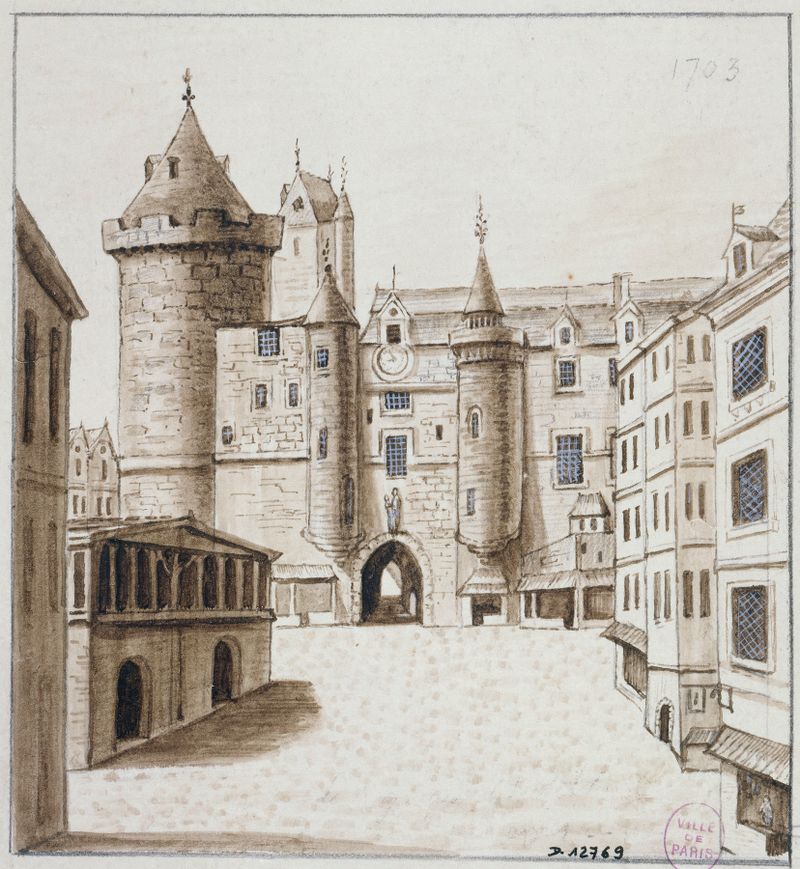
Le grand Châtelet
Alfred Bonnardot
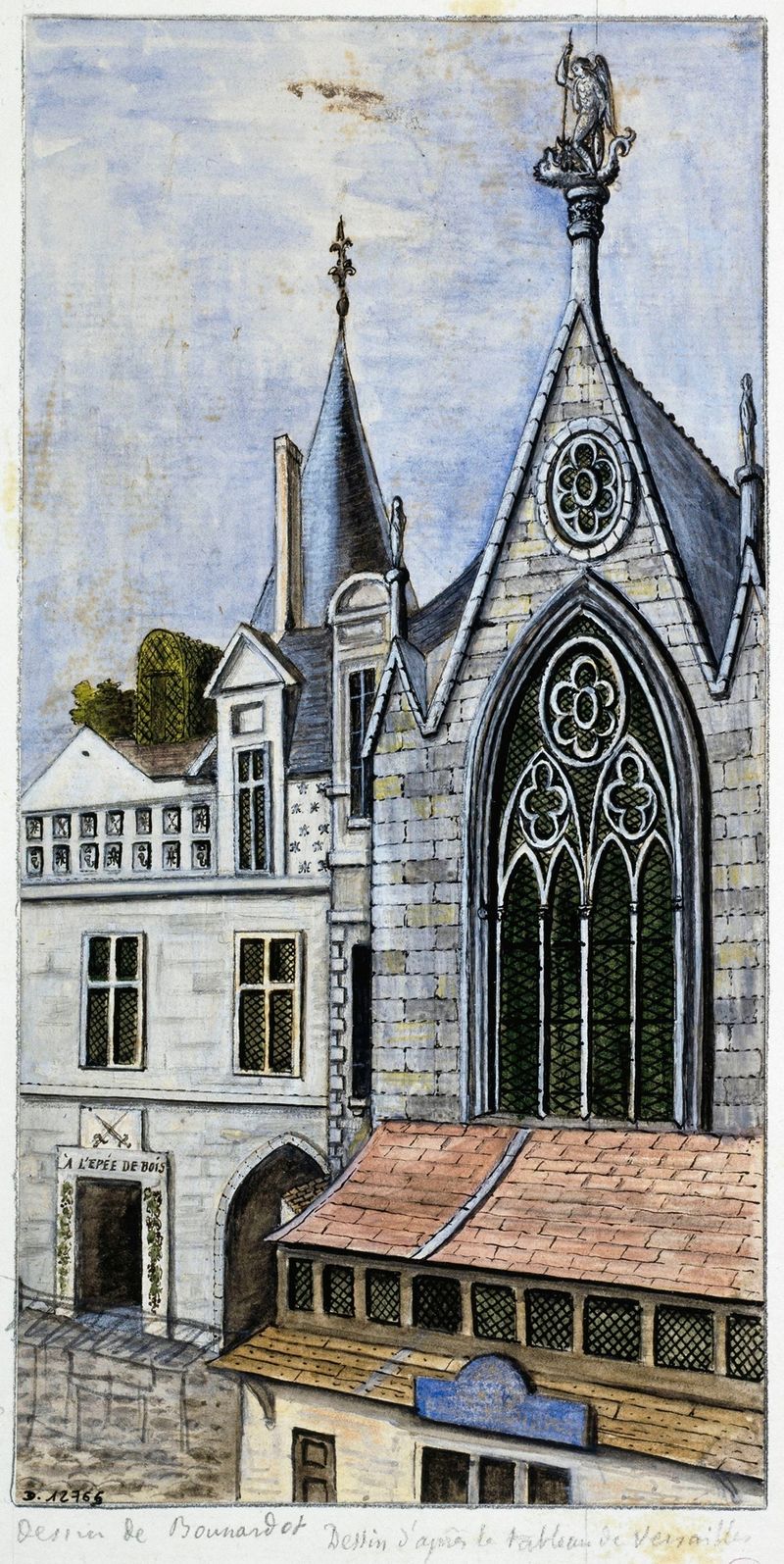
La Sainte-Chapelle, Palais de Justice
Alfred Bonnardot

Ancienne cour des Comptes, portail de l’escalier
Alfred Bonnardot
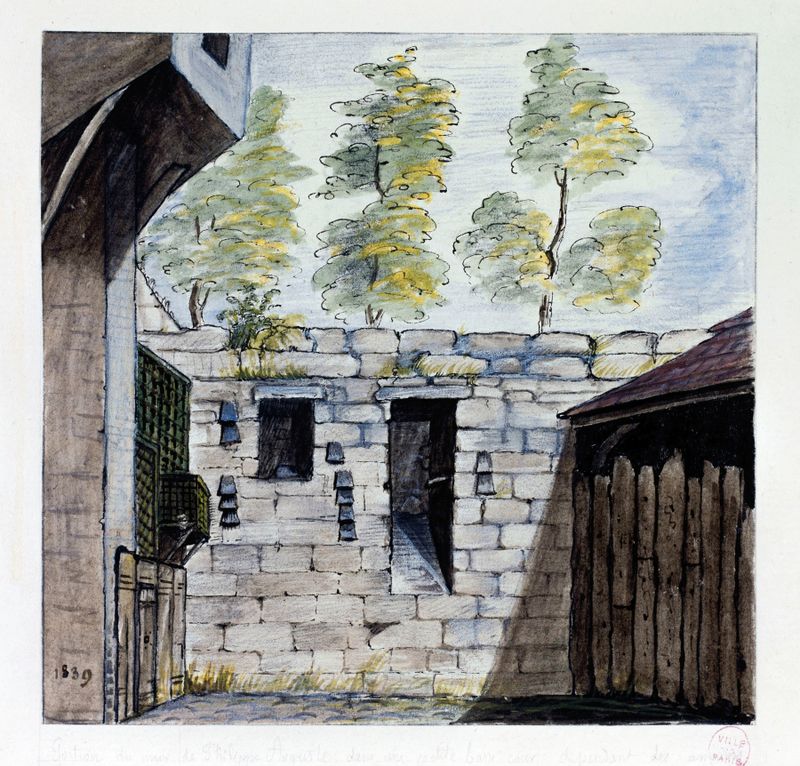
Mur d’enceinte de Philippe Auguste
Alfred Bonnardot
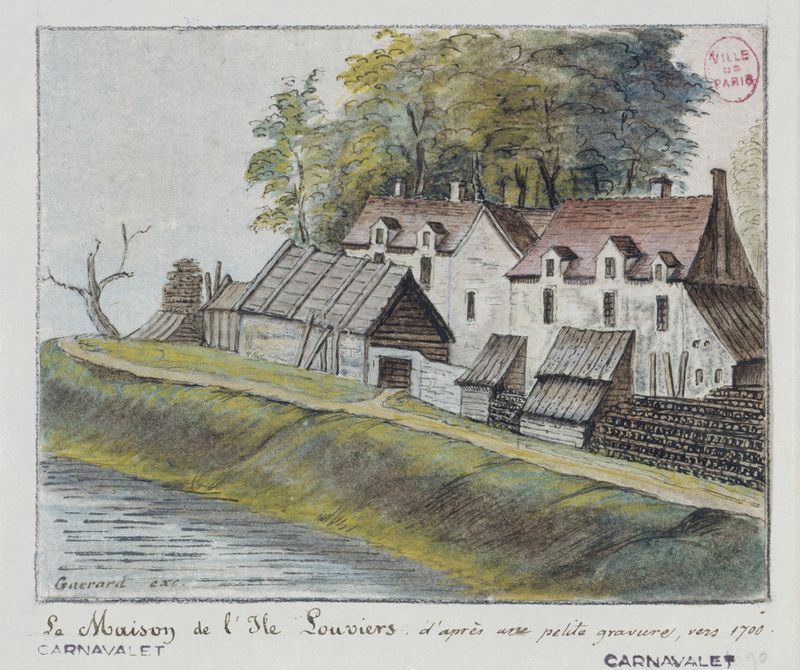
La maison de l’île Louviers
Alfred Bonnardot
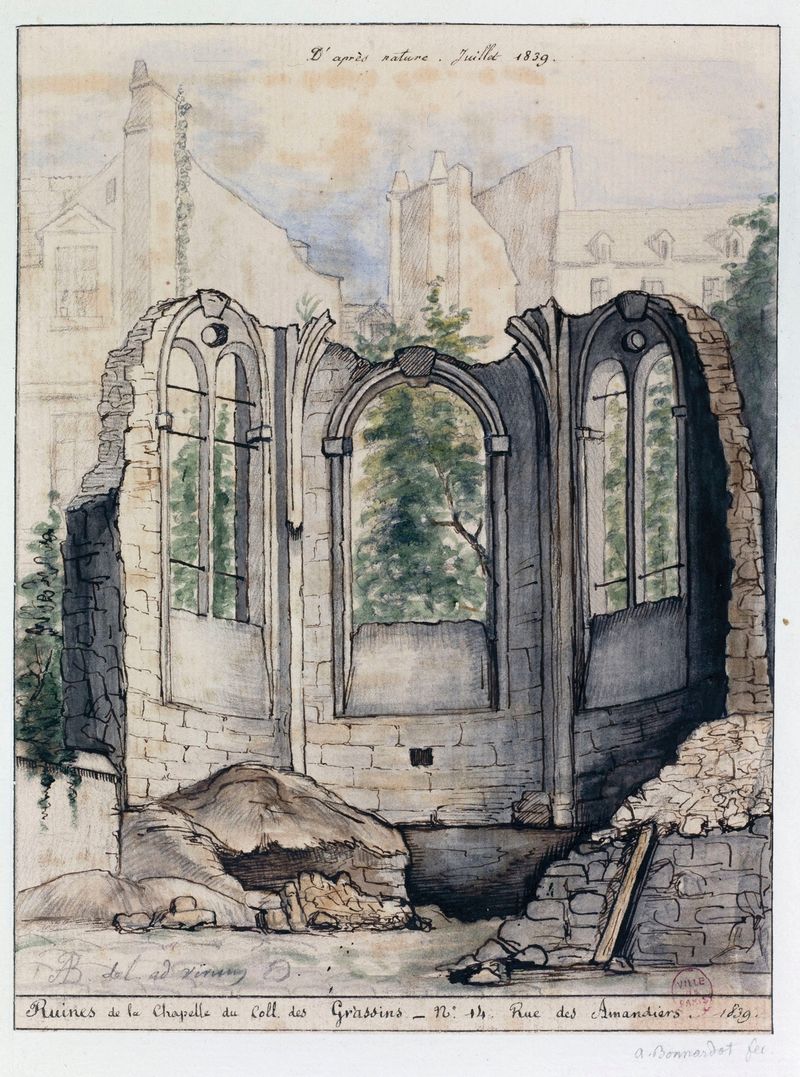
Ruines de la chapelle du collège des Grassins, 14 rue des Amandins
Alfred Bonnardot
More Architecture Art
Browse all →
The statue of Liberty
Frédéric Auguste Bartholdi

View of Houses in Delft, Known as ‘The Little Street’
Johannes Vermeer

View of Houses in Delft, Known as ‘The Little Street’
Johannes Vermeer

The Cathedral in Rouen. The portal, Grey Weather
Claude Monet

The yellow house
Vincent van Gogh

The Church in Auvers-sur-Oise, View from the Chevet
Vincent van Gogh