
Ansicht von Neapel mit dem Golf und dem Vesuv im Hintergrund — History & Facts
In the embrace of grief, art becomes a vessel for what we’ve lost, allowing the weight of memory to breathe anew. Focus on the sweeping expanse of the landscape, where the vibrant blue of the Gulf meets the serene slopes of Vesuvius, towering in the background. The gentle play of light reflects on the water’s surface, hinting at a quiet afternoon. Notice how the soft brushwork delineates the edges of the clouds, creating a sense of ethereal tranquility that contrasts with the looming presence of the volcano, a symbol of both beauty and destruction.
The palette is rich yet muted, evoking a nostalgia that feels both personal and universal. Delve deeper into the subtle contrasts within the composition: the calm waters juxtaposed with the dormant threat of Vesuvius evoke a tension between serenity and latent peril. The distant silhouettes of the city suggest the presence of life, yet the stillness of the scene hints at absence. Each element, from the gentle hills to the faintly visible homes, is imbued with a sense of longing, encapsulating more than mere geographical beauty.
It speaks to the impermanence of existence, a reminder that even in moments of peace, the specter of loss lingers. In 1827, Johann Jakob Wolfensberger created this piece while navigating the shifting tides of Romanticism in Europe. Settled in Naples, he was surrounded by vibrant landscapes and rich culture, yet the echoes of personal and collective grief permeated the art world. During this period, artists sought to capture the sublime and the emotional depths of their surroundings, which is poignantly reflected in this artwork, a meditation on memory and the passage of time.
More Artworks by Johann Jakob Wolfensberger
Browse all →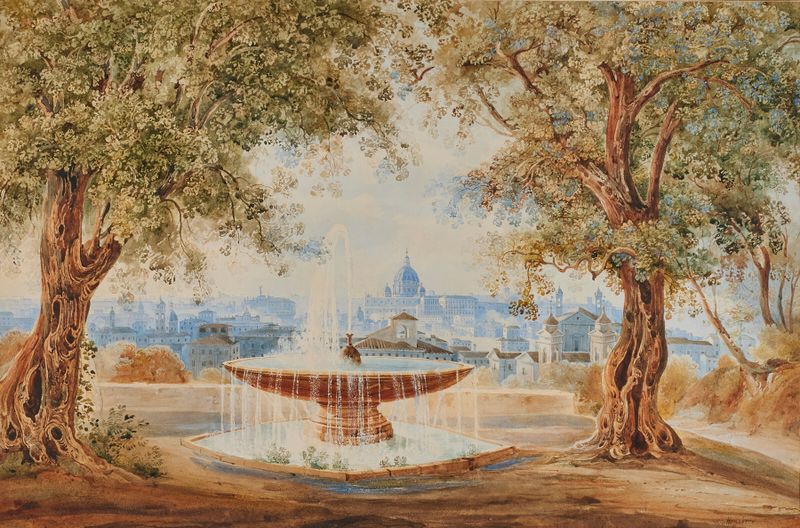
Vue de Rome depuis les hauteurs avec la basilique Saint Pierre
Johann Jakob Wolfensberger
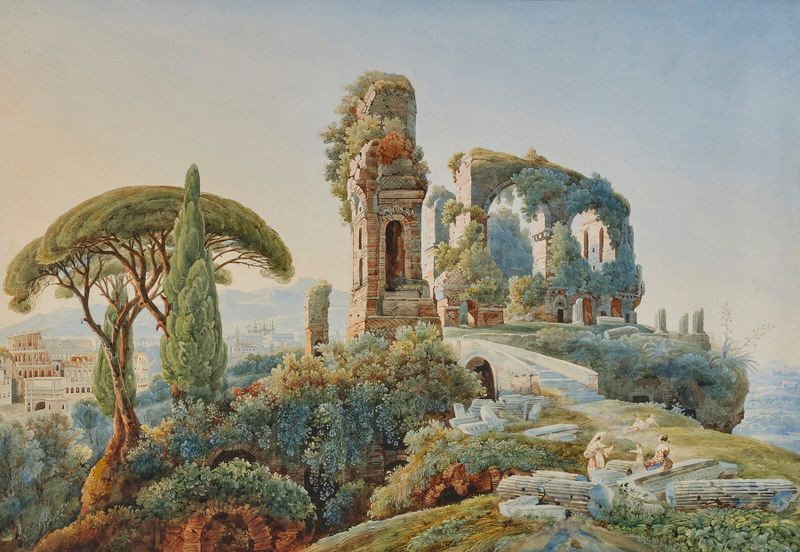
Vue du Forum Romain avec le Colisée à l’arrière-plan
Johann Jakob Wolfensberger

Porta Furba mit Fontana di Clemente XII in Rom
Johann Jakob Wolfensberger
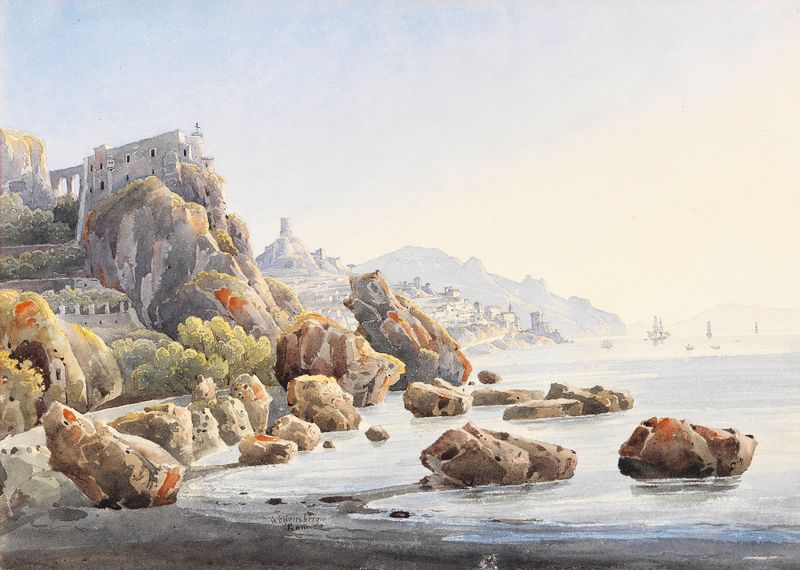
Felsenküste bei Amalfi
Johann Jakob Wolfensberger

Vue du Forum Romain
Johann Jakob Wolfensberger

La vallée des temples d’Agrigente en Sicile avec le temple de la Concorde et le temple d’Héra
Johann Jakob Wolfensberger





