
Felsenküste bei Amalfi — History & Facts
In the haunting embrace of memory, landscapes speak in volumes where words fall short. Begin your exploration at the left, where rocky cliffs rise majestically, their jagged edges softened by a warm, golden hue that suggests a late afternoon sun hanging low in the sky. As you move your gaze across the canvas, take note of the interplay between light and shadow, particularly how the sunlight dances on the water, creating a shimmering path toward the horizon. The rich greens of vegetation clawing at the crags contrast vividly with the deep blues of the sea, inviting contemplation of nature’s power and beauty. Beneath this idyllic surface lies a profound tension between permanence and transience.
The cliffs, steadfast and eternal, stand witness to the fleeting moments of waves crashing below, each splash a reminder of time’s relentless march. The delicate clouds above, soft and airy, evoke a sense of nostalgia, hinting at memories lost and the weight of the passage of time. Here, the artist captures a moment that resonates with both joy and melancholy, inviting viewers to reflect on their own experiences. In the early 1820s, while creating this piece, the artist found himself immersed in the Romantic movement, which emphasized nature's awe-inspiring beauty and human emotion.
Living in Switzerland, he sought inspiration from the stunning coastal vistas of Amalfi, a destination that symbolized paradise for many travelers of the era. This painting reflects not only Wolfensberger’s artistic journey but also a broader cultural moment when artists began to explore personal and emotional connections to their environments.
More Artworks by Johann Jakob Wolfensberger
Browse all →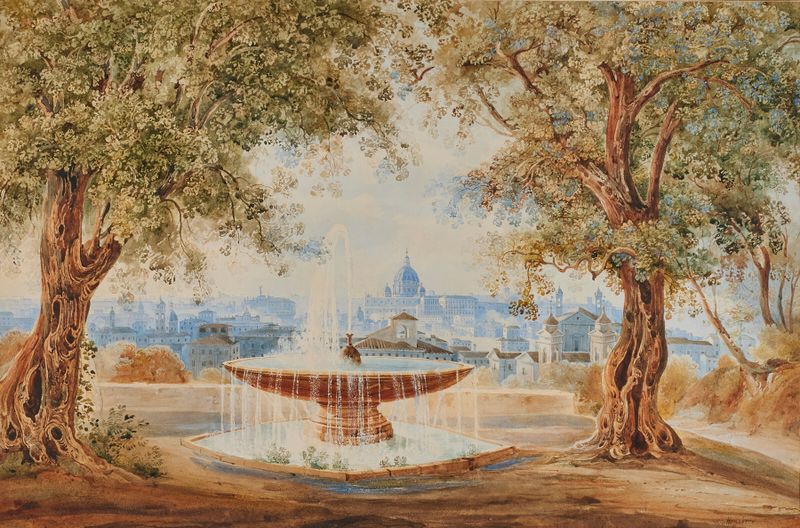
Vue de Rome depuis les hauteurs avec la basilique Saint Pierre
Johann Jakob Wolfensberger
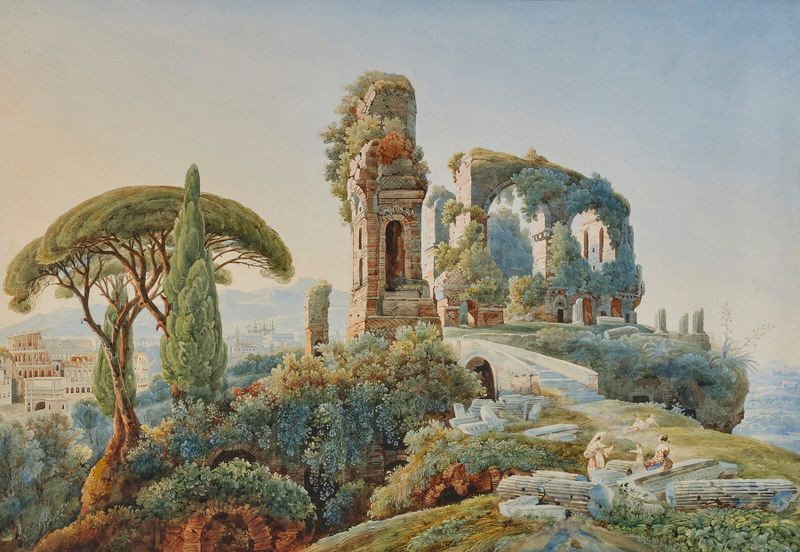
Vue du Forum Romain avec le Colisée à l’arrière-plan
Johann Jakob Wolfensberger

Porta Furba mit Fontana di Clemente XII in Rom
Johann Jakob Wolfensberger
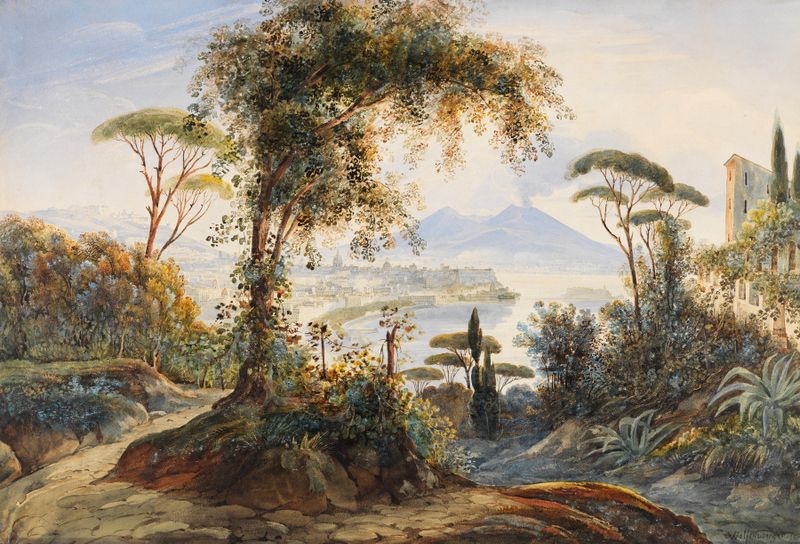
Ansicht von Neapel mit dem Golf und dem Vesuv im Hintergrund
Johann Jakob Wolfensberger

Vue du Forum Romain
Johann Jakob Wolfensberger

La vallée des temples d’Agrigente en Sicile avec le temple de la Concorde et le temple d’Héra
Johann Jakob Wolfensberger





