
Porta Furba mit Fontana di Clemente XII in Rom — History & Facts
Who listens when art speaks of silence? In the hushed whispers of landscapes and architecture, betrayal lingers beneath the serene surface, an unspoken tension waiting to be unveiled. Look to the center of the composition at the grand fountain, its cascading waters glistening under a gentle wash of sunlight. The elegant curves of the architecture frame the scene, drawing your eye to the intricate details of the stonework and the soft reflection shimmering in the water below. Notice how the muted palette of earthy tones contrasts with the vibrant blues of the sky, suggesting a harmony that belies the underlying complexity of the relationships at play in this urban setting. Beyond its beauty, this piece captures a moment rife with contradictions.
The fountain, a symbol of public gathering, stands in stark contrast to the solitude of the surrounding architecture, perhaps hinting at the isolation felt by those who pass by yet remain unseen. Shadows dance along the cobblestones, hinting at the hidden stories of betrayal that echo through the ages—whispers of love lost amidst the grandeur of Rome. It invites contemplation on the nature of connection and disconnection, revealing more than what initially meets the eye. Wolfensberger painted this work during a time of artistic transition in the 18th century, when neoclassicism was beginning to take root in Europe.
Exact details of his life are sparse, but his works reflect an intricate understanding of architectural forms and their emotional resonance, shaped by the rich culture surrounding him in Rome. The city’s transformation into a hub for artists and thinkers would have undoubtedly influenced his perspective, as he navigated this landscape of beauty and betrayal.
More Artworks by Johann Jakob Wolfensberger
Browse all →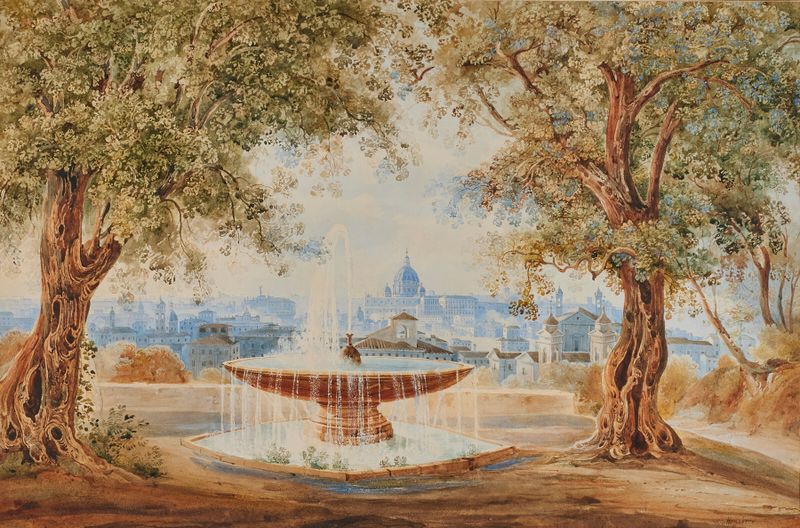
Vue de Rome depuis les hauteurs avec la basilique Saint Pierre
Johann Jakob Wolfensberger
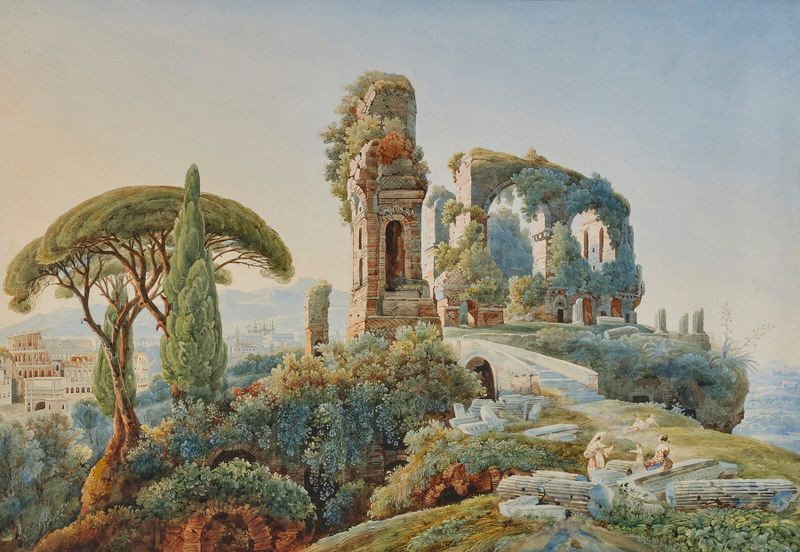
Vue du Forum Romain avec le Colisée à l’arrière-plan
Johann Jakob Wolfensberger
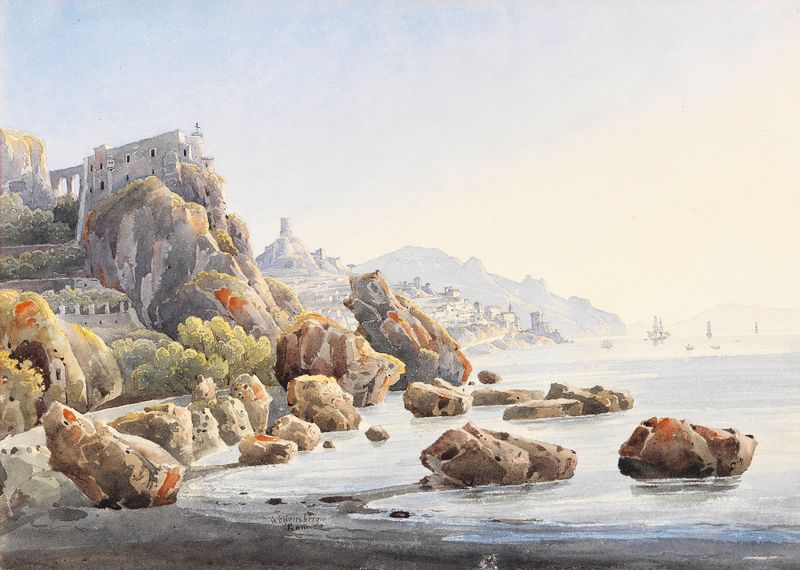
Felsenküste bei Amalfi
Johann Jakob Wolfensberger
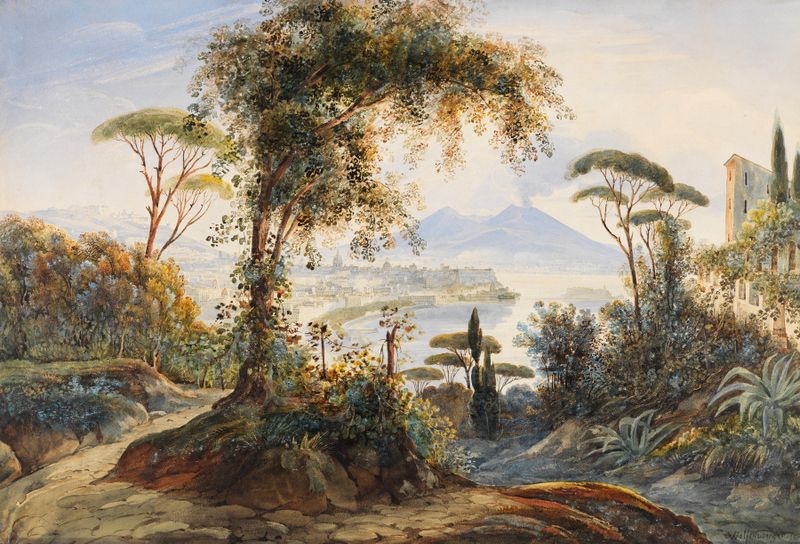
Ansicht von Neapel mit dem Golf und dem Vesuv im Hintergrund
Johann Jakob Wolfensberger

Vue du Forum Romain
Johann Jakob Wolfensberger

La vallée des temples d’Agrigente en Sicile avec le temple de la Concorde et le temple d’Héra
Johann Jakob Wolfensberger
More Architecture Art
Browse all →
The statue of Liberty
Frédéric Auguste Bartholdi

View of Houses in Delft, Known as ‘The Little Street’
Johannes Vermeer

View of Houses in Delft, Known as ‘The Little Street’
Johannes Vermeer

The Cathedral in Rouen. The portal, Grey Weather
Claude Monet

The yellow house
Vincent van Gogh

The Church in Auvers-sur-Oise, View from the Chevet
Vincent van Gogh