
Appian Way — History & Facts
Here, the fragility of life and nature intertwines seamlessly, revealing a delicate balance in an otherwise overwhelming world. Focus first on the winding pathway that unfurls through the lush greenery, drawing the viewer's eye into the heart of the scene. Notice how the vibrant greens of the foliage contrast with the soft hues of the sky, illustrating a harmony between earth and sky. The careful brushwork creates a sense of movement in the leaves, while distant figures ambling along the Appian Way hint at human presence without overwhelming the landscape's tranquility. As your gaze travels along the path, consider the juxtaposition between the serenity of the scene and the energy of life that bubbles just beneath the surface.
The figures, though small, evoke a sense of connection to the road’s ancient history, suggesting that every step taken is both a personal and collective journey. The dappled sunlight filtering through the trees adds to the fragile beauty of the moment, a reminder that peace in nature is often transient, yet profoundly impactful. In 1868, at a time when Romanticism was yielding to Impressionism, the artist painted this work during a period of deep personal reflection and exploration of landscapes. Living in Italy, Corrodi was influenced by the beauty around him and the resurgence of interest in classical themes.
He sought to capture the poetic essence of the Appian Way, a symbol of the enduring relationship between humanity and the paths ever-trodden through time.
More Artworks by Hermann David Salomon Corrodi
Browse all →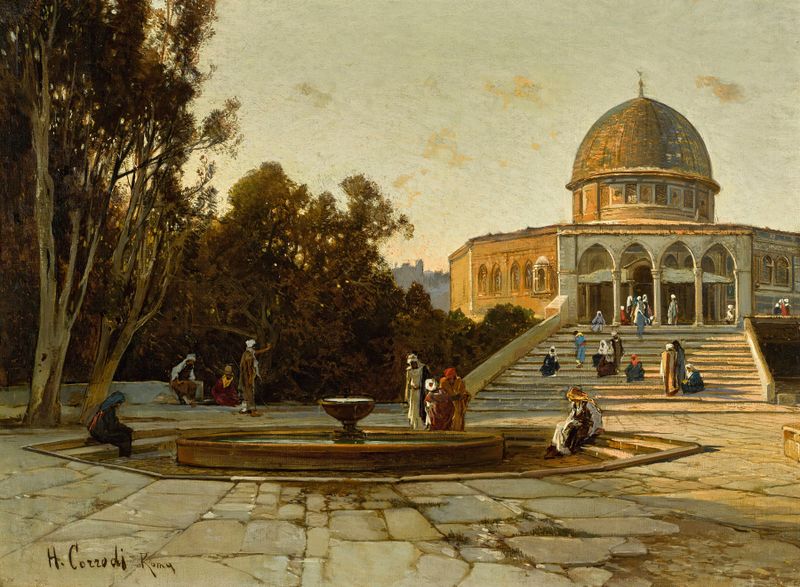
The Dome Of The Rock, Jerusalem
Hermann David Salomon Corrodi

The Galata Bridge, Constantinople
Hermann David Salomon Corrodi
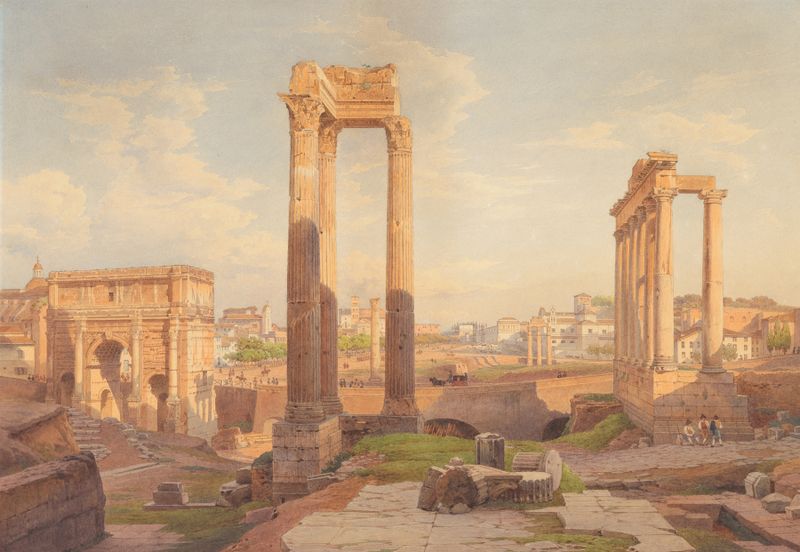
Forum Romanum
Hermann David Salomon Corrodi
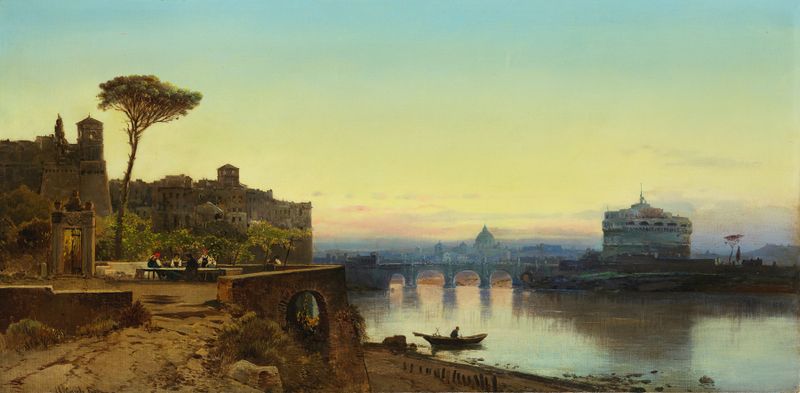
Blick über den Tiber auf die Engelsburg
Hermann David Salomon Corrodi

Prayer Before Jerusalem
Hermann David Salomon Corrodi
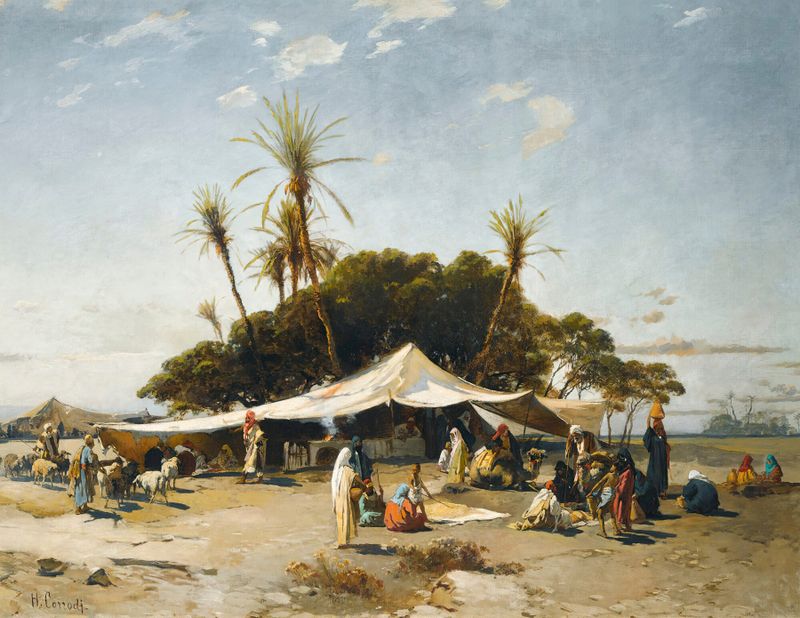
A camp in the desert
Hermann David Salomon Corrodi
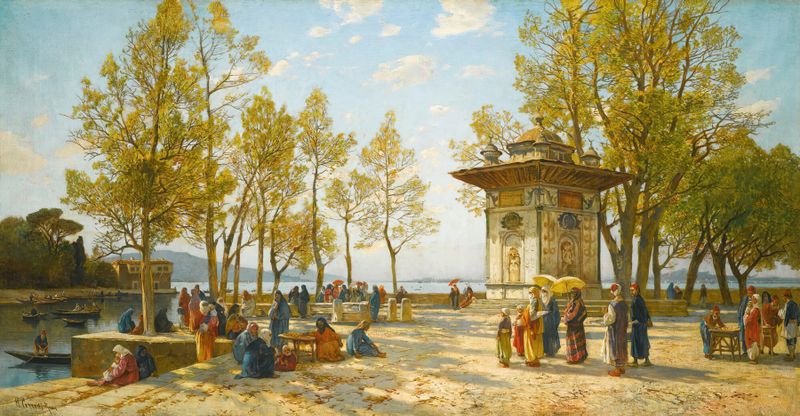
The Fountain Of The Sweet Waters Of Asia, On The Bosphorus
Hermann David Salomon Corrodi

A Bedouin Camp At Dusk
Hermann David Salomon Corrodi
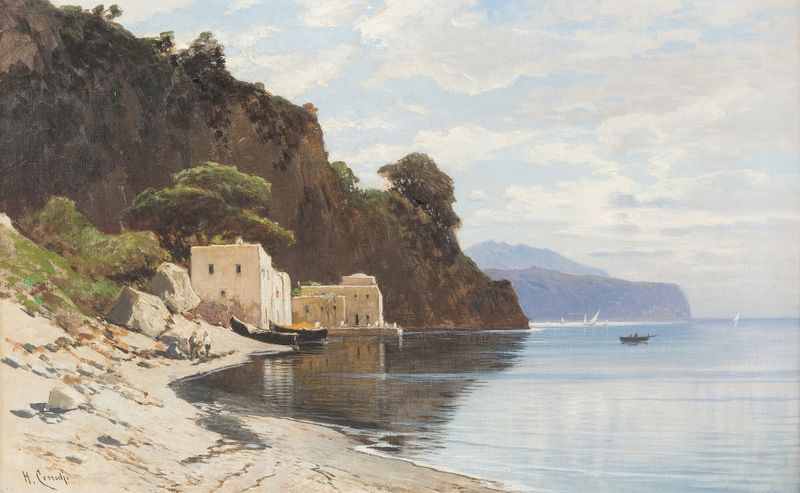
At the Amalfi coast
Hermann David Salomon Corrodi

An oasis encampment
Hermann David Salomon Corrodi





